Tennisplatz In Gossensass — History & Facts
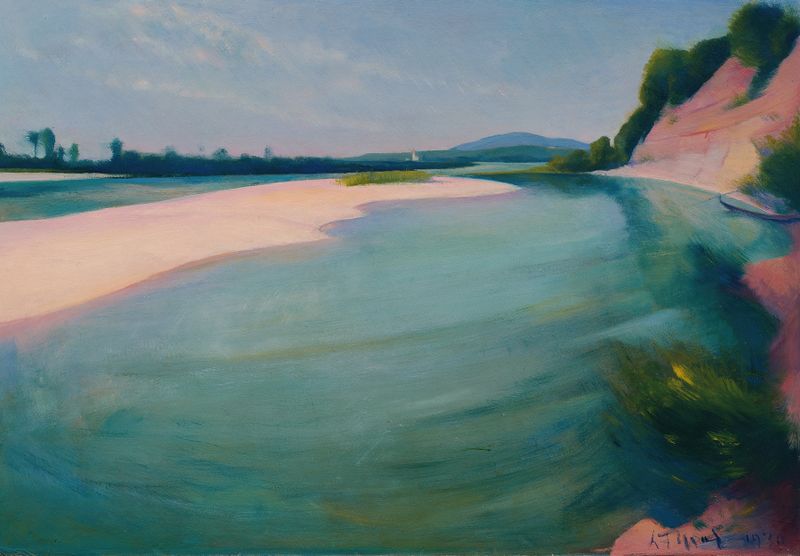
When did color learn to lie? In Tennisplatz In Gossensass, vibrant hues dance across the canvas, blurring the line between reality and the longing that fuels our dreams. Focus on the foreground, where a swirling mix of greens and blues captures a tennis court, its surface gleaming under the summer sun. Perhaps the players are enraptured in the fervor of the game; the brush strokes pulse with energy, drawing the eye in a rhythmic motion. Notice how the light falls upon the players’ faces, illuminating their expressions with a blend of determination and joy, yet casting long shadows that hint at something deeper just beneath the surface. Hidden within the joy of the game lies a tension between the vibrant energy and the stillness that envelops the surrounding landscape.
The distant mountains loom, a reminder of nature's permanence contrasting with the transient thrill of competition. Each stroke evokes a sense of nostalgia, the players seemingly unaware of the fleeting nature of their moment; it’s as if the colors themselves yearn to hold onto the joy of the present, while shadows whisper of inevitable change. In 1908, Ludwig Ferdinand Graf painted this work in Gossensass, a town that had become a favored retreat for artists seeking inspiration amidst the beauty of the Tyrolian Alps. At this time, the art world was experiencing a shift toward impressionism, where color and light began to take precedence over form and detail.
Graf, navigating his own artistic journey, was captivated by this interplay of emotion and environment, capturing a moment that reflects both the exuberance of youth and the bittersweet nature of time.