Design for Stage Set for the Second Act of Elisca or L’Habitante de Madagascar — History & Facts
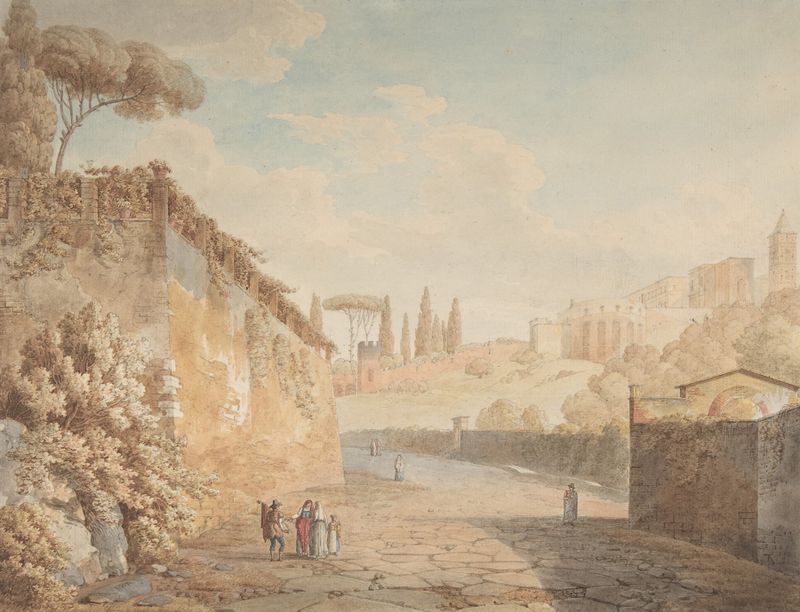
Could a single brushstroke hold eternity? In the delicate strokes and vivid colors of this stage set design, we witness the vivid dance of creativity and intention, frozen in time yet pulsating with the potential for movement. Look to the center, where swirling forms and vibrant hues collide, creating a dynamic sense of action. The clever use of blue and gold draws the eye, inviting you to explore the interplay between light and shadow that defines the scene's depth. Each element—whether it be the sweeping curves or the jagged silhouettes—serves to evoke a feeling of anticipation, suggesting that something momentous is about to unfold on this imagined stage. Within this design lies a tension between harmony and chaos.
The swirling patterns might symbolize the fluidity of life, while the stark contrasts of light and dark hint at underlying conflicts in the narrative. The movement implied by the brushwork suggests a fleeting moment, where everything is poised to change. What stories lurk just behind the surface of the paint, waiting for the right moment to emerge? In 1798, Thibault crafted this stage set design during a period of artistic exploration in France, where neoclassicism was giving way to romanticism.
Straddling these two worlds, he was influenced by the vibrant cultural shifts around him. As the art scene flourished, the need for innovations in theatrical design became paramount, pushing him to blend imaginative vision with practical application in a time of artistic reawakening.