
Die Augustinerkirche in Perchtoldsdorf bei Wien — History & Facts
Can paint confess what words never could? In Die Augustinerkirche in Perchtoldsdorf bei Wien, the canvas breathes life into the quiet beauty of a church, revealing truths that echo beyond verbal expression. Look closely at the intricate details of the church's façade, where the warm hues of the setting sun embrace the stonework. Notice how the light delicately dances across the walls, casting long shadows that hint at the passage of time. The composition draws your eye upwards, inviting you to ponder the steeple that reaches for the heavens, while the surrounding landscape cradles the structure in a serene embrace.
The colors, a symphony of browns, yellows, and greens, evoke a sense of tranquility, as if the scene whispers stories of devotion and history. Yet, beneath this serene exterior lies a tapestry of contrasts. The solidity of the church stands in stark juxtaposition to the fleeting shadows, emblematic of human transience in the face of faith and tradition. The scene is alive with secrets; the way the trees frame the building suggests a protective embrace, while the distant hills remind us of the vastness of the world beyond.
This tension between nature and architecture encapsulates an emotional landscape that invites reflection on our place within it. Elias Pieter van Bommel painted this work in 1885, during a period of great change in Europe. The industrial revolution was reshaping society, yet artists like him sought solace in capturing the enduring elements of cultural heritage. Living in Vienna, he was influenced by the Romantic movement, which celebrated the beauty of nature and the sublime allure of historical architecture.
In this context, the painting becomes more than a mere landscape; it serves as a testament to enduring values amidst an evolving world.
More Artworks by Elias Pieter van Bommel
Browse all →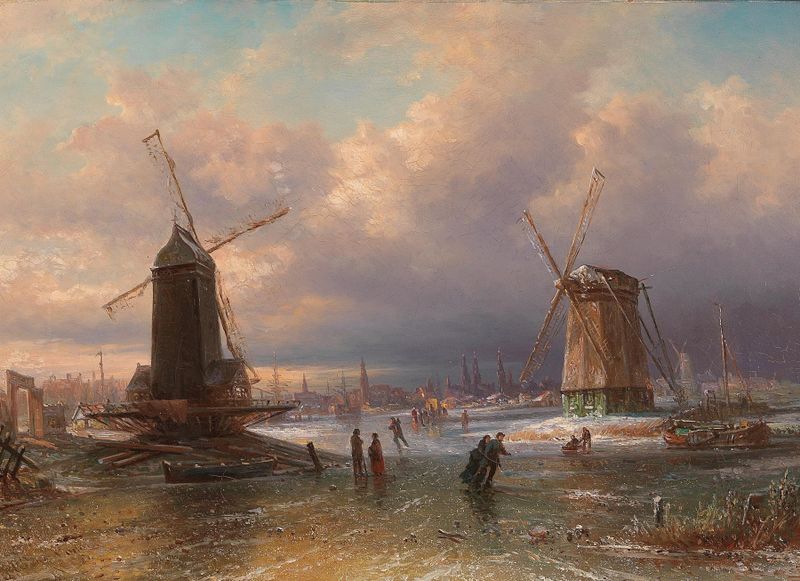
Winter Pleasures on the Ice outside a Dutch Town
Elias Pieter van Bommel
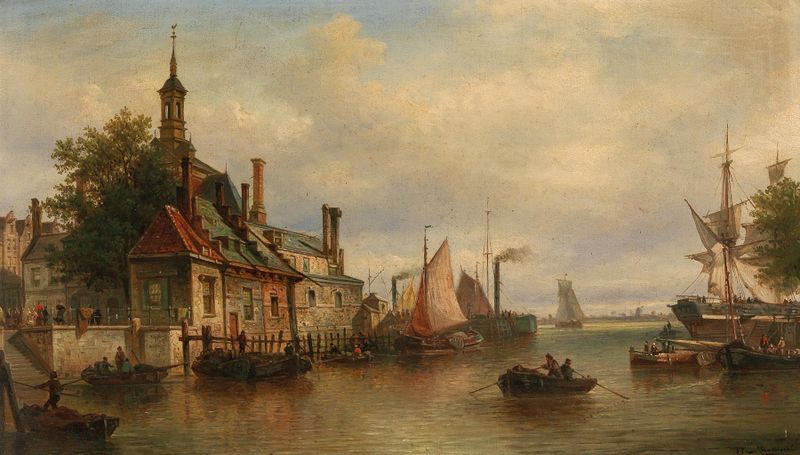
The Old Hanse Gate on the Maas in Rotterdam
Elias Pieter van Bommel

The Singel and Brouwersgracht, Amsterdam
Elias Pieter van Bommel

View from the Nieuwengracht in Amsterdam
Elias Pieter van Bommel
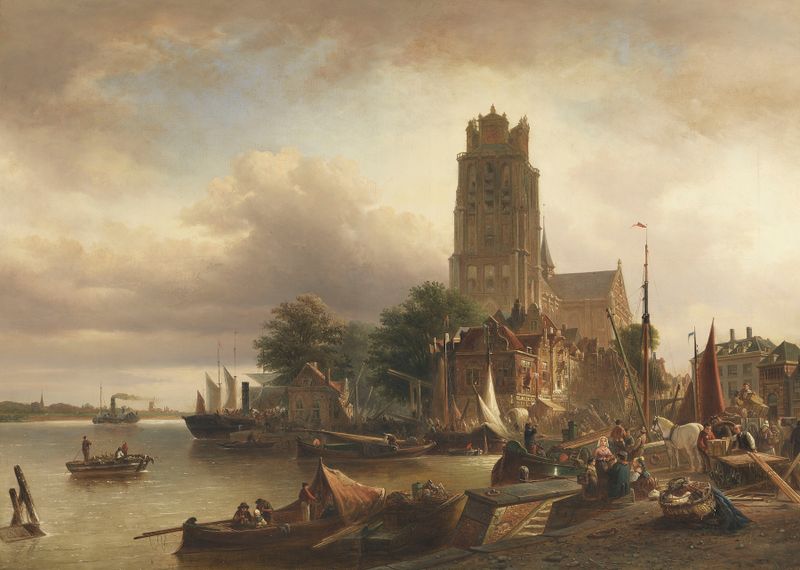
Ansicht von Dordrecht mit der Grote Kerk
Elias Pieter van Bommel
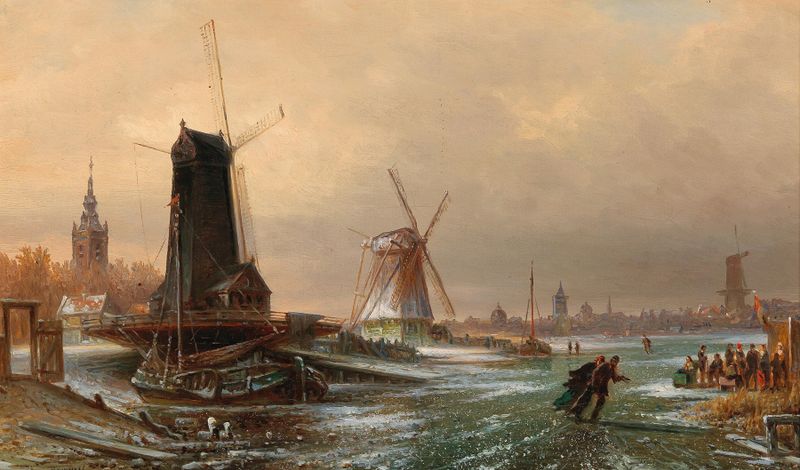
Dutch Sawmill, Water Mill and Flour Mill, near Amsterdam
Elias Pieter van Bommel
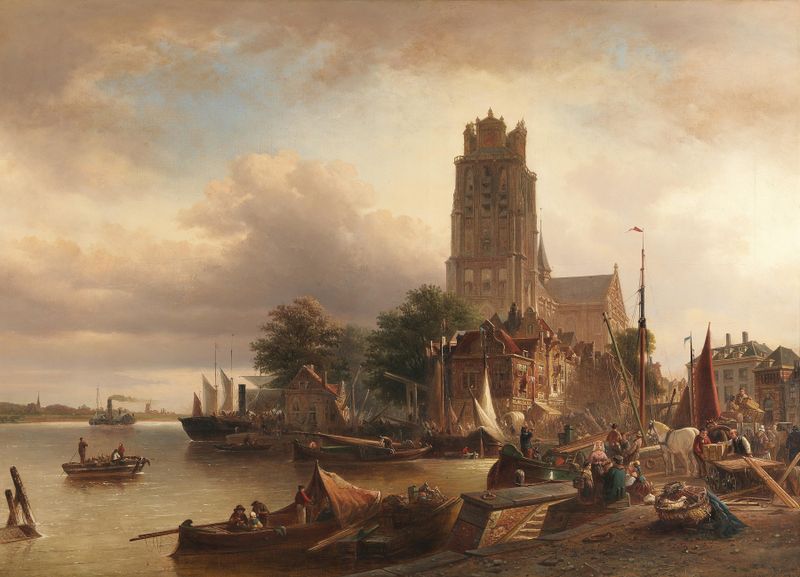
Dordrecht
Elias Pieter van Bommel

Motif Of Dordrecht
Elias Pieter van Bommel

A Winter View of the City of Dordrecht
Elias Pieter van Bommel
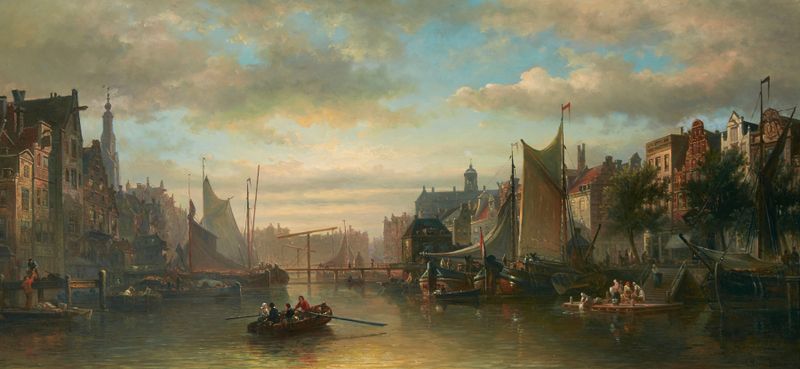
A view of Amsterdam
Elias Pieter van Bommel
More Architecture Art
Browse all →
The statue of Liberty
Frédéric Auguste Bartholdi

View of Houses in Delft, Known as ‘The Little Street’
Johannes Vermeer

View of Houses in Delft, Known as ‘The Little Street’
Johannes Vermeer

The Cathedral in Rouen. The portal, Grey Weather
Claude Monet

The yellow house
Vincent van Gogh

The Church in Auvers-sur-Oise, View from the Chevet
Vincent van Gogh