Die Donauauen bei Wien — History & Facts
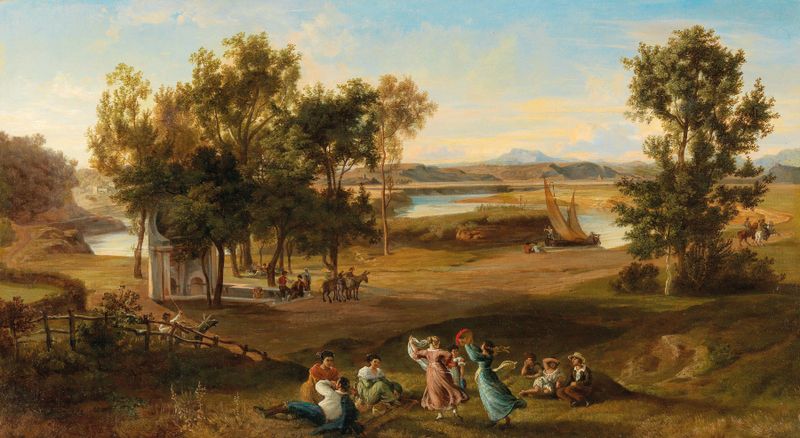
Who listens when art speaks of silence? In the hushed expanse of Die Donauauen bei Wien, fear lies quietly beneath the surface, beckoning a deeper understanding of nature's tranquility. Look to the horizon where the gentle curves of the river undulate into infinity, inviting your gaze to wander. Notice how the muted palette—soft greens and rich browns—encases the scene in an embrace of calmness. The interplay of light and shadow creates a delicate balance, emphasizing the depth of the foliage while allowing the water to shimmer with whispered secrets.
Each brushstroke seems deliberate, capturing the stillness that hangs in the air, leaving an echo of something stirring just out of reach. The painting’s subtle contrasts are where the true emotional weight lies. While the serene landscape may appear idyllic, the absence of human presence suggests an underlying tension—a fear of isolation or abandonment in nature's vastness. The ethereal quality of the light hints at impermanence, urging viewers to contemplate their own fleeting existence amid the enduring beauty of the natural world.
Here, silence becomes a canvas for introspection, where the unseen and unheard can evoke profound feelings of vulnerability. Created in 1870, this work emerged during a time in Vienna when the art scene was vibrant and evolving. Josef Hoffmann was influenced by the burgeoning movement towards modernism, exploring new ways to depict the landscape as not merely a subject, but a portal into emotional experience. As he painted, the world around him was in flux, with the emergence of industrialization contrasting sharply with the serene beauty of nature, reflecting an inner conflict that resonates through the piece.