
Die Rax in Niederösterreich — History & Facts
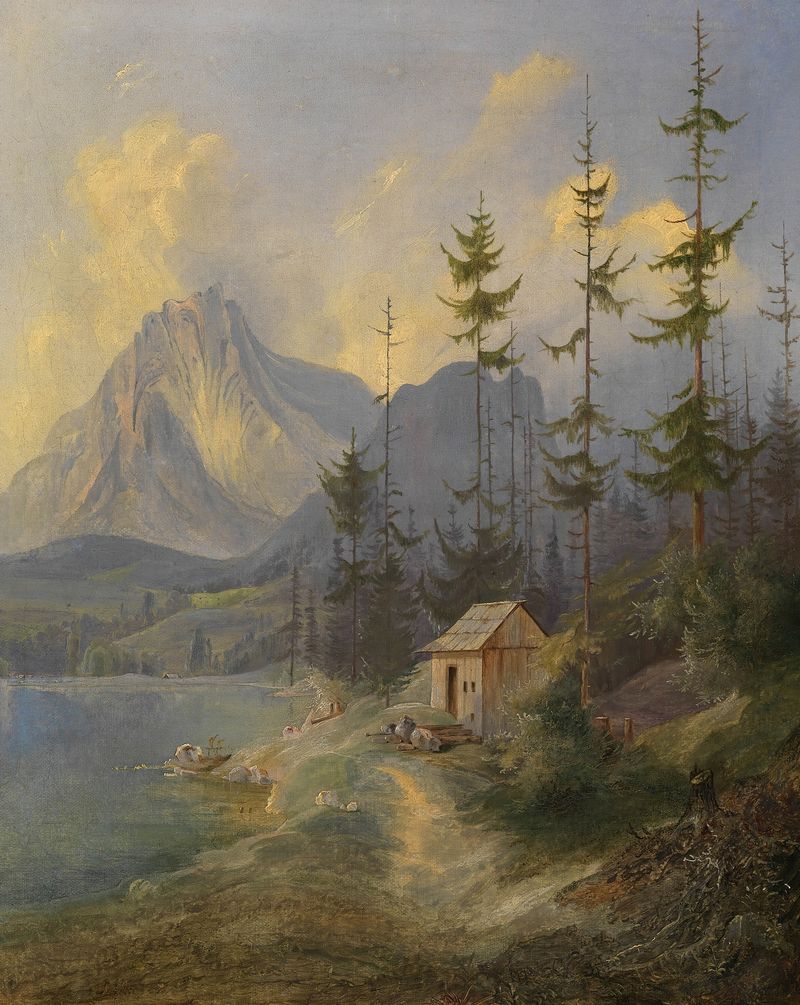
Can paint confess what words never could? In Die Rax in Niederösterreich, the chaos of nature reveals the thin line between serenity and madness. Look to the left at the burst of verdant foliage, rich greens blending into deeper shadows, where dense trees seem to whisper secrets to the wind. Notice how the sunlight filters through, illuminating patches of ground, creating a play of light and shadow that dances with the wildness of the landscape. The mountain looms majestically in the background, its rocky face etched with a gentle weathering, inviting contemplation and hinting at both beauty and the sublime terror of nature. The contrast between the lush foreground and the ominous mountain behind evokes a feeling of duality—life versus stagnant immensity, human emotion against the indifference of nature.
The painting speaks of madness not just in chaos but in the overwhelming force of beauty that can unsettle the mind. The viewer is drawn into a space where tranquility and tumult exist side by side, a reminder of the thin veil that separates calmness from emotional upheaval. Adalbert Stifter created this work in 1841 while residing in Austria, amidst a burgeoning Romantic movement that emphasized the connection between nature and human experience. Stifter, often regarded as a literary figure as well as a painter, sought to illustrate the profound emotional resonance found in natural landscapes, reflecting both the simplicity and complexity of the human condition in a rapidly changing world.
More Artworks by Adalbert Stifter
Browse all →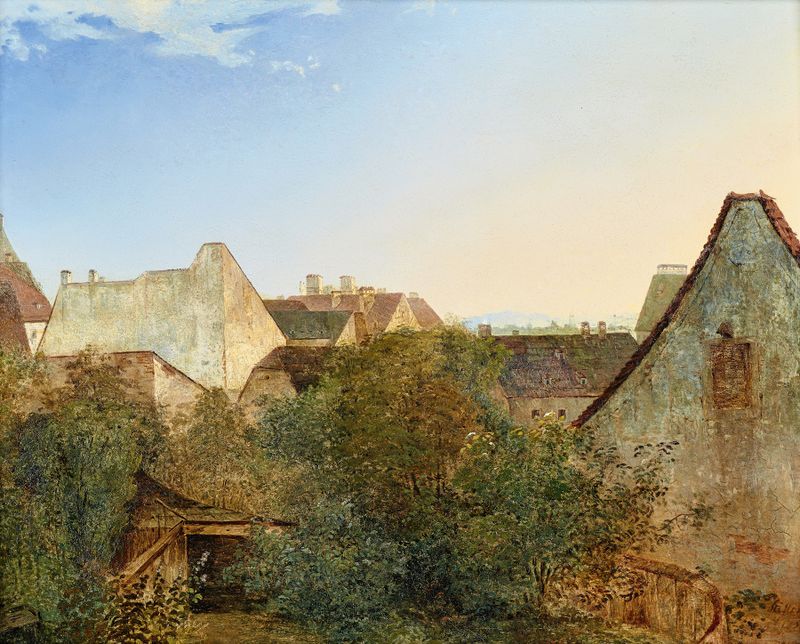
Blick über Wiener Vorstadthäuser (Beatrixgasse)
Adalbert Stifter
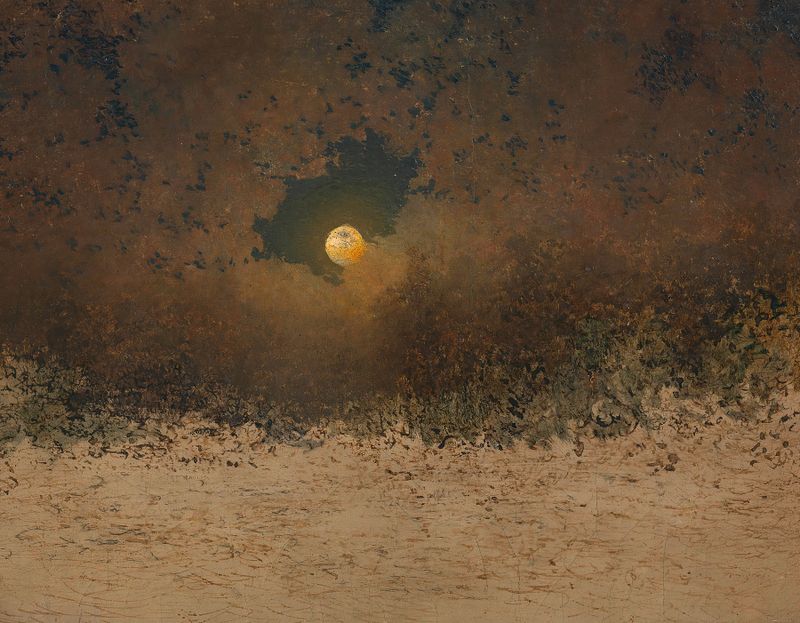
Mondlandschaft mit bewölktem Himmel
Adalbert Stifter
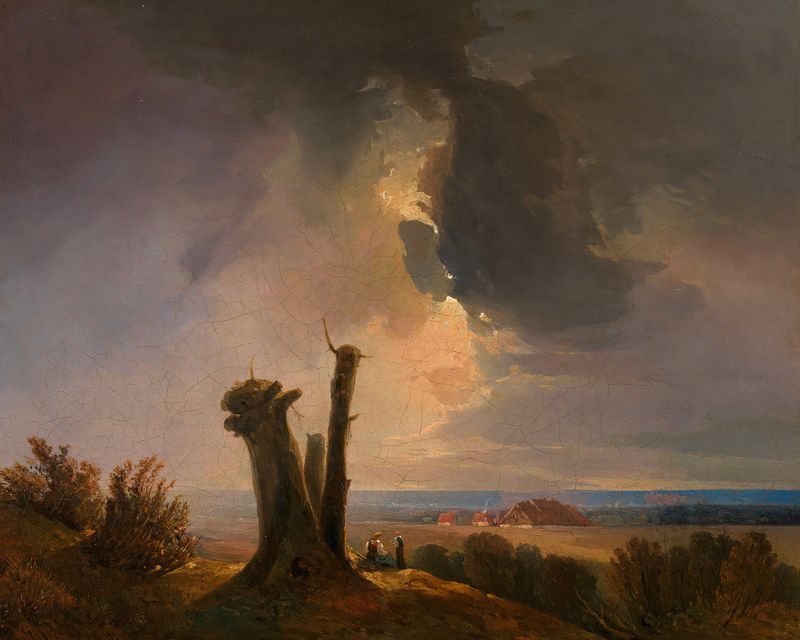
Westungarische Landschaft – Blick vom Leithagebirge
Adalbert Stifter
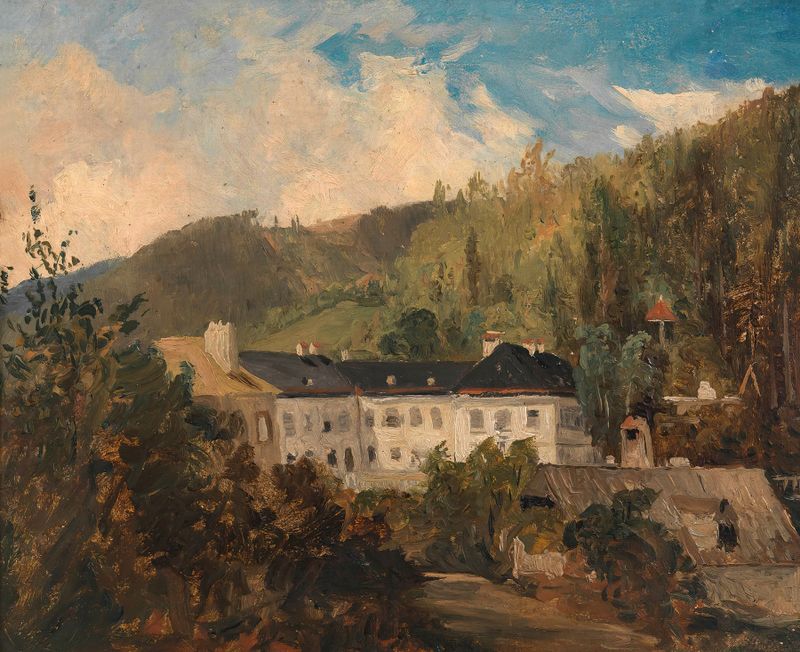
Motiv aus Neuwaldegg
Adalbert Stifter
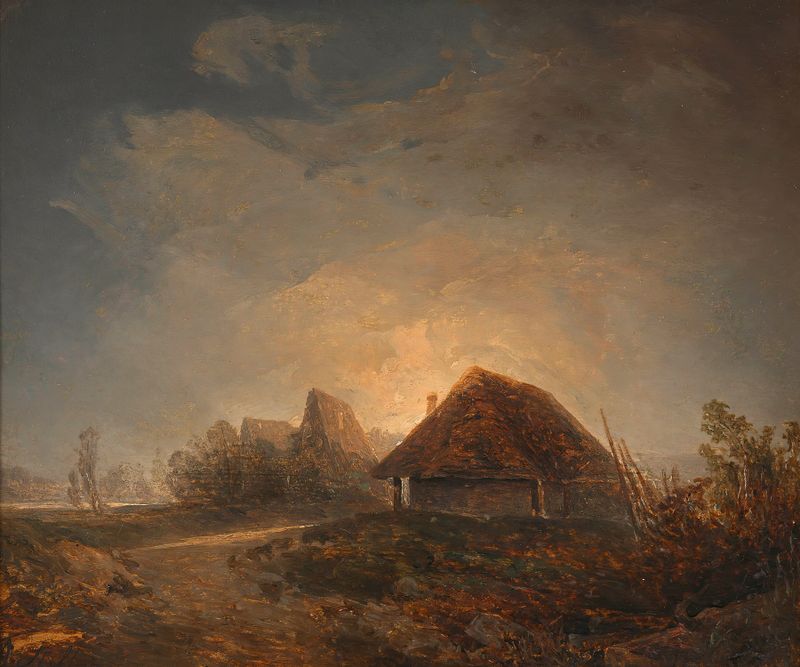
Westungarische Landschaft mit Hütten und aufgehendem Mond
Adalbert Stifter
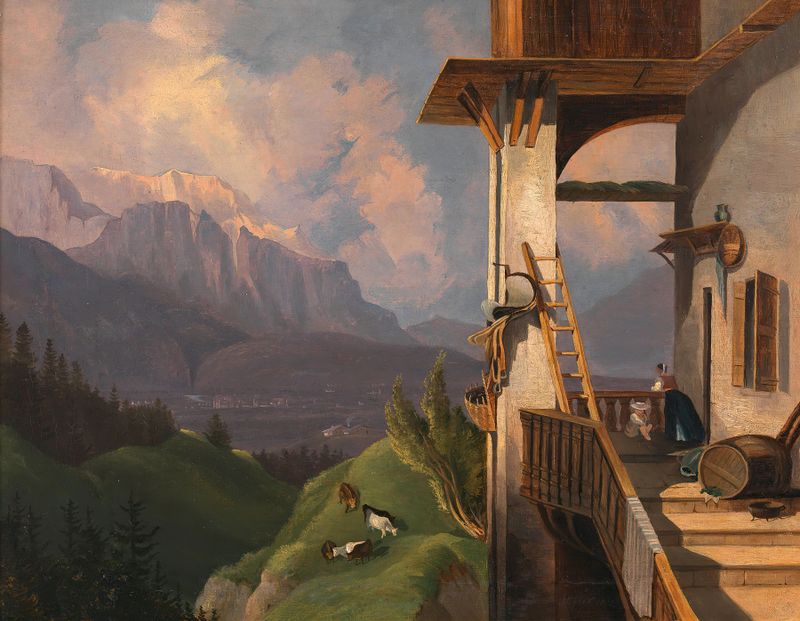
Innsbruck mit der Nordkette
Adalbert Stifter
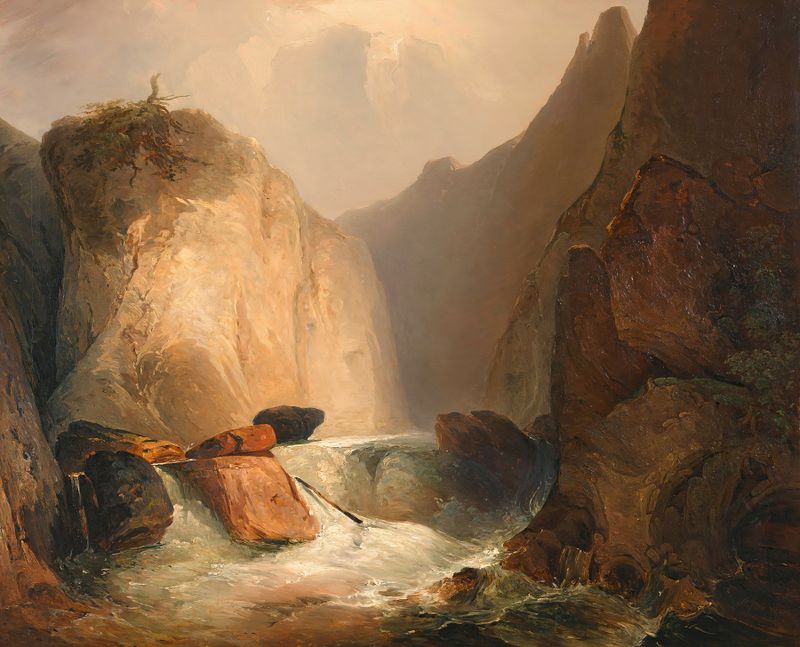
Felspartie – Moldauenge bei Hohenfurt
Adalbert Stifter
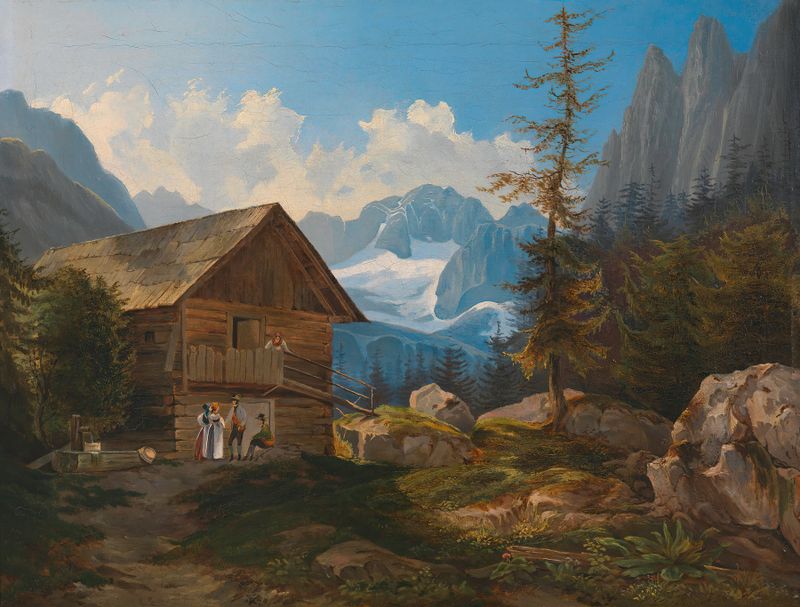
Im Gosautal (Oberösterreich)
Adalbert Stifter
Der Sarstein bei Alt-Aussee
Adalbert Stifter
Blick in die Beatrixgasse in Wien
Adalbert Stifter





