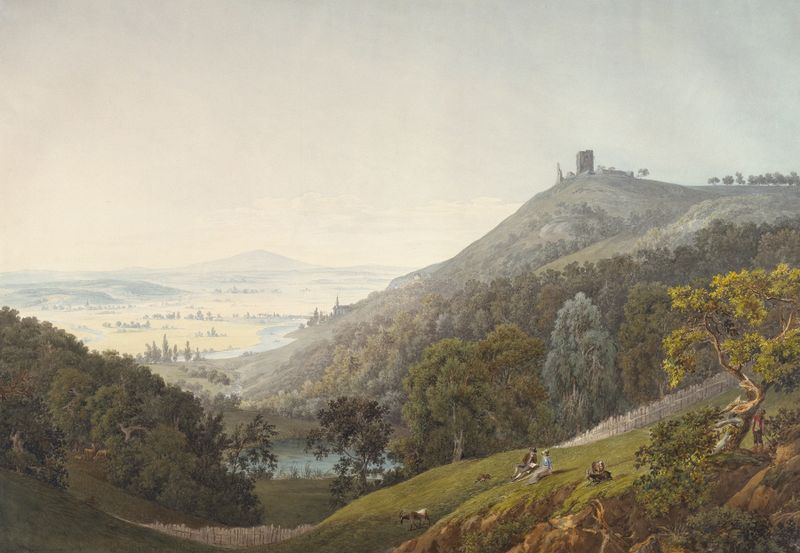
Die Ruinen Gleiberg und Vetzberg bei Gießen, links die beiden Burgruinen auf Bergen, rechts ein weites Tal, im Vordergrund Ausflügler und Hirten — History & Facts
Could a single brushstroke hold eternity? In Die Ruinen Gleiberg und Vetzberg bei Gießen, the expansive landscape whispers of both grandeur and absence, capturing the essence of emptiness that lingers in every corner. Look to the right at the rolling hills that cradle the distant ruins, their crumbling stonework bathed in a gentle light. Notice how the soft greens and browns blend effortlessly, portraying a serene yet haunting atmosphere. The figures of excursionists and shepherds in the foreground engage in the trivialities of life, while the majestic ruins stand monumentally still, inviting contemplation on their silent stories.
The disciplined brushwork and careful composition reveal a meticulous artistry that evokes both awe and nostalgia. Delve deeper into the painting’s emotional landscape, where the contrast between the lively figures and the desolate ruins evokes a profound sense of longing. The vibrancy of the foreground reflects the vitality of human experience, yet it is overshadowed by the silent reminders of a forgotten past. This duality resonates, stirring a tension between life’s transience and the enduring nature of the landscape itself. Created in 1803, in a context marked by the transition from the Enlightenment to Romanticism, the artist found inspiration in the natural world’s beauty while also grappling with themes of loss and memory.
During this period, themes of nostalgia and reflection on history were burgeoning in the artistic community, and Reinermann, situated in Germany, contributed to this dialogue through his poignant representation of a landscape steeped in time.