The Ruin of Kalsmunt near Wetzlar — History & Facts
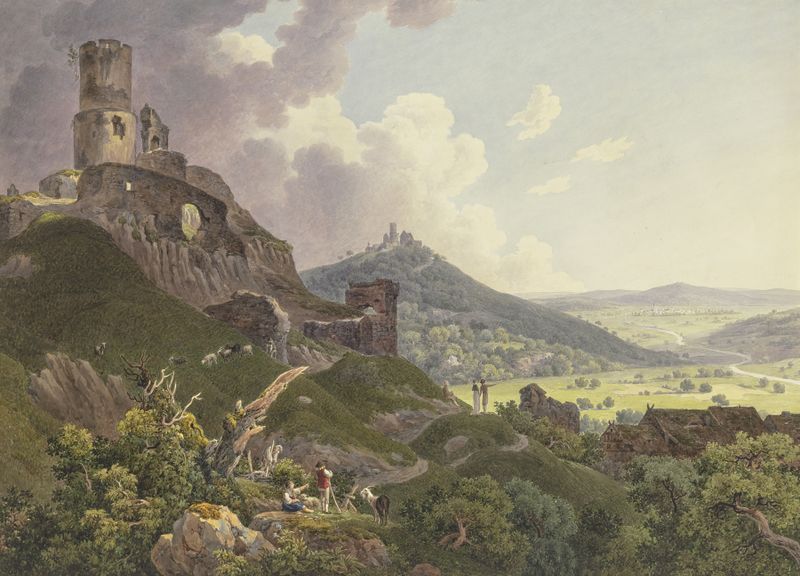
Did the painter know this moment would outlive them? The decaying vestiges of a once-great structure stand resolute against the passage of time, whispering stories of a forgotten era. Focus on the weathered stones, their textures a testament to both nature’s fury and humanity’s ambition. Notice how the light filters through the gaps, illuminating patches of moss and revealing the fragile beauty within decay. The palette is dominated by muted earth tones, emphasizing the somber mood, while the contrast between the soft greens of the surrounding foliage and the stark gray of the ruins draws attention to the interplay of life and abandonment. Hidden within these remnants are deeper reflections on mortality and legacy.
The crumbling walls, though lifeless, speak of aspirations once grand, now reduced to mere fragments. The surrounding landscape, lush and vibrant, serves as a reminder that nature will ultimately reclaim what was once built by human hands. This dynamic contrast evokes a bittersweet emotion, as the viewer contemplates the fleeting nature of existence. In 1805, as Friedrich Christian Reinermann crafted The Ruin of Kalsmunt near Wetzlar, he was navigating a shifting artistic landscape marked by Romanticism's rise.
The painting, created in a time when artists began to explore themes of nature, emotion, and the sublime, captures a moment of introspection amid broader societal changes in Europe, including the stirrings of nationalism and a growing appreciation for the past. Reinermann’s focus on ruins mirrors a collective longing for continuity and connection to history, marking his work as both a personal and cultural reflection.