Dordrecht — History & Facts
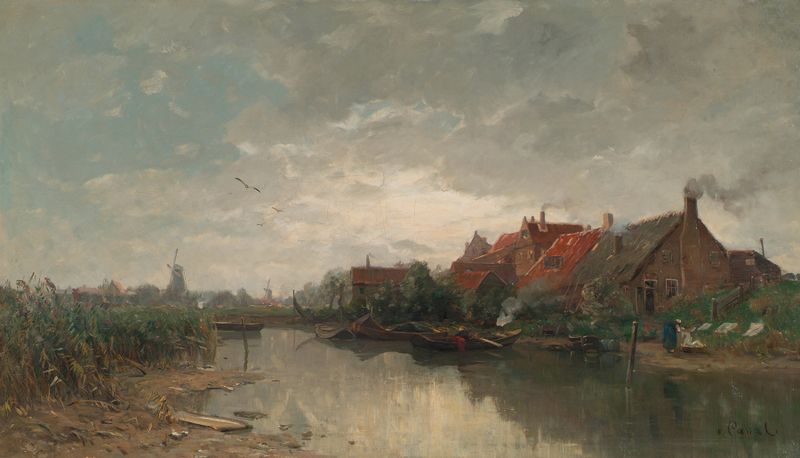
When did color learn to lie? In Dordrecht, a quiet unease seeps through the serene streets, revealing a world stripped bare of its vibrancy. The palette offers a facade — soft blues and muted grays suggest peace while hinting at an emptiness that lingers just beneath the surface, as if whispering secrets of discontent. Look to the left at the delicate interplay of light and shadow, where the gentle glow of the late afternoon sun kisses the contours of the buildings. The artist employs subtle brushwork to create a sense of depth, drawing the viewer’s eye along the canal and into the heart of the scene.
Notice the stillness of the water, reflecting not just the architecture but also an underlying melancholia, a contrast to the idyllic setting that speaks to the absence of life. Amidst the tranquil surfaces, the artwork conveys a deeper tension — the hollowness of the environment overshadowed by the grandeur of its architecture. The empty windows, mere frames without inhabitants, evoke feelings of isolation. Here, the color, while ostensibly comforting, becomes a veil over the emptiness that defines the urban landscape, inviting introspection about what lies beyond the surface of beauty. Created in 1910, this piece emerged during a transitional period in European art, where traditional forms were beginning to give way to modernist expressions.
Gilbert von Canal, working in his studio in the Netherlands, sought to capture not only the physical aspects of his surroundings but also the emotional landscape of urban life, reflecting a broader cultural shift towards exploring the voids within society.