Niederländischer Kanal — History & Facts
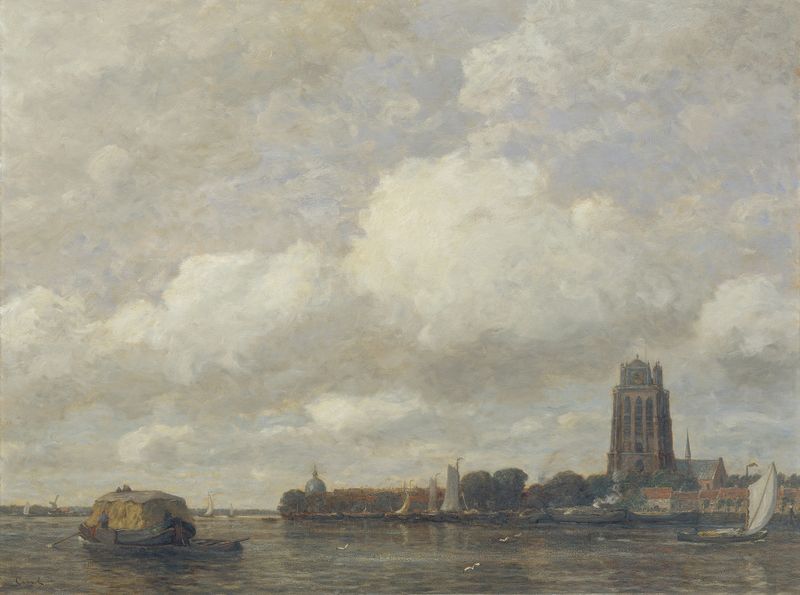
In the midst of decay, beauty finds its form; the canvas whispers secrets of time and transformation. Look to the right at the subtle ripples across the water’s surface, where muted hues blend with vibrant strokes, capturing the fleeting dance of light. Here, the artist employs a delicate palette of greens and browns, evoking the remnants of nature reclaiming its space, while soft brushwork breathes life into the crumbling architecture. The composition invites the viewer’s eye to traverse the canal’s banks, revealing layers of texture that illustrate both the passage of time and the intricate relationship between decay and renewal. As you delve deeper, notice how the intertwining of flora and forgotten structures captures the tension between abandonment and resurgence.
The weathered buildings stand as silent witnesses, telling stories of a once-thriving world now yielding to nature’s embrace. This juxtaposition offers a poignant commentary on the inevitability of change and the bittersweet beauty found in decay—an embrace of impermanence that resonates profoundly in our contemporary lives. In 1893, while creating this piece, the artist found himself amidst a period of significant transition in the art world, exploring themes of realism and impressionism. Painted in the Netherlands, Niederländischer Kanal reflects both personal introspection and broader societal shifts, where the encroachment of modernity contrasted with a romantic longing for the simplicity of the past.
This work, like many of his, captures the essence of a fleeting moment in time, inviting viewers to reflect on their own encounters with decay and beauty.