Dorfidylle — History & Facts
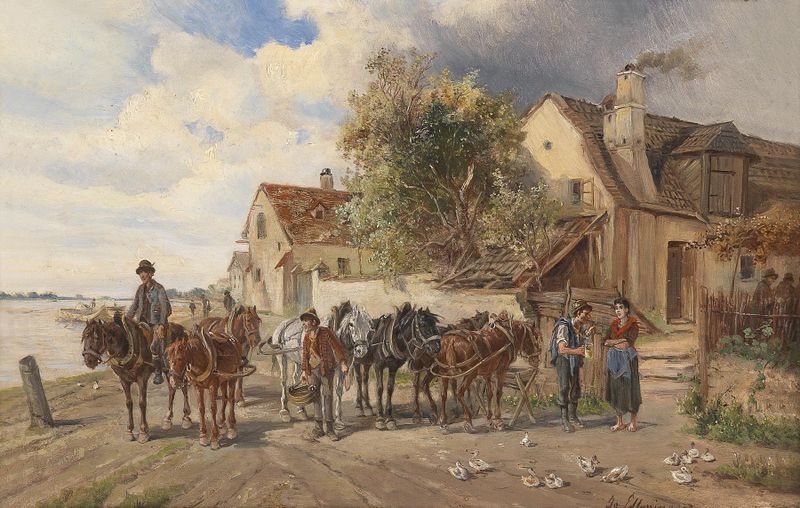
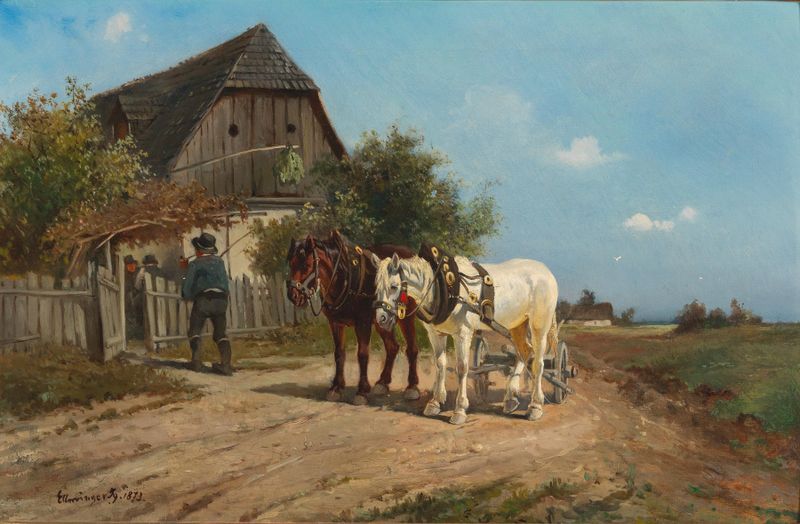
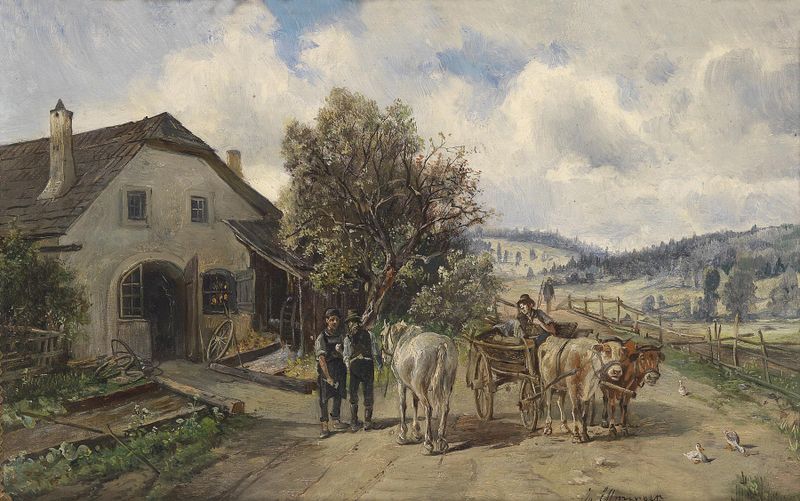
Where does light end, and longing begin? In Dorfidylle, the ache of solitude whispers through the gentle hues and serene landscape, inviting contemplation of both beauty and absence. Look to the center of the canvas, where a tranquil village nestles against the backdrop of rolling hills. The delicate interplay of soft greens and warm browns creates a sense of harmony, while the golden light bathes the scene in a nostalgic glow. Notice the winding path leading into the village, an invitation that beckons yet suggests an underlying tension of distance and desire.
The sparse figures dotting the landscape seem almost ghostly, hinting at lives lived but distanced from the viewer, heightening the sense of emptiness. Beneath the calm surface lies a subtle contrast between idyllic beauty and an unsettling void. The idyllic village, brimming with promise, feels hauntingly still, as if the laughter and life that once filled it are now merely echoes. The gentle rise of the hills cradles the scene, yet also suggests confinement, a border that separates the warmth of the village from the sprawling wilderness beyond.
This juxtaposition evokes a longing for connection and a sense of yearning that permeates the peaceful façade. In 1872, while creating this work, the artist was situated in a period of evolving artistic expression in Austria, where romanticism was giving way to more impressionistic techniques. Ellminger's focus on rural landscapes reflected both his personal experiences and a broader cultural appreciation for the serene beauty of the natural world. This painting emerged from a time when artists sought to capture fleeting moments of beauty, while grappling with the complexities of modernity encroaching upon traditional life.