Vor der Schmiede — History & Facts
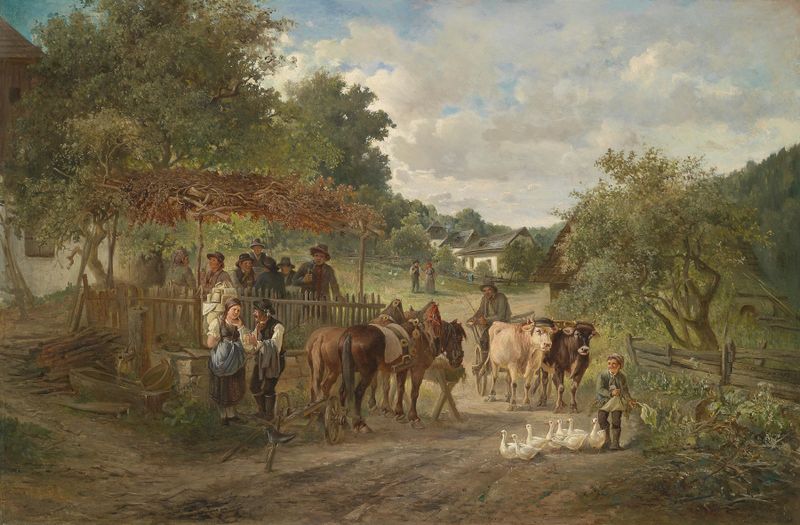
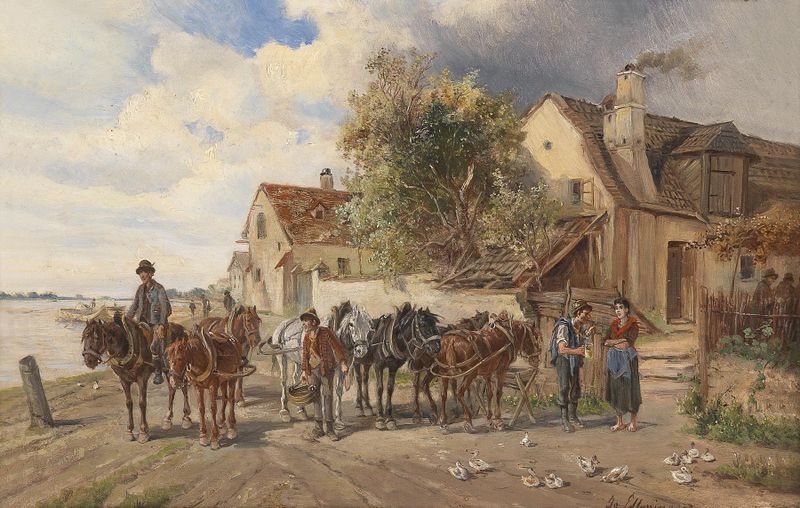
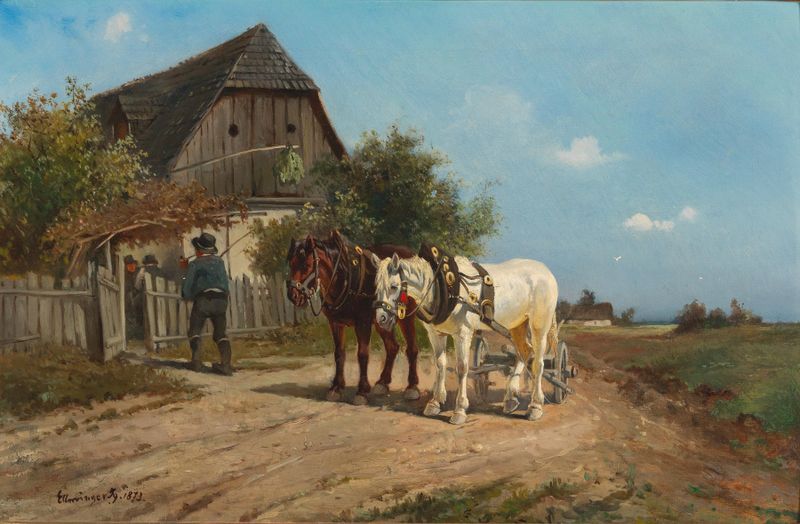
In Vor der Schmiede, the delicate interplay between life and mortality unfolds, reminding us of the fleeting nature of existence and the strength found in vulnerability. Look closely at the figures in the foreground, where the warmth of their skin contrasts starkly with the coolness of the forge behind them. Notice how the subtle hues of ochre and sienna breathe life into their expressions, evoking a sense of labor and weariness. The composition draws the eye to the glowing embers, the heart of the forge, illuminating the scene while casting long shadows that hint at both creation and destruction, a reminder of life's duality. Amidst this busy environment, there lies a poignant tension between the vitality of the blacksmith's work and the ephemeral nature of the figures surrounding him.
The slight furrow of their brows suggests the weight of toil, echoing themes of sacrifice and the inevitability of time's passage. Each detail—the glint of metal, the soot-stained hands—whispers of a hard-fought survival, intertwining the labor of the present with the looming specter of mortality that looms over all. Ellminger crafted this work during a period when industrialization was beginning to reshape society. Although the specific date remains unknown, he was active in the late 19th century, a time marked by rapid change and the emergence of modernity.
As a painter, he sought to capture not only the essence of human endeavor but also the profound stories woven into the fabric of everyday life, a theme that resonated deeply during his artistic journey.