
Dorfstraße — History & Facts
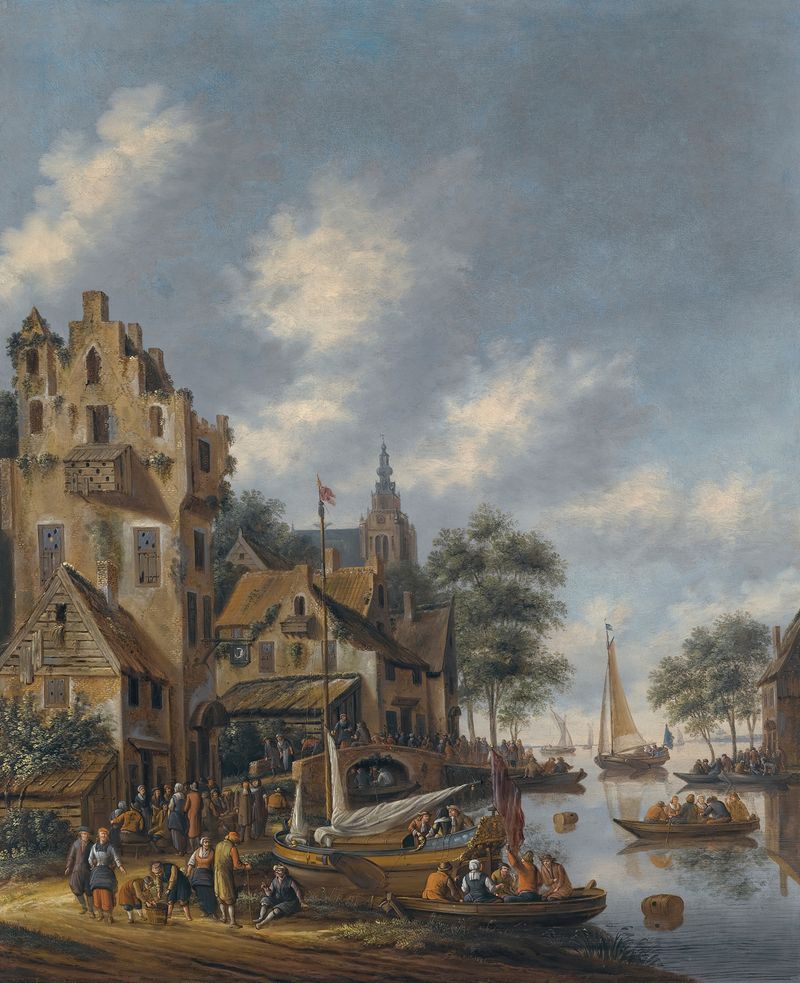
When did color learn to lie? The melancholy of a quiet street, lined with distant houses, beckons the viewer to ponder the stories that linger beneath the brushstrokes. Focus on the left, where soft hues of ochre and muted greens create a scene steeped in nostalgia. Notice how the light filters through the trees, casting gentle shadows that seem to dance across the cobblestones, inviting you to walk down this path of memory. The careful composition draws the eye further down the street, where figures fade into the background, hinting at lives intertwined yet separate. Yet, amid the serene beauty, there lies a tension; the stillness speaks of solitude.
The figures appear small and distant, their postures hinting at weariness, as if life’s burdens weigh heavily on their shoulders. This contrast between the inviting palette and the emotional undertone evokes a deep sense of longing, suggesting that the street itself is a witness to unspoken sorrows and stories left untold. In the 1660s, Heeremans painted Dorfstraße during a time when the Dutch Golden Age was in full bloom, marked by flourishing artistic expression. Living in a period where realism flourished, he was part of a vibrant artistic community in the Netherlands, grappling with themes of everyday life.
This work reflects not only his skill in capturing the essence of the mundane but also the underlying melancholy that colors human existence.
More Artworks by Thomas Heeremans
Browse all →
Enjoying the Ice
Thomas Heeremans

A winter landscape with skaters on the ice
Thomas Heeremans
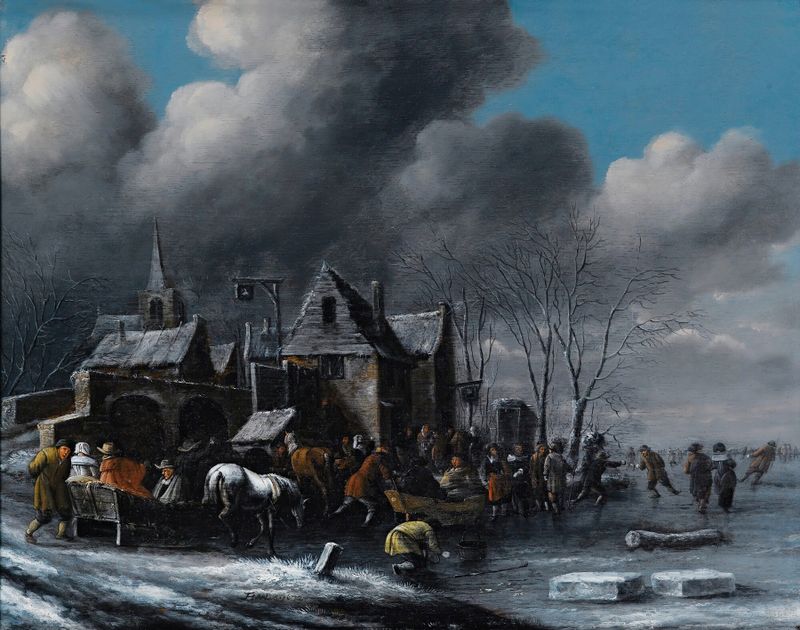
Skaters On A Frozen River
Thomas Heeremans
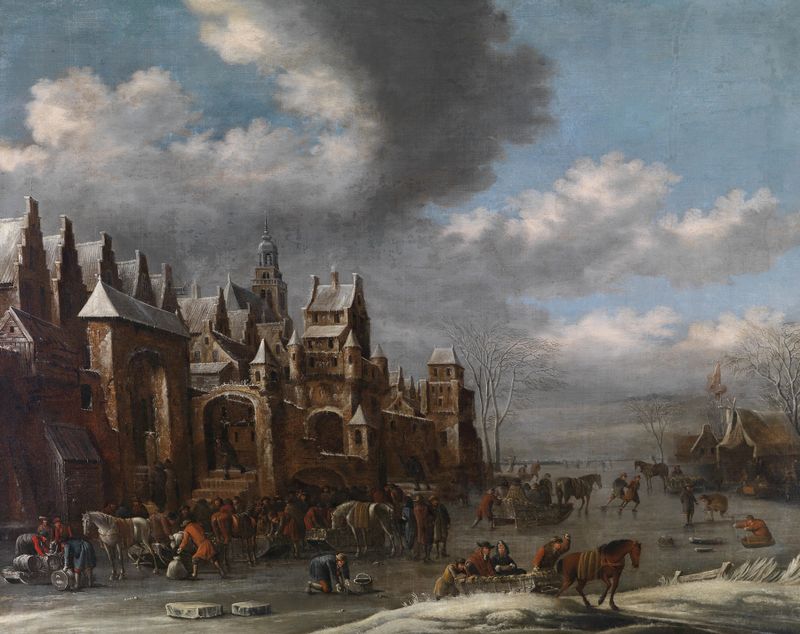
Winterlandschaft mit Eisläufern
Thomas Heeremans

Ansicht des Strandes bei Scheveling
Thomas Heeremans

Travellers resting outside a tavern
Thomas Heeremans
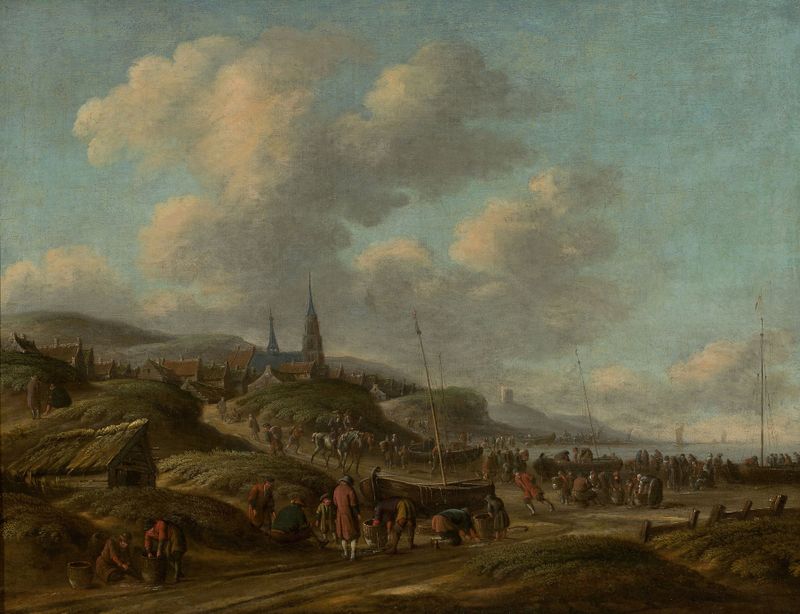
Coast in Scheveningen
Thomas Heeremans

A Town On The Banks Of A River
Thomas Heeremans
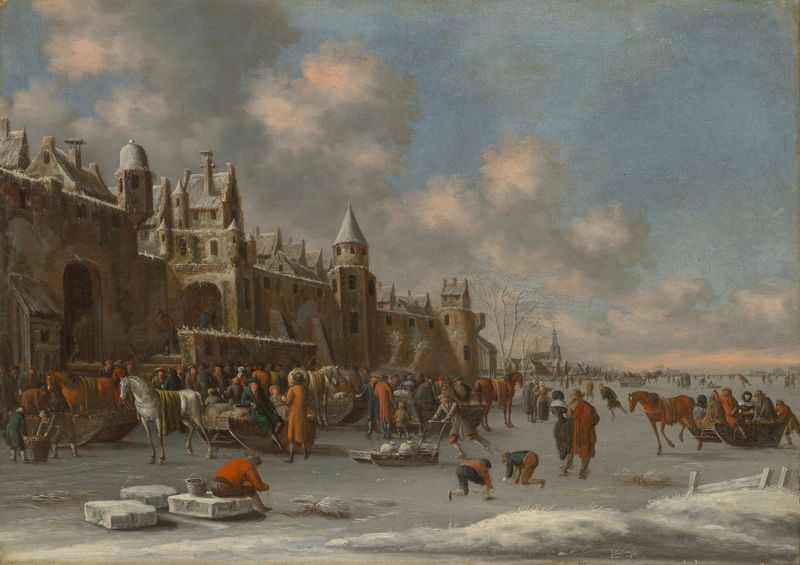
A winter landscape with skaters on a frozen lake near a city wall
Thomas Heeremans
A Town On The Banks Of A River With Figures At The Waterside
Thomas Heeremans





