
Ansicht des Strandes bei Scheveling — History & Facts
In that stillness, we find the essence of rebirth, a moment suspended between the ebb and flow of life itself. Look to the left at the gentle swell of the waves, their crests catching the soft light of the sun. The muted palette—grays, blues, and hints of ochre—draws your eye toward the horizon where sea and sky intertwine. Notice how the delicate brushstrokes replicate the shimmering surface of the water, imparting a sense of motion, while the figures along the shore remain almost static, grounded in their own lives.
The composition, framed by wispy clouds, invites contemplation of both nature's beauty and humanity's place within it. Beneath this tranquil scene lies a tension between the vitality of the sea and the stillness of the people. The distant sails, barely visible, symbolize dreams and aspirations, while the figures onshore embody the contrast of permanence in an ever-changing world. This juxtaposition speaks to the cycles of life—how each wave may wash away the old while nurturing new possibilities, hinting at a broader narrative of renewal.
The play of light further enhances this theme, casting shadows that hint at what lies beneath the surface. In 1678, during a time of burgeoning trade and artistic exploration in the Netherlands, the painter found himself amidst a vibrant cultural landscape. Heeremans was part of an era that celebrated maritime life, capturing its essence in ways that informed future generations. Working in Scheveling, a popular beach destination, he depicted not just a scene but a moment in history, where nature and humanity intersected in a dance of light and shadow.
More Artworks by Thomas Heeremans
Browse all →
Enjoying the Ice
Thomas Heeremans

A winter landscape with skaters on the ice
Thomas Heeremans
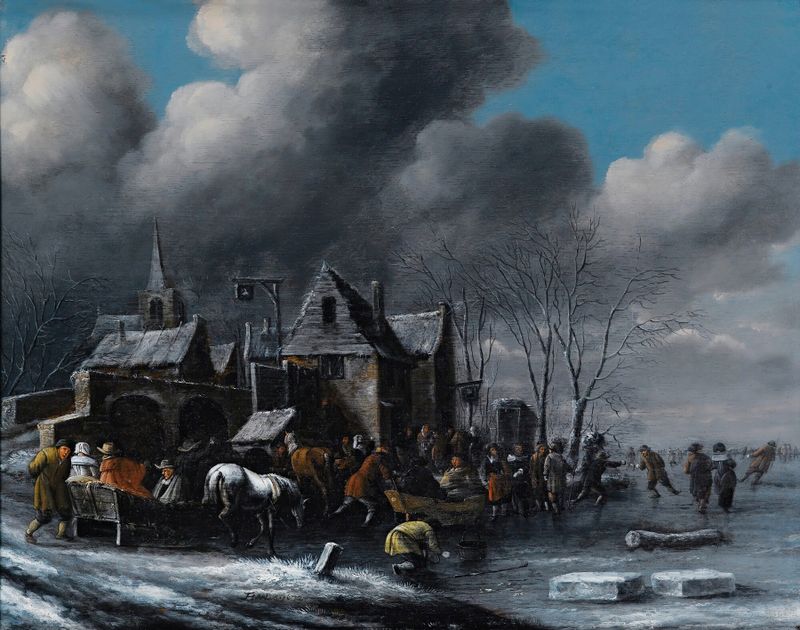
Skaters On A Frozen River
Thomas Heeremans
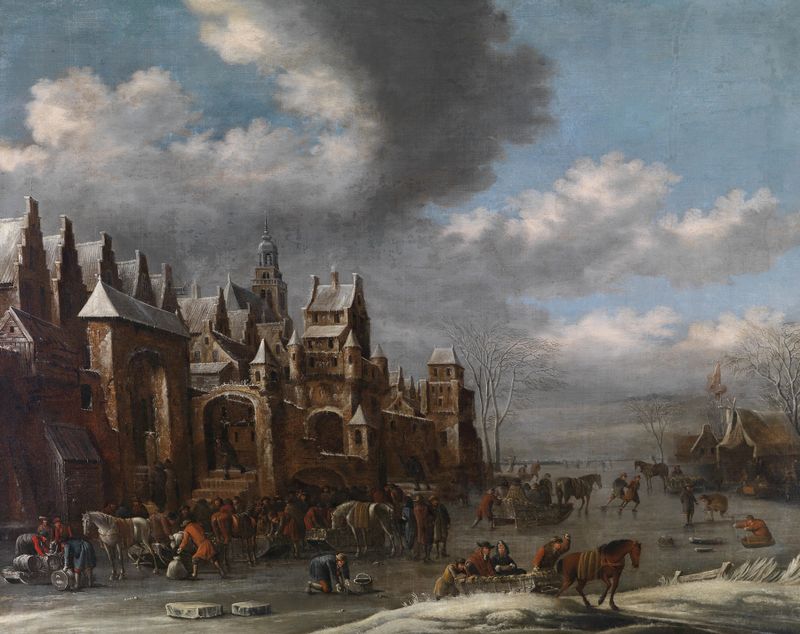
Winterlandschaft mit Eisläufern
Thomas Heeremans

Travellers resting outside a tavern
Thomas Heeremans
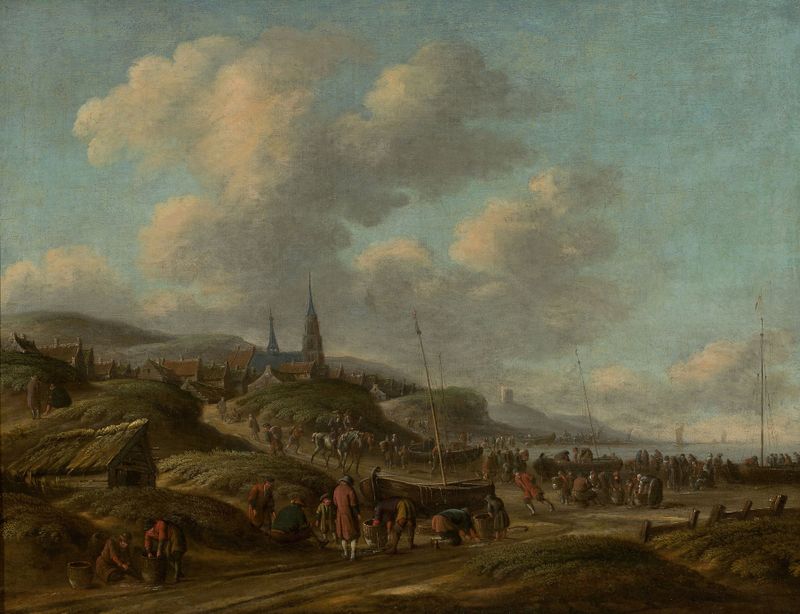
Coast in Scheveningen
Thomas Heeremans

A Town On The Banks Of A River
Thomas Heeremans
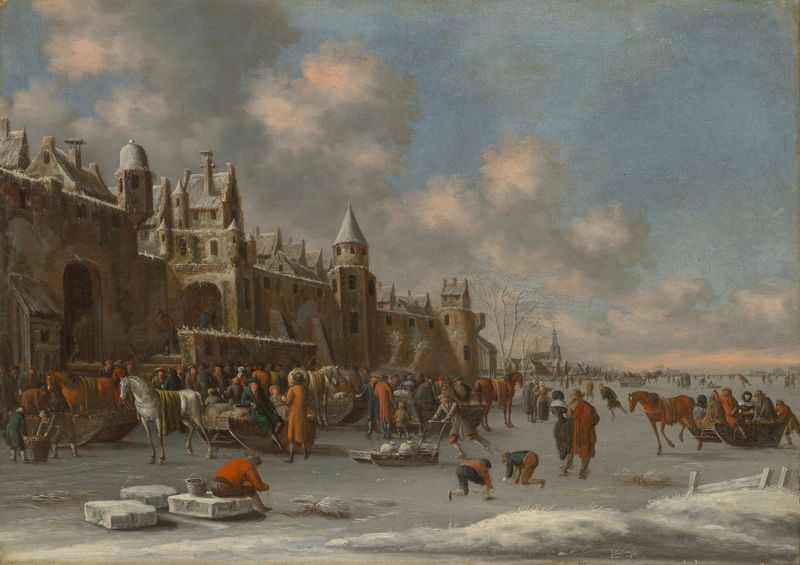
A winter landscape with skaters on a frozen lake near a city wall
Thomas Heeremans

Dorfstraße
Thomas Heeremans
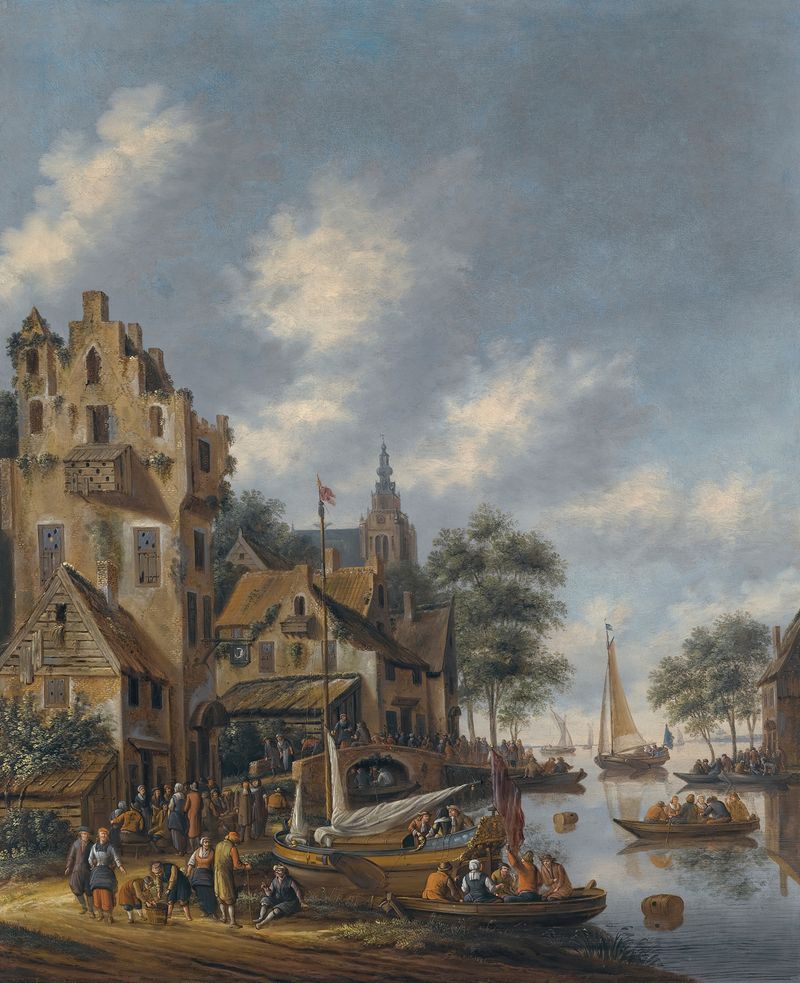
A Town On The Banks Of A River With Figures At The Waterside
Thomas Heeremans





