
Dorfstraße nach dem Regen — History & Facts
Can beauty exist without sorrow? In Dorfstraße nach dem Regen, a quiet path emerges, soaked in vibrant hues that whisper of life after a storm. Look to the center of the canvas where the cobbled street glistens beneath a soft, diffused light. The wet stones reflect a kaleidoscope of colors, drawing the eye to the gentle interplay between the darkened pavement and the lush greens of the surrounding foliage. Notice how the artist employs a delicate balance of impressionistic brush strokes to evoke not just a scene, but a palpable atmosphere, rich with tranquility and renewal. Yet, beneath this serene surface lies a complex dialogue of emotions.
The glistening stones symbolize resilience, while the dampness evokes a sense of melancholy, reminding us of what has passed. The solitary figures, subtly positioned along the street's edges, suggest a story of contemplation; they seem to ponder the fleeting nature of beauty and the inevitable sorrows that sunset brings. The soft interplay of light and shadow amplifies this tension, creating a haunting allure that captures both peace and yearning. Eugen Jettel painted this work around 1896, during a period of burgeoning artistic exploration in Vienna.
At this time, he was part of a movement that sought to capture the essence of nature through color and light. The world was witnessing a shift towards modernity, and Jettel’s portrayal of everyday scenes reflected his deep appreciation for the transient beauty of life, all while embracing the intricacies of human emotion amidst a changing landscape.
More Artworks by Eugen Jettel
Browse all →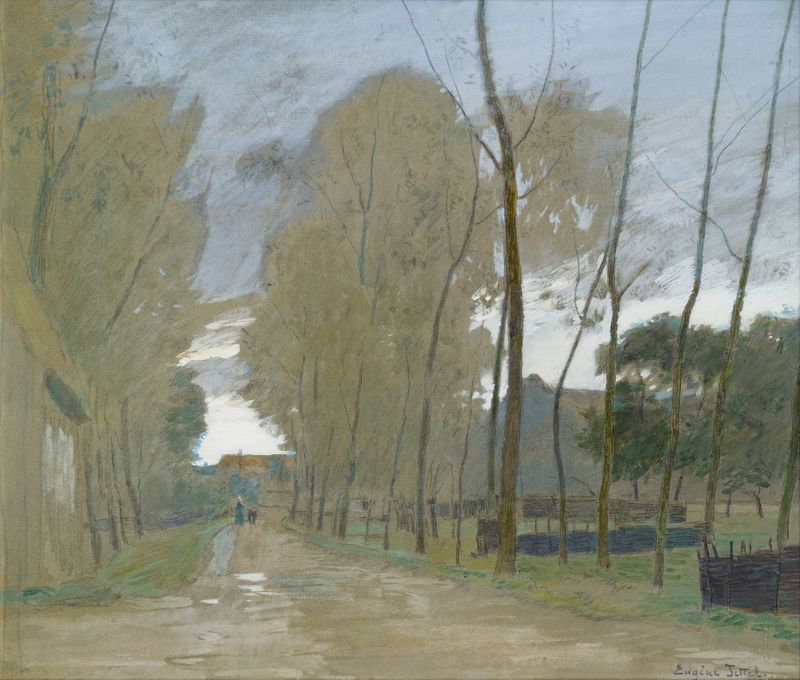
Motiv aus der Bretagne
Eugen Jettel
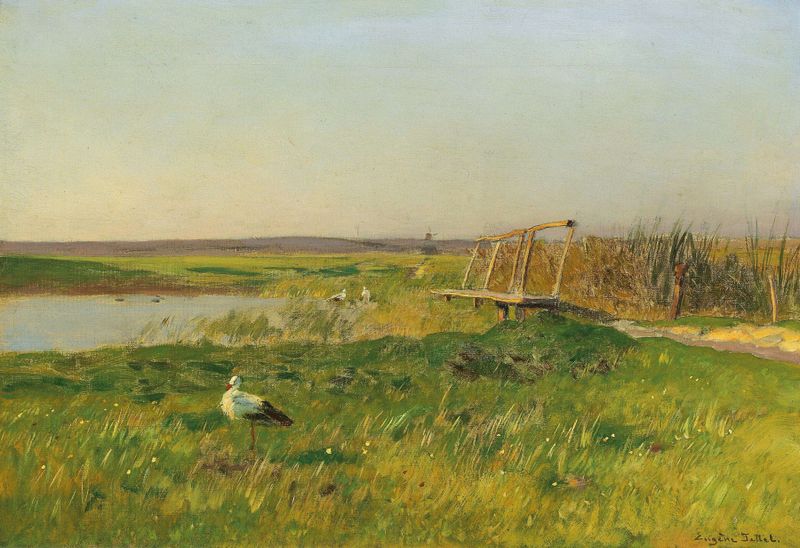
Frühlingslandschaft mit Störchen an einem Weiher
Eugen Jettel

Rinder auf Sommerwiese
Eugen Jettel
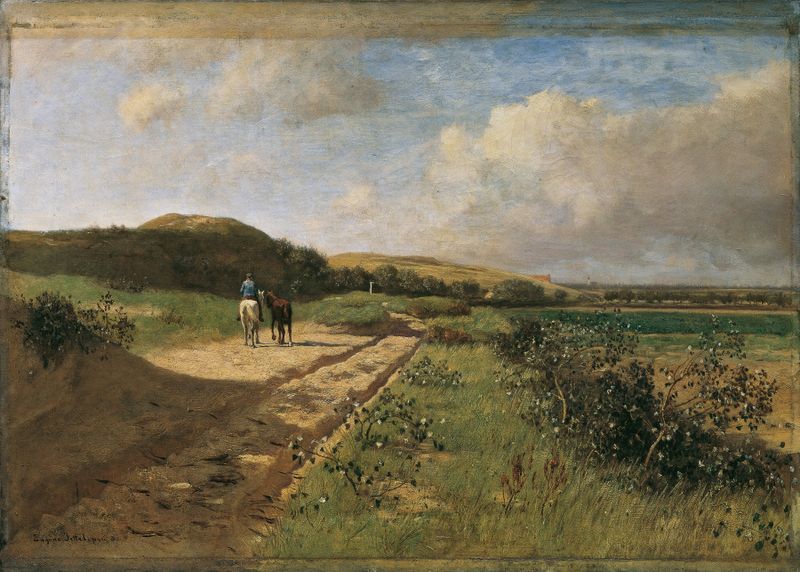
Dünen bei Katwijk
Eugen Jettel
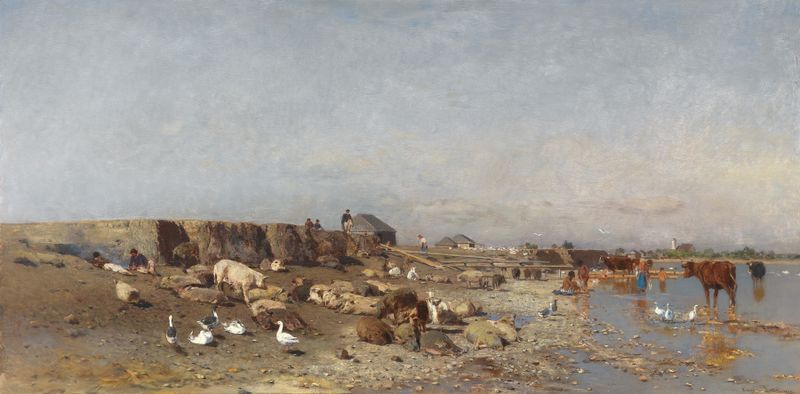
Motiv aus Szered an der Waag
Eugen Jettel
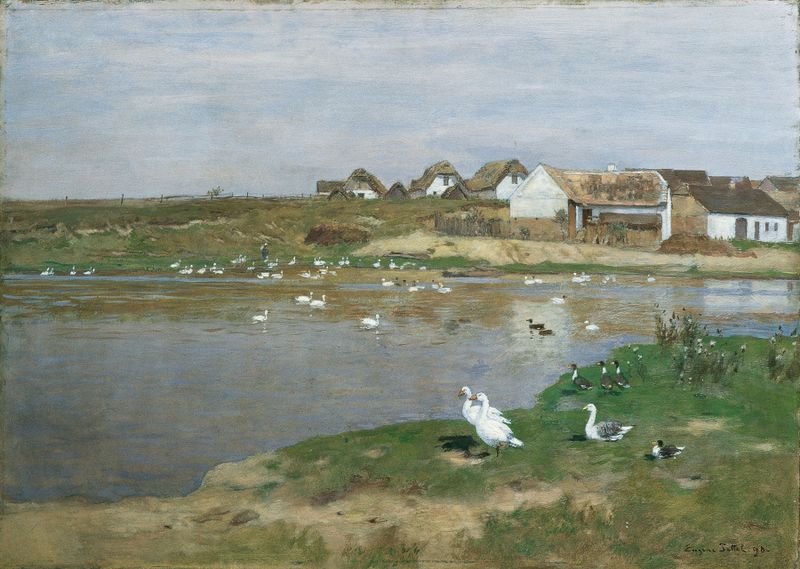
Der Gänseteich in Kotting-Neusiedl
Eugen Jettel

Flusslandschaft Mit Boot
Eugen Jettel

Flusslandschaft mit Kühen
Eugen Jettel

Dorfpartie Strohhütten aus Staatz
Eugen Jettel

Abendlandschaft
Eugen Jettel





