Dover — History & Facts
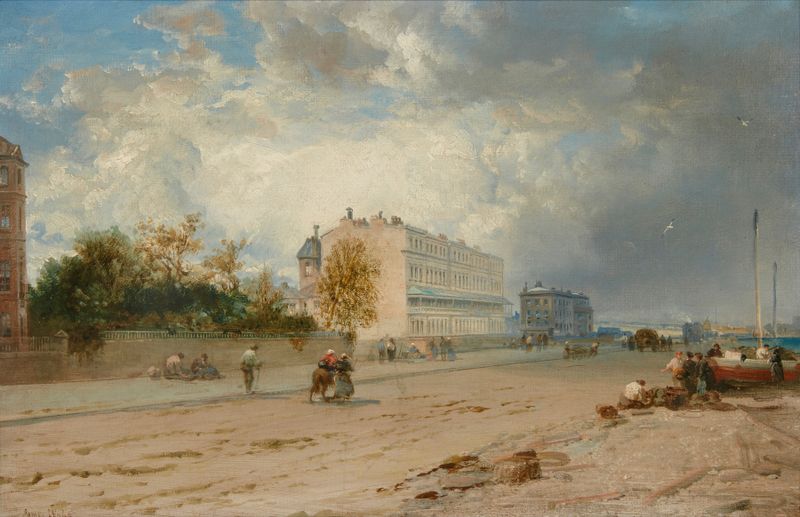
In the stillness of Dover, James Webb captures the haunting serenity that belies the tumultuous emotions beneath its surface. Look to the left at the verdant cliffs, their rugged edges softened by the gentle embrace of twilight. The cool blues and greens meld seamlessly, while the sky glows with hints of amber and lavender, creating a contrast that invites contemplation. Webb's meticulous brushstrokes and the delicate interplay of light and shadow guide the viewer’s eye across the canvas, evoking both the grandeur and fragility of nature. As you delve deeper, notice the solitary ship navigating the horizon, a testament to human endurance against nature's vastness.
The serene waters reflect the sky's warm colors, evoking a sense of calm amidst the impending storm. This duality—beauty intertwined with solitude—whispers of the transient nature of life, invoking both hope and longing. The silence in the scene speaks volumes, hinting at the hidden stories of those who have stared into the depths of the sea. James Webb painted Dover in 1867 during a time when the Romantic movement was waning, giving way to a new era in art.
Living in England's coastal region, Webb was deeply influenced by the natural landscape, and he sought to portray both its beauty and its emotional resonance. This work reflects not only his personal exploration of nature but also the broader artistic shift towards realism and emotional depth prevalent in 19th-century art.