Driving Cattle in Småland — History & Facts
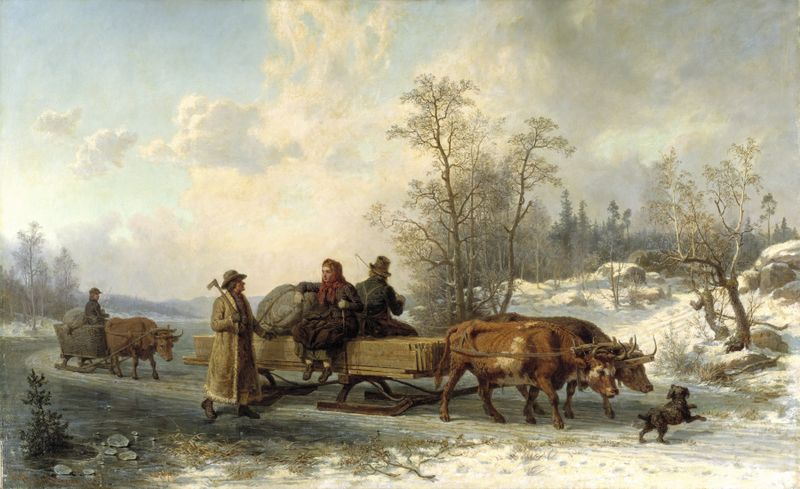
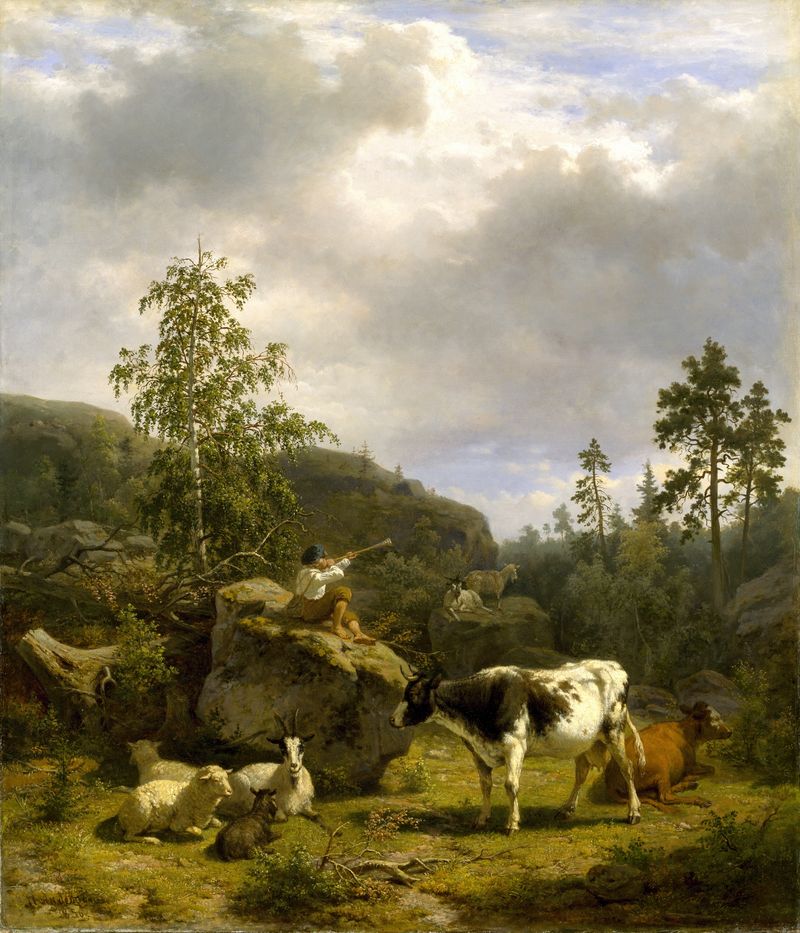
Is this a mirror — or a memory? In Nils Andersson’s Driving Cattle in Småland, the fleeting nature of a moment reveals itself through layers of color and emotion. The delicate balance of fragility and strength resonates in the pastoral scene, offering a glimpse into the harmonious relationship between man and nature. Look to the horizon where the soft, muted greens and browns blend seamlessly, guiding your gaze toward the distant, rolling hills. Focus on the figures in the foreground, where a farmer, with weathered hands, gently guides his cattle along the path.
The brushstrokes are loose yet purposeful, capturing the movement of both the animals and the landscape. Notice how the light dances across the scene, illuminating the warm hues of dusk, evoking a sense of both peace and responsibility in the laborious task. Beneath the surface, the painting speaks to the tension of existence — the fragility of rural life juxtaposed with the enduring cycle of nature. The farmer’s posture, slightly hunched but resolute, reflects the weight of responsibility, while the cattle embody both vulnerability and reliance on their caretaker.
This intricate interplay between human and animal echoes a deeper connection to the land, hinting at the transient beauty of life itself. In 1863, Andersson painted this work during a period of social change in Sweden, where the realities of agrarian life were facing the pressures of modernization. As the art world shifted towards realism, he embraced this approach, capturing the authenticity of rural experiences. His studies in the natural landscape paved the way for a nuanced portrayal of everyday life, forever immortalizing the relationship between people and the land they inhabit.