Forest Landscape with a Shepherd Boy and Cattle — History & Facts
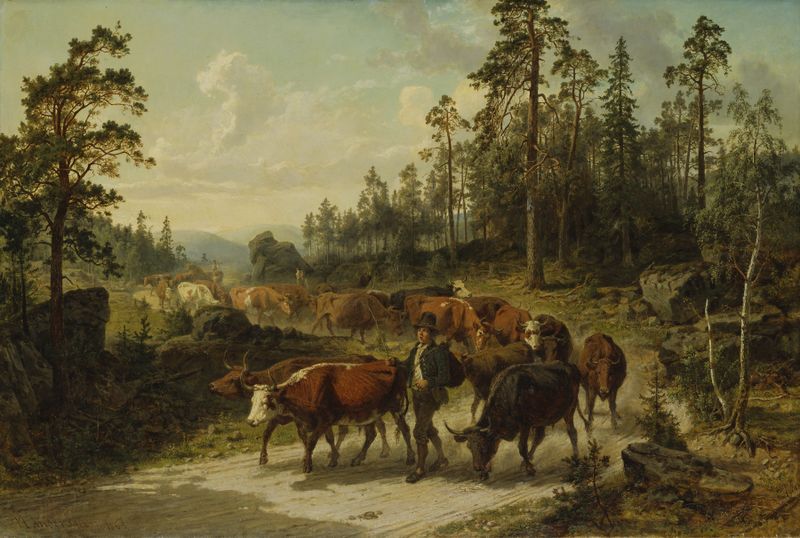
Can paint confess what words never could? In the delicate strokes of a landscape, divinity whispers through the leaves and breathes life into the shepherd boy and his gentle herd. Look to the left where the lush green foliage unfurls in shades of emerald and jade, cradling the scene with its welcoming embrace. The boy, clad in humble attire, stands at the forefront, his gaze directed towards the viewer as if inviting them into his world. Notice how the sunlight filters through the canopy, casting a soft, dappled glow on the grazing cattle, creating a mesmerizing dance of light and shadow that brings forth the tranquility of nature. At the heart of this composition lies a juxtaposition between the simplicity of rural life and the profound serenity of the natural world.
The boy's slight smile suggests an awareness of the sacredness in his surroundings, while the cattle, grounded in their quietude, embody a peaceful existence untouched by time. This harmonious coexistence evokes themes of innocence and the divine presence embedded within the everyday, urging viewers to reflect on their own connections to nature and faith. Nils Andersson painted this work in 1856 during a time when the Romantic movement was flourishing, fostering a renewed appreciation for nature and rural life. Living in Sweden, he sought to capture the beauty of his homeland while grappling with the societal changes brought on by industrialization.
This painting not only reflects a moment of personal introspection but also resonates with a broader dialogue in the art world, where the sublime was often celebrated and explored.