
Dürnstein On The Danube — History & Facts
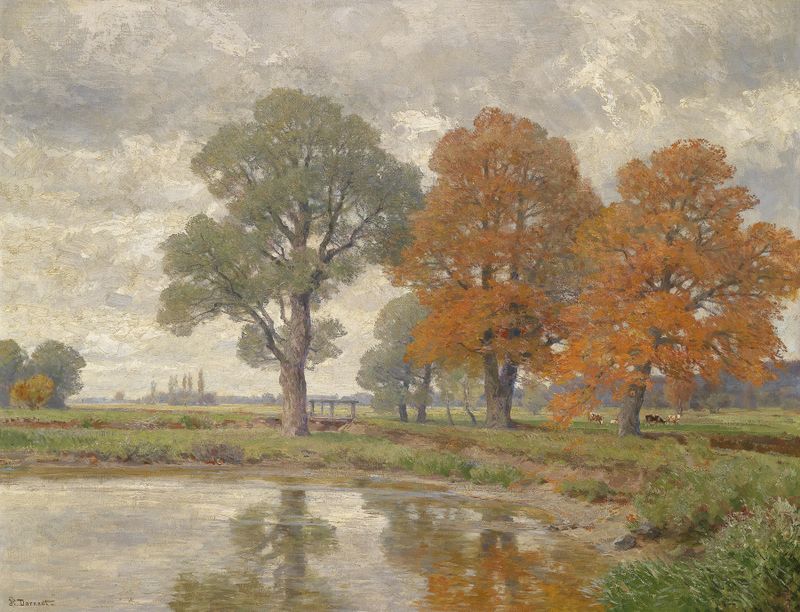
This reflection resonates deeply within the luminous colors of a bygone summer landscape, inviting contemplation of the transformative power of art. Look to the center of the canvas, where the warm golden hues of the sunlit Danube shimmer with a vibrant life. Notice how the deep blues and greens of the surrounding hills cradle the water, creating a harmonious balance. The soft, loose brushwork evokes a sense of movement, as if the viewer can almost feel the gentle breeze rustling through the leaves and the cool river flowing beneath the vibrant sky. Yet, amidst this idyllic portrayal, there are whispers of emotional tension.
The contrasting colors — the fierce yellows against serene blues — suggest a duality, a play between tranquility and the chaos of natural beauty. The distant castle perched on the cliff evokes the passage of time, hinting at history and permanence, while the dynamic foreground reflects the ephemeral nature of life. This duality creates a poignant dialogue between the vibrant present and the silent echoes of the past. In 1876, Hugo Darnaut created Dürnstein On The Danube during a pivotal period in European art, marked by the rise of Impressionism and the exploration of color and light.
Working in the vibrant artistic scene of Austria, he sought to encapsulate nature’s splendor, drawing upon his experiences along the Danube. His approach reflects a shift in perception, where the emphasis on emotional resonance in landscape art began to thrive, paralleling the evolving artistic movements around him.
More Artworks by Hugo Darnaut
Browse all →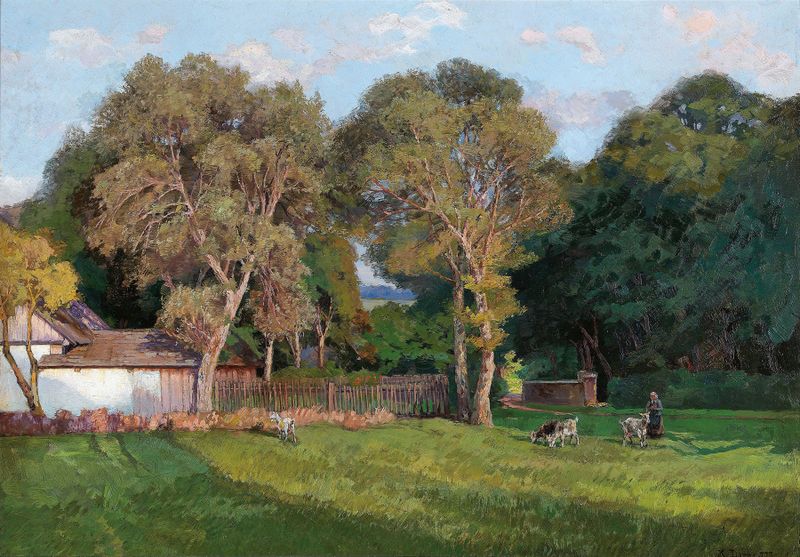
Aus dem Wienerwald
Hugo Darnaut
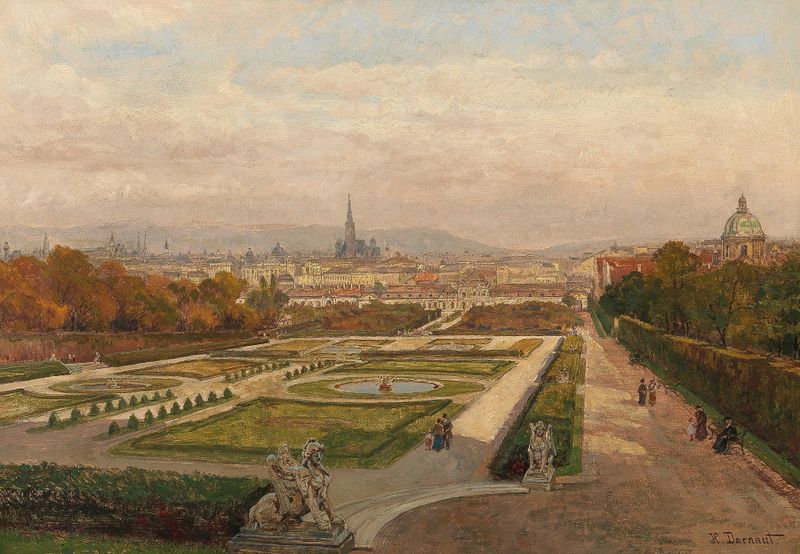
Blick vom Belvedere auf Wien
Hugo Darnaut

Motiv aus Plankenberg
Hugo Darnaut

In einem Wiener Garten (II., Praterstraße 60)
Hugo Darnaut

A Scene at Dusk in Late Autumn
Hugo Darnaut
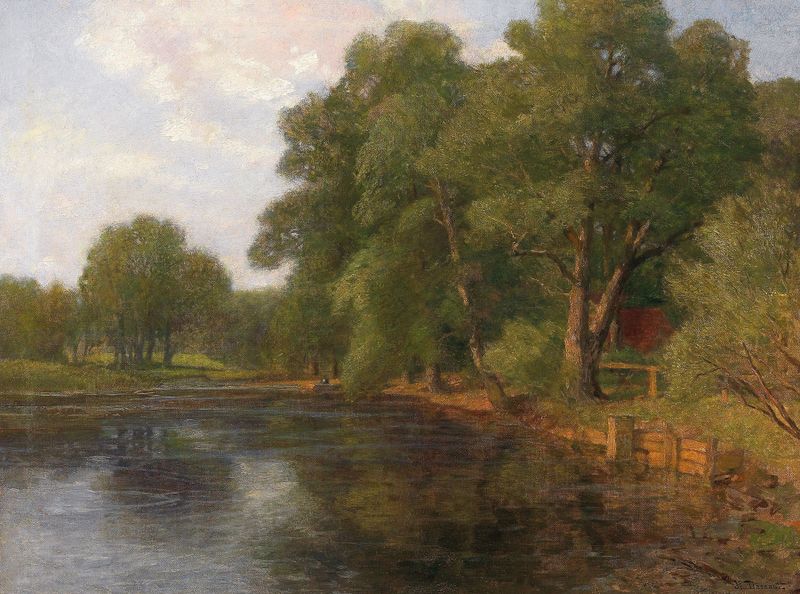
Motiv bei Plankenberg
Hugo Darnaut

Die Ruine Starhemberg im Piestingtal
Hugo Darnaut
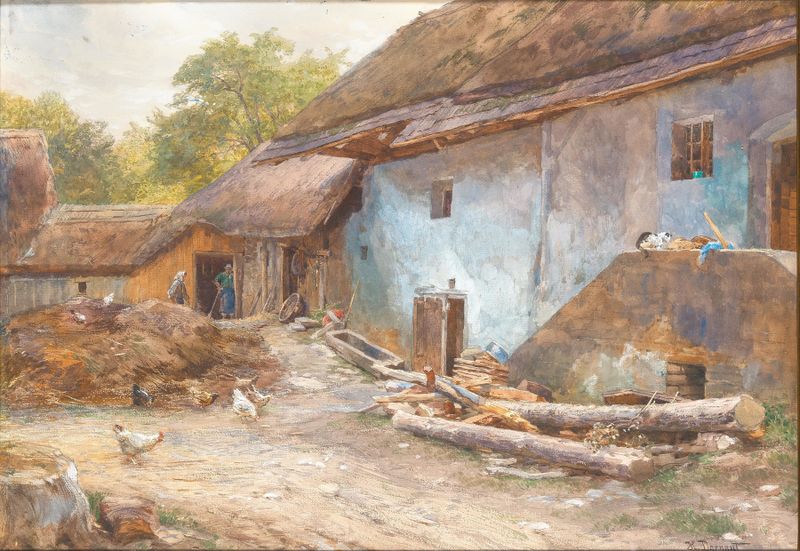
Niederösterreichischer Bauernhof
Hugo Darnaut

River Landscape with Small Herd of Cows and a Village in the background
Hugo Darnaut
Spätherbsttag
Hugo Darnaut





