Dusk — History & Facts
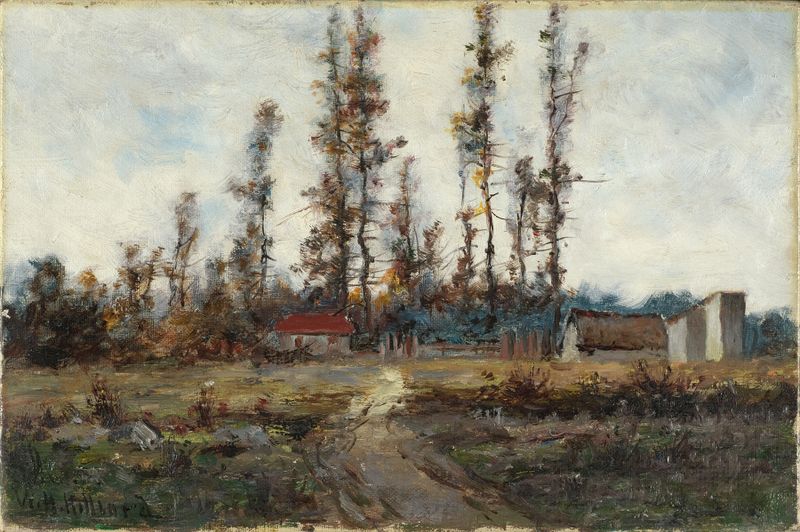
Could a single brushstroke hold eternity? In Dusk, the essence of destiny unfolds through a delicate interplay of shadow and light, suggesting that every fleeting moment is laden with possibility. Look to the left, where deep indigo skies blend seamlessly into the subdued warmth of approaching twilight. Hilliard's use of layered brushstrokes creates a luminescent horizon, inviting the viewer to breathe in the serene anticipation of nightfall. The composition balances the vibrant hues with gentle earth tones that ground the scene, evoking a sense of quiet reflection. As you explore the canvas, notice the solitary figure standing at the water’s edge, gazing into the distance.
This figure embodies both longing and hope, captured in the stillness of the moment; their silhouette contrasts dramatically against the vivid colors of the settling sun. The tranquil water reflects the kaleidoscope of dusk, suggesting that every transition carries an unspoken narrative—a reminder of the beauty in endings and beginnings. William Henry Hilliard created Dusk during a period of introspection, likely in the late 19th century, as he navigated the evolving art scene in America, characterized by the rise of Impressionism. This was a time of personal exploration for many artists, as they sought to capture nature's subtleties and human emotions.
Hilliard’s brushwork not only reflects his environment but also his quest to encapsulate those ephemeral moments that define our existence.