New England Landscape — History & Facts
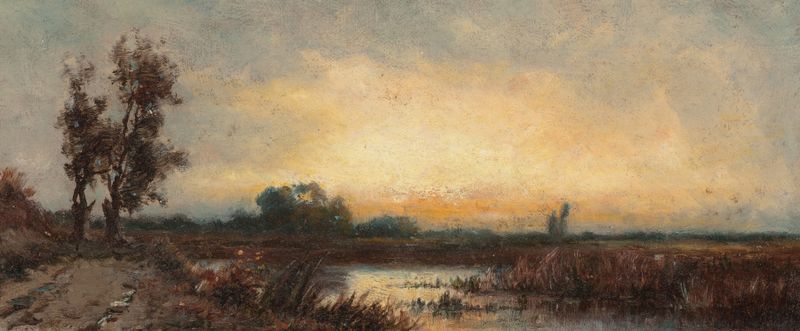
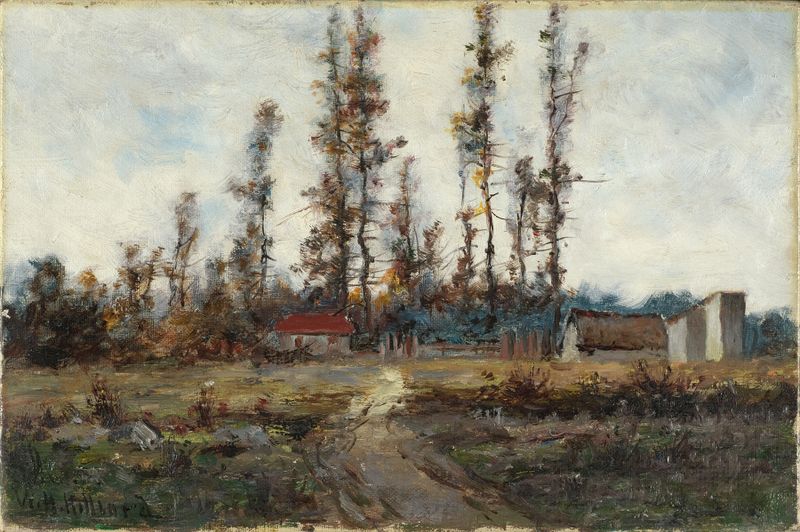
It holds the truth about beauty, eternally poised between reality and imagination, inviting us to step into its embrace. Look to the center of this tranquil composition, where gentle hills roll like a comforting wave. The soft greens and muted browns create a serene landscape, while dappled sunlight filters through a delicate canopy of trees, dancing across the ground. Notice how the horizon stretches wide, inviting the eye toward the tranquil sky, painted in subtle blues and grays that evoke a sense of expansive freedom.
Each brushstroke feels deliberate yet spontaneous, capturing the fleeting moment of nature's beauty with a refreshing honesty. Delve deeper into the interplay of light and shadow, where quiet contrasts reveal a hidden dialogue. The vibrancy of the leaves, kissed by sunlight, stands in stark relief against the rich earth, suggesting the resilience of nature amidst change. There is a profound stillness here, yet the colors vibrate with life, hinting at the artist's reverence for the fleeting moments that define a landscape.
This quiet tension between motion and stillness urges the viewer to contemplate the transient nature of beauty itself. This work emerged during a time when William Henry Hilliard engaged with the evolving American landscape movement, likely painted in the late 19th century. Hilliard, inspired by the natural world around him, sought to distill the essence of New England’s varied terrain, finding beauty in its simplicity. His artistry reflects a growing appreciation for American landscapes, capturing not just the physical realm but also the emotional resonance they conjure in the viewer's heart.