
Early Spring—Bluebonnets and Mesquite — History & Facts
Where does light end, and longing begin? In Early Spring—Bluebonnets and Mesquite, the interplay of vibrant blooms and delicate shadows invites reflection on the fleeting nature of beauty and existence. Look to the center, where vivid bluebonnets burst forth in a riot of color against the muted browns of the mesquite trees. Their petals, illuminated by soft sunlight, create an ethereal glow that draws the eye, while the twisting branches of the trees frame this captivating spectacle. Onderdonk's brushwork, with its fluid strokes and careful layering, captures the essence of spring's awakening, imbuing the scene with a palpable sense of life and renewal. Yet, beneath this celebration of nature lies a profound tension.
The bluebonnets symbolize not just the beauty of the season, but also the transient quality of life—each bloom a reminder of its inevitable end. The juxtaposition of the vibrant flowers against the sturdy, gnarled mesquite hints at the duality of existence: beauty thrives amidst decay. Shadows dance at the edges, as if whispering secrets of time’s passage, urging viewers to contemplate their own moments of joy and loss. Julian Onderdonk painted this work in 1919, during a pivotal moment in his career as a prominent Texas landscape artist.
As he traveled the state, he sought to capture its unique flora and essence, reflecting both the region's beauty and his personal struggles with health and identity. In a post-war climate, where the world was grappling with change, his vivid depictions of the Texas landscape offered solace and a reminder of life's enduring cycles.
More Artworks by Julian Onderdonk
Browse all →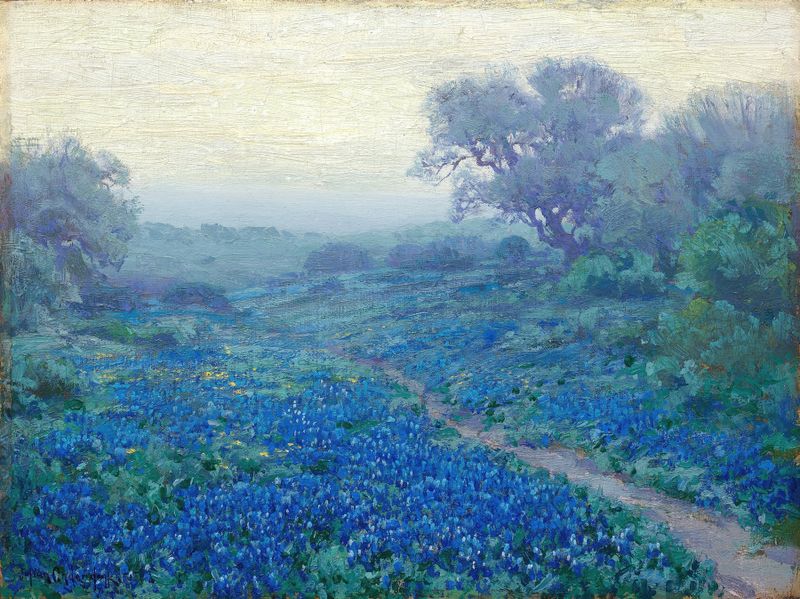
Bluebonnets at Sunrise
Julian Onderdonk

Road to the Hills
Julian Onderdonk
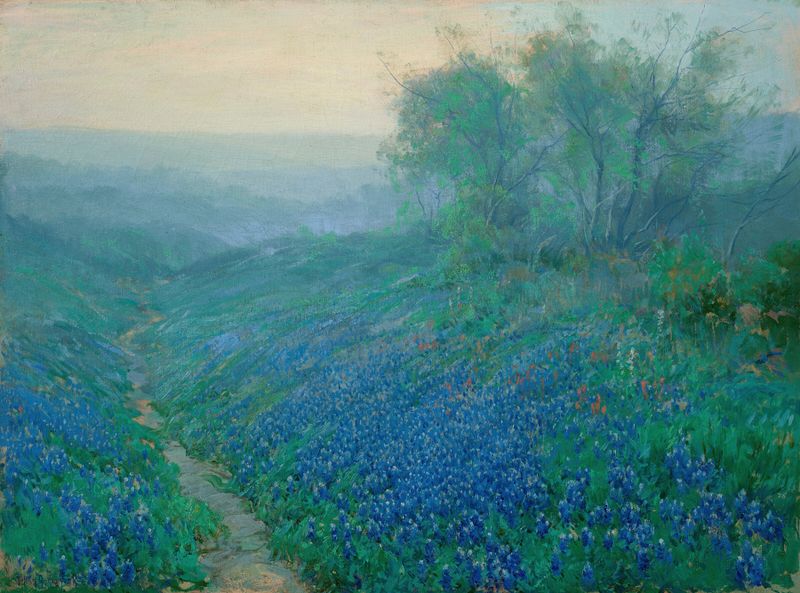
Bluebonnets at Dawn, North of San Antonio
Julian Onderdonk
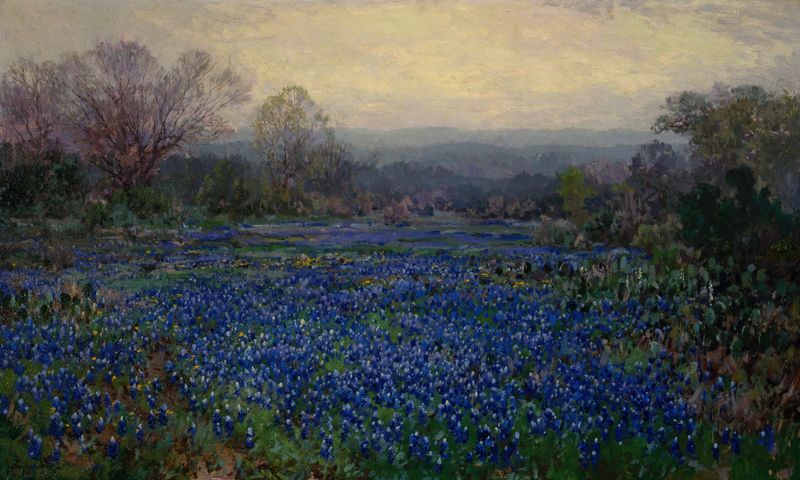
Untitled (Field of Bluebonnets)
Julian Onderdonk
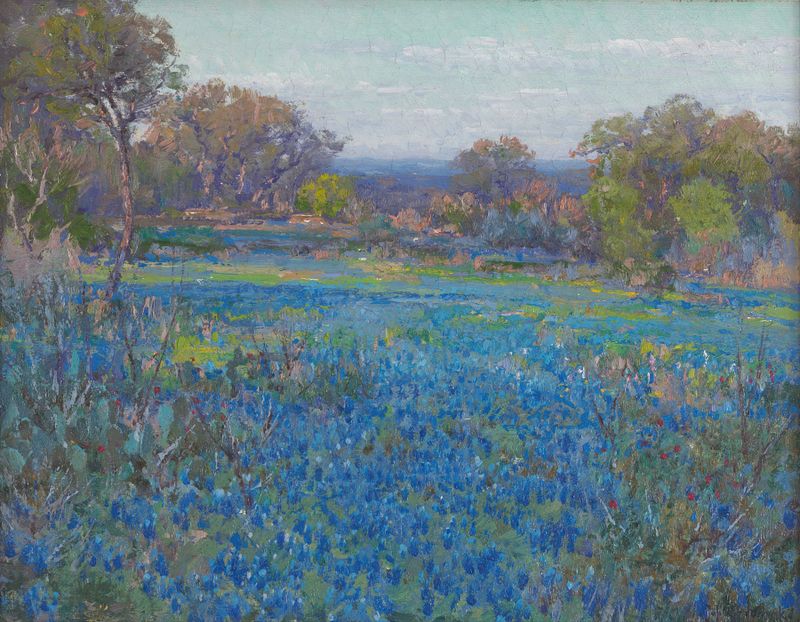
A field of Blue Bonnets, late afternoon sunlight
Julian Onderdonk
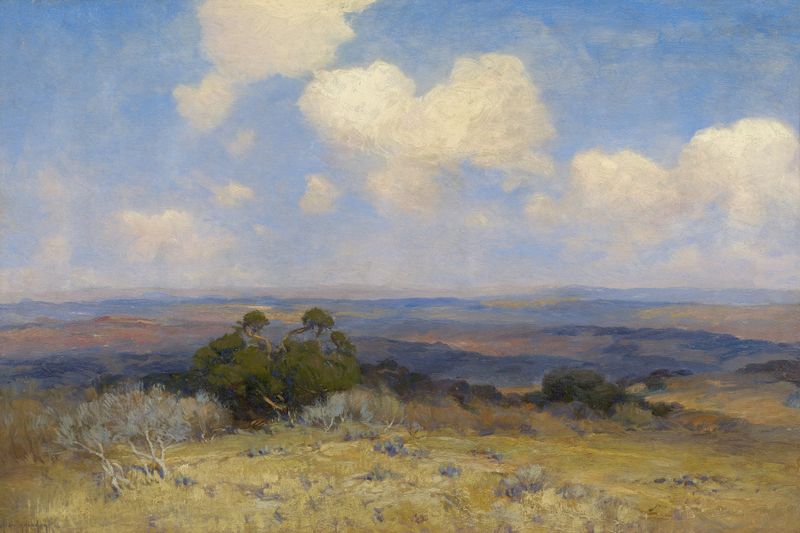
Sunlight and Shadow
Julian Onderdonk
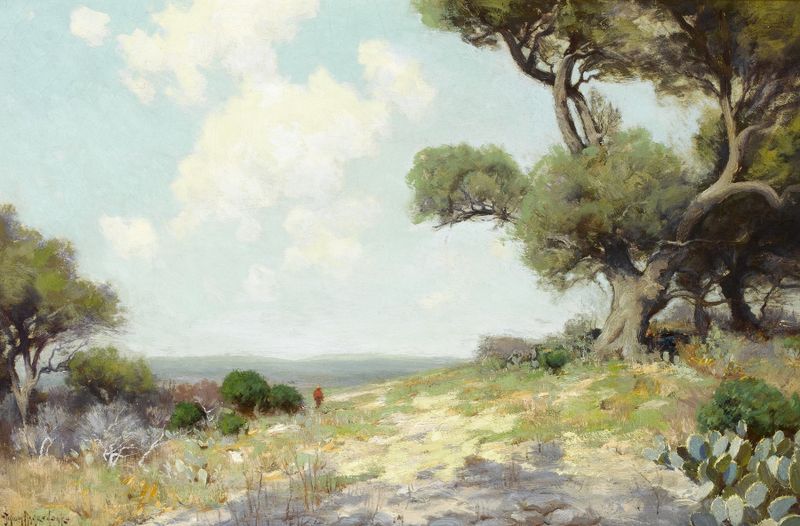
In the Hills — Southwest Texas
Julian Onderdonk
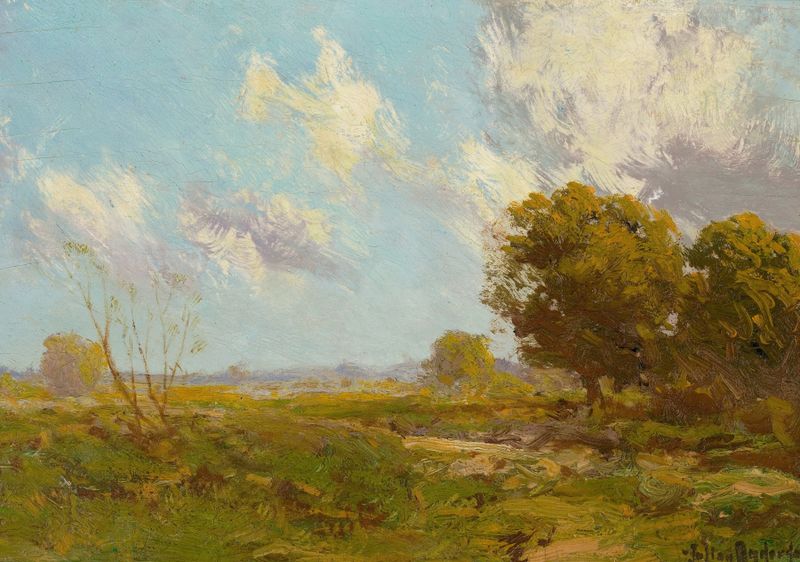
Late Afternoon
Julian Onderdonk
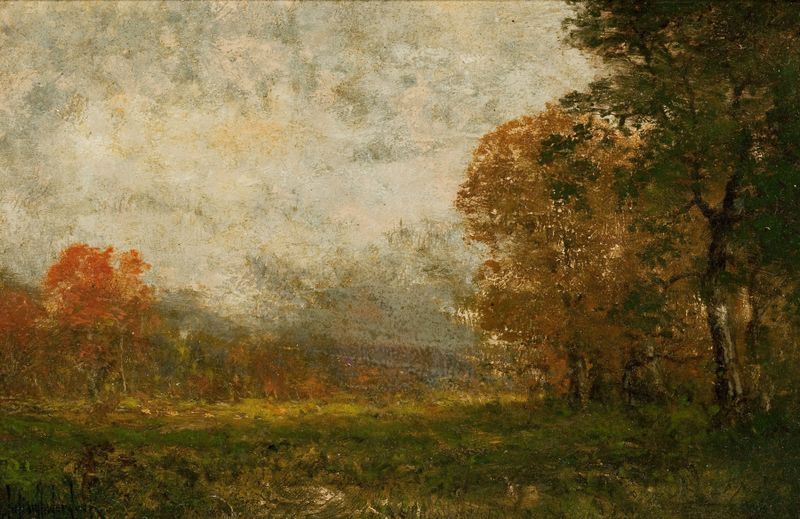
Autumn Landscape
Julian Onderdonk
Edge of the Woods
Julian Onderdonk





