
Easter Procession In Mateos Gago Street, Seville — History & Facts
A sea of vibrant robes spills onto the cobbled streets, each figure cloaked in the deep hues of tradition. A silence envelops the crowd, pierced only by the distant echo of drums as the procession flows like water through the narrow alleys of Seville. Light dances on the gilded surfaces of intricate religious statues, illuminating faces filled with a mix of reverence and ecstasy. Look to the left, where the ghostly figure of a penitent stands, his hood casting a shadow over a contemplative expression.
The artist captures the tension between the bright, flickering lights and the muted tones of the participants, inviting viewers to explore the contrasts of celebration and solemnity. Notice how the movement of the crowd converges toward the central altar, a focal point that draws the eye like a magnet, creating a dynamic composition that pulses with energy. Beneath the surface, the painting speaks of a community intertwined with faith and cultural identity. Each gesture and facial expression tells a story of devotion, yet the artist juxtaposes this fervor with the quiet intensity of the penitent.
The gleaming statues reflect a spiritual ecstasy, while the onlookers' expressions hint at an emotional conflict—between tradition and individuality, joy and sacrifice. Manuel García y Rodríguez created this piece in 1896 while living in Seville, a city steeped in religious history and vibrant cultural traditions. At this time, Spain was undergoing considerable social and political transformation, and the fervent observance of Holy Week provided a canvas for the artist's exploration of collective emotion. His work acted as both a reflection of the local culture and a contribution to the evolving landscape of Spanish art, capturing a moment that resonates across generations.
More Artworks by Manuel García y Rodríguez
Browse all →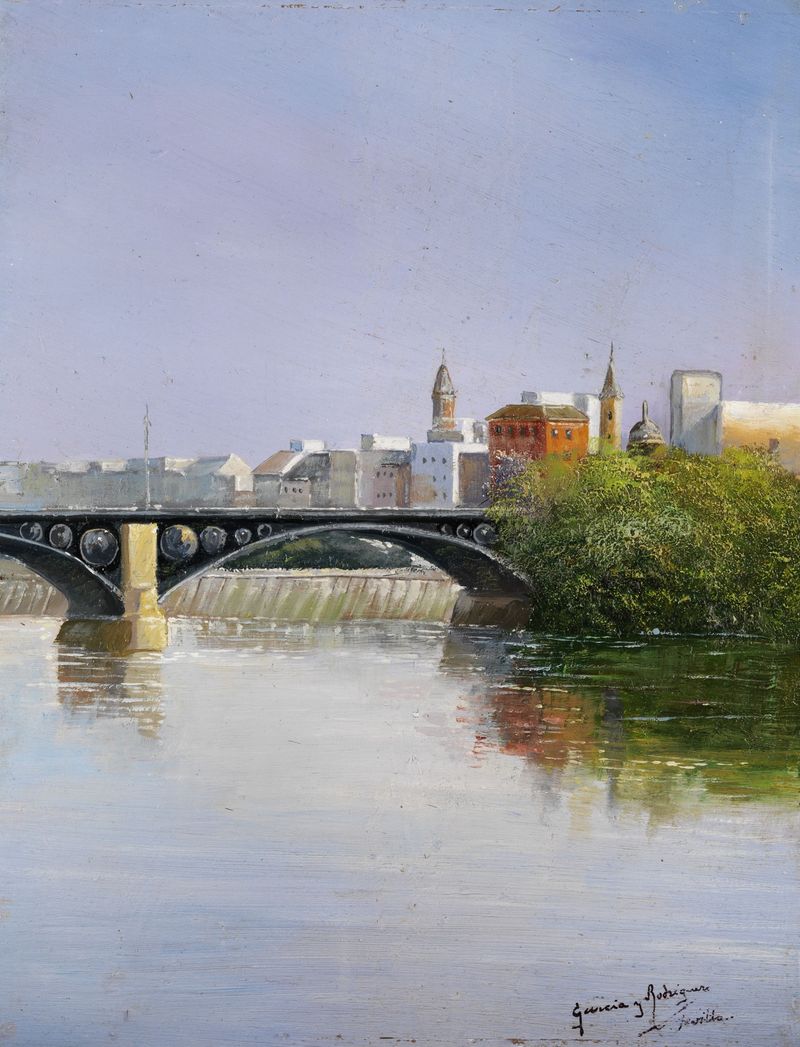
Bridge in Sevilla
Manuel García y Rodríguez
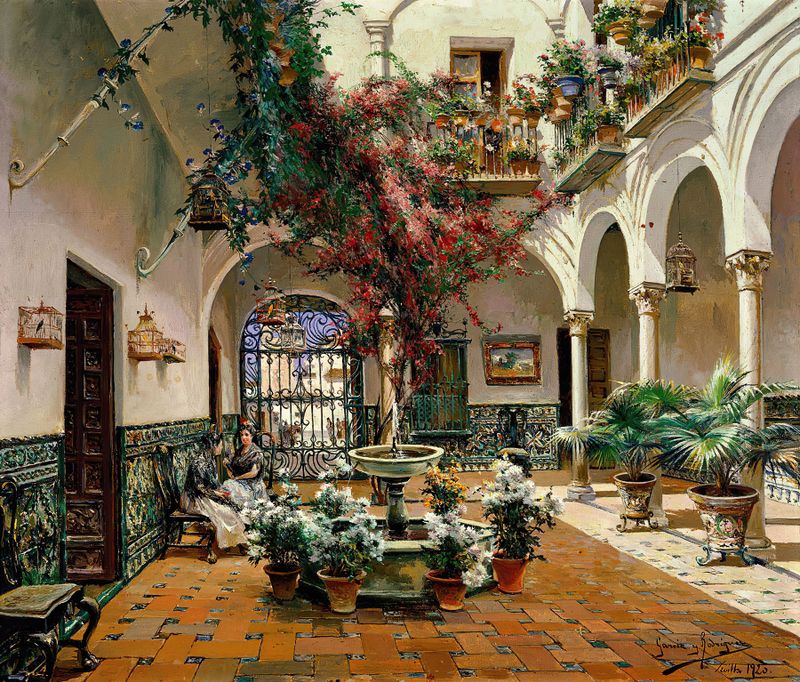
Interior Courtyard, Seville
Manuel García y Rodríguez

First Atrium of Santa Paula Convent, Seville
Manuel García y Rodríguez

Garden In Seville
Manuel García y Rodríguez
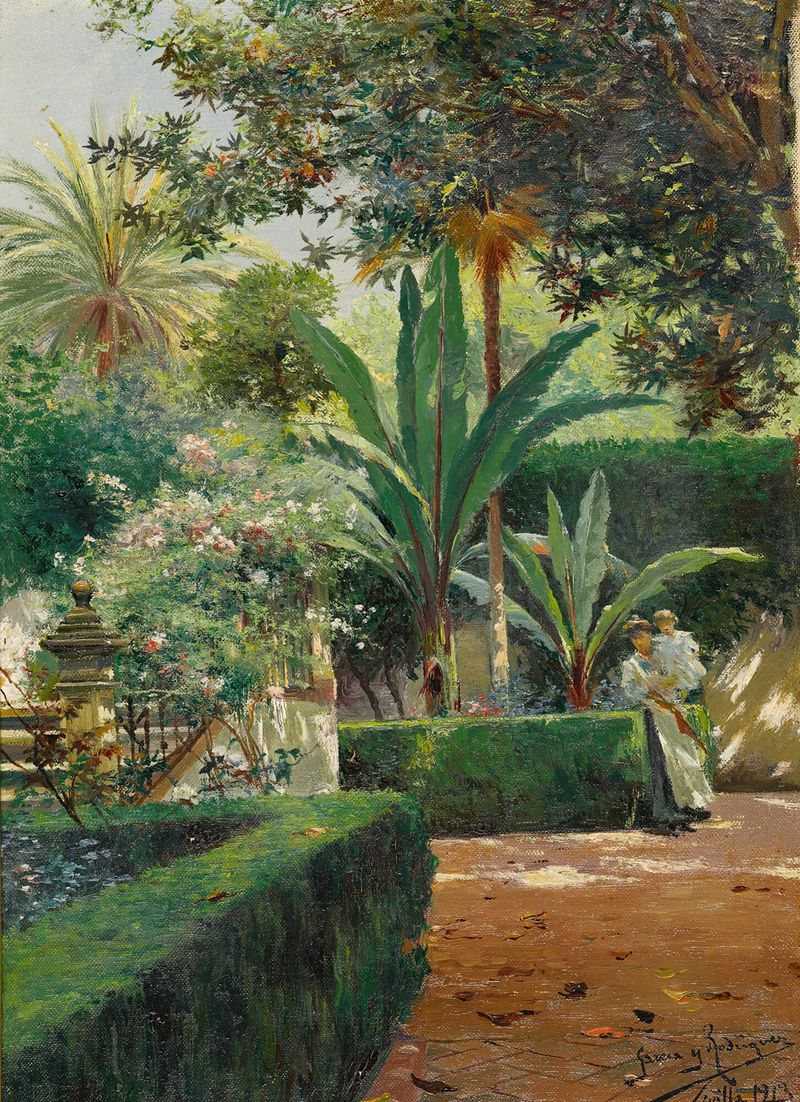
A Garden In Seville
Manuel García y Rodríguez

A Sevillian Alley
Manuel García y Rodríguez

Dappled Sunlight In A Garden
Manuel García y Rodríguez

Ronda
Manuel García y Rodríguez

Street scene in Granada
Manuel García y Rodríguez

The Alcazar Gardens, Seville
Manuel García y Rodríguez
More Religious Art
Browse all →
The Return of the Prodigal Son
Rembrandt van Rijn

The Garden of Earthly Delights
El Bosco

Count Orgaz’ funeral
El Greco

The Hundred Guilder Print: the central piece with Christ preaching, the plate arched
Rembrandt van Rijn

The Descent from the Cross
Rogier van der Weyden

The return of the prodigal son
Rembrandt van Rijn