
Ronda — History & Facts
Did the painter know this moment would outlive them? Ronda captures a fleeting instant that echoes with the tension of violence, a haunting reminder of human fragility. Focus on the center where two figures dance in a whirlwind of motion, their bodies entwined in a passionate embrace that belies the underlying strife. The earth-toned palette radiates warmth yet hints at an unsettling intensity, while the strokes of the brush create a sense of urgency, propelling the viewer into the heart of the scene. Notice how the light casts elongated shadows, merging the dancers with the ground, suggesting an inescapable connection to both joy and turmoil. The tension between movement and stillness reveals the psychological landscape of this piece.
The dancers’ faces are caught in varying expressions—bliss and conflict intermixed—mirroring the duality of life. Subtle details, like the way the fabric of their costumes clings to their forms, evoke the weight of expectation and societal struggles. This juxtaposition speaks to the broader cultural discourse of the time, where celebration often coexisted with unrest. Created in 1924, the artist was residing in Spain, a country on the cusp of political upheaval that would lead to the Spanish Civil War.
In this charged atmosphere, Ronda reflects both personal and collective experiences, encapsulating a moment in time when art served as a powerful medium for commentary. It is a work that not only holds visual allure but also resonates with the deep undercurrents of its era, forever marking the canvas of history.
More Artworks by Manuel García y Rodríguez
Browse all →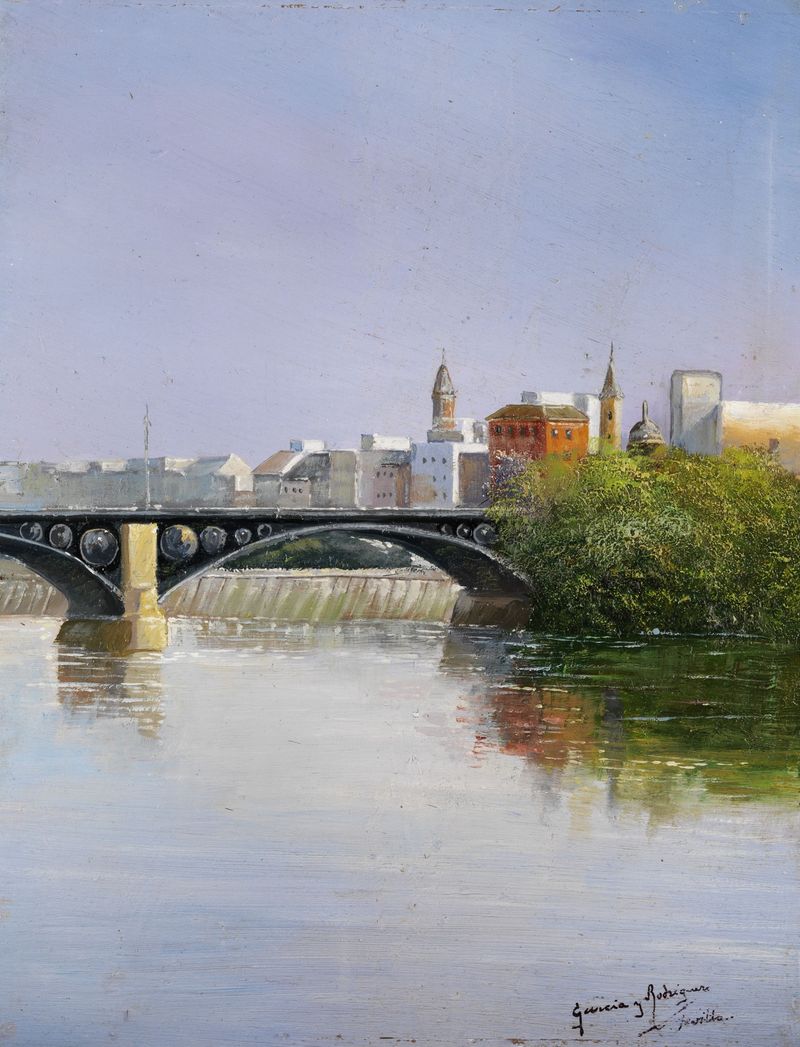
Bridge in Sevilla
Manuel García y Rodríguez
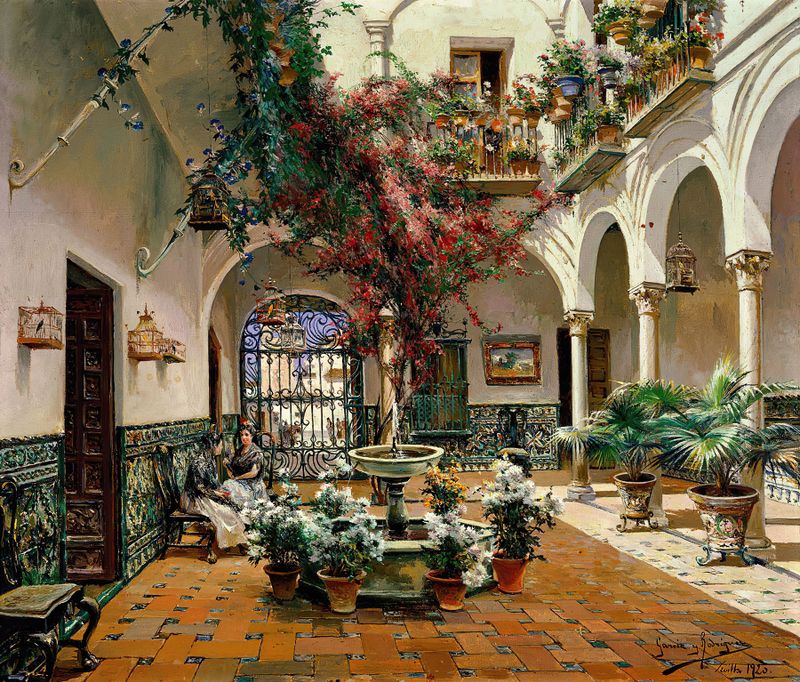
Interior Courtyard, Seville
Manuel García y Rodríguez
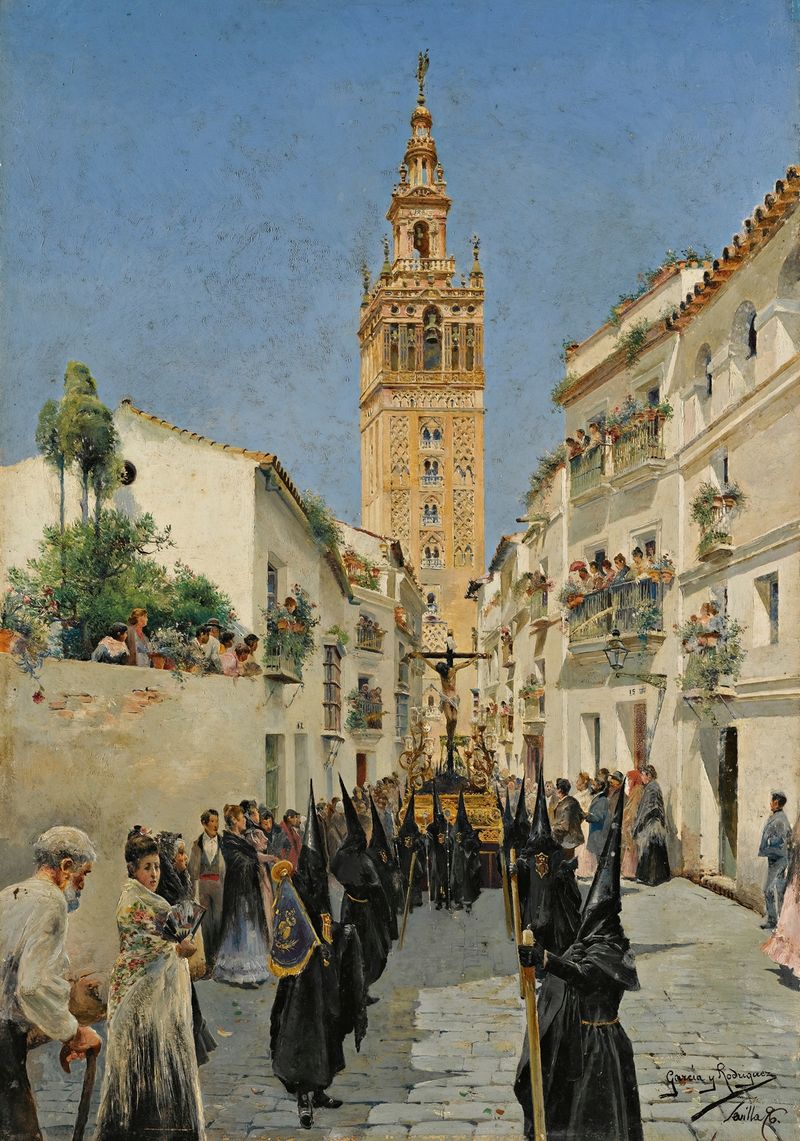
Easter Procession In Mateos Gago Street, Seville
Manuel García y Rodríguez

First Atrium of Santa Paula Convent, Seville
Manuel García y Rodríguez

Garden In Seville
Manuel García y Rodríguez
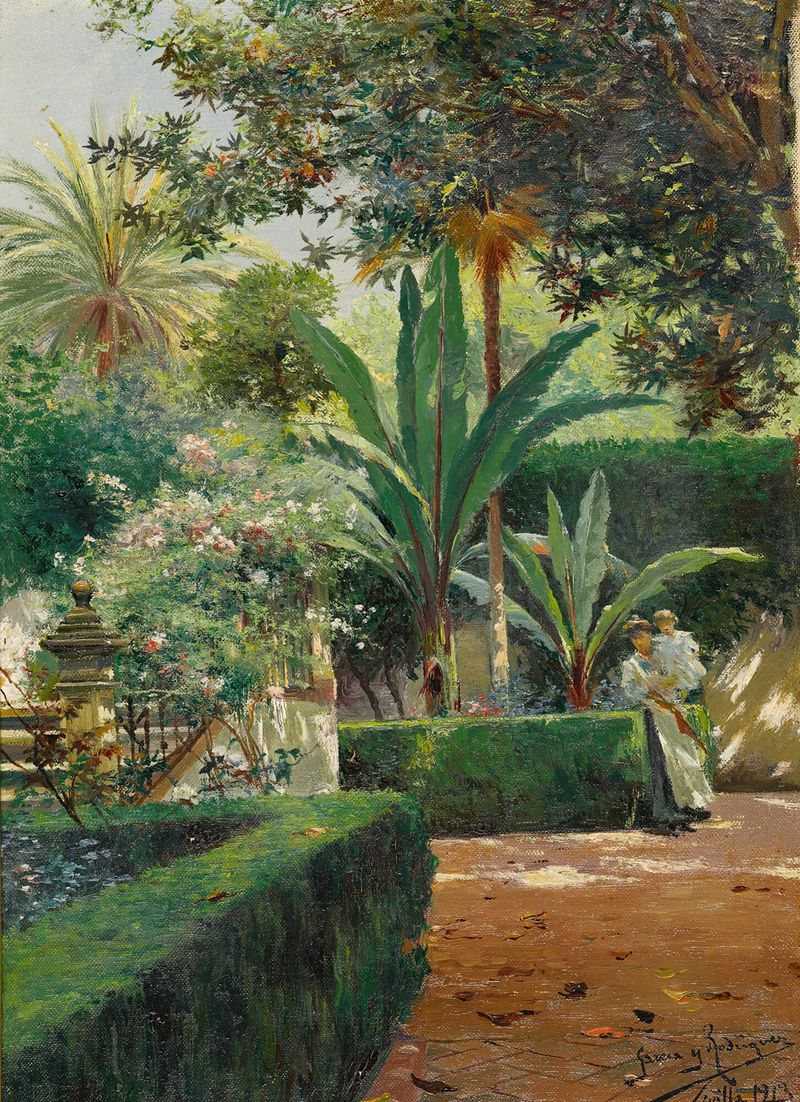
A Garden In Seville
Manuel García y Rodríguez

A Sevillian Alley
Manuel García y Rodríguez

Dappled Sunlight In A Garden
Manuel García y Rodríguez

Street scene in Granada
Manuel García y Rodríguez

The Alcazar Gardens, Seville
Manuel García y Rodríguez





