
The Alcazar Gardens, Seville — History & Facts
In the early morning light, the Alcazar Gardens bloom with life, vibrant flowers spilling their colors against the emerald greenery. A gentle breeze stirs the leaves, capturing the laughter of children playing beneath the shade of ancient trees. Here, among the whispers of nature, time feels suspended, as if truth itself has taken root in this luscious retreat. Look to the left at the vibrant hues of blooming azaleas, their petals kissed by sunlight, radiating warmth and joy.
Notice how the winding pathways invite the viewer's gaze deeper into the garden, leading to a delicate fountain that serves as the heart of this floral sanctuary. The artist employs a palette of soft greens and bold pinks, creating a harmonious balance that evokes a sense of tranquility and festive exuberance simultaneously. Yet, beneath this picturesque surface lies a deeper story of contrasts. The interplay of light and shadow creates an emotional tension, hinting at the fleeting nature of beauty and time.
Children laugh, yet their ephemeral joy echoes a truth that all moments, however sweet, are transient—impulsively captured in the strokes of the brush. In this serene setting, the exuberance of life is juxtaposed with the inevitable passage of time, a duality that resonates with viewers long after they leave. Manuel García y Rodríguez painted The Alcazar Gardens, Seville during the early 1920s, a period marked by a growing interest in representing the subtleties of everyday life. Living in Spain amid cultural and political shifts, he sought to reflect the beauty of his surroundings, creating a connection to the collective Spanish identity.
This painting stands as a testament to that era, inviting us to appreciate the delicate balance between nature, joy, and the truths woven through time.
More Artworks by Manuel García y Rodríguez
Browse all →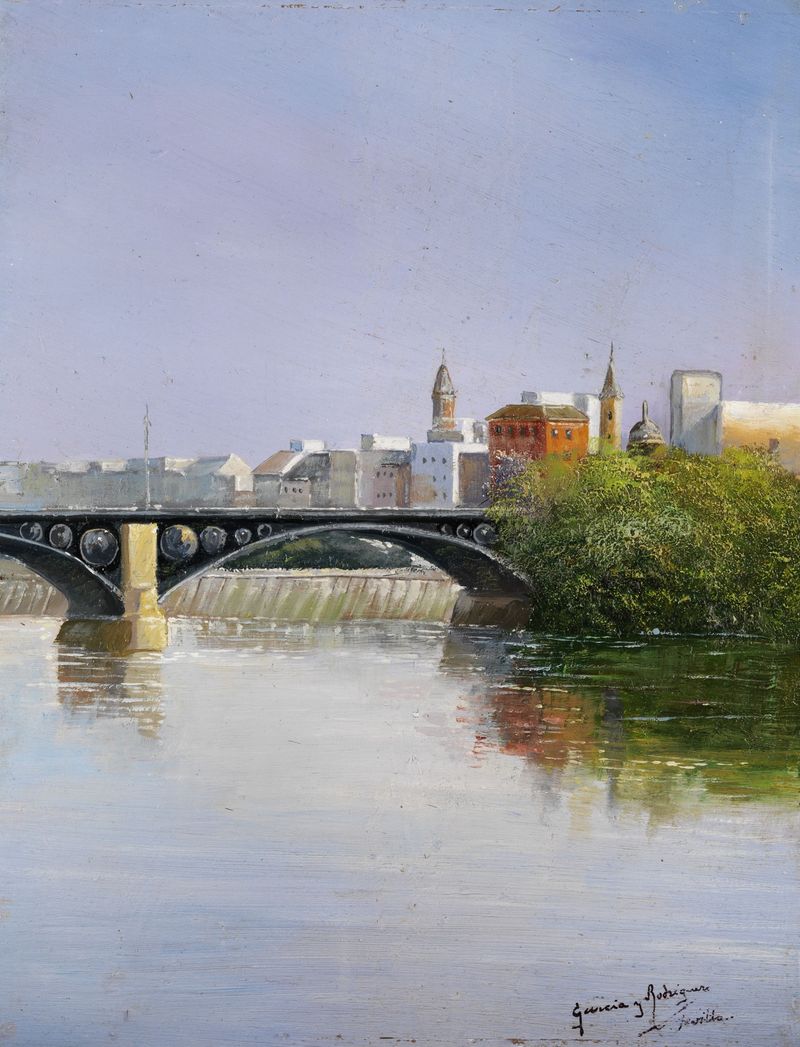
Bridge in Sevilla
Manuel García y Rodríguez
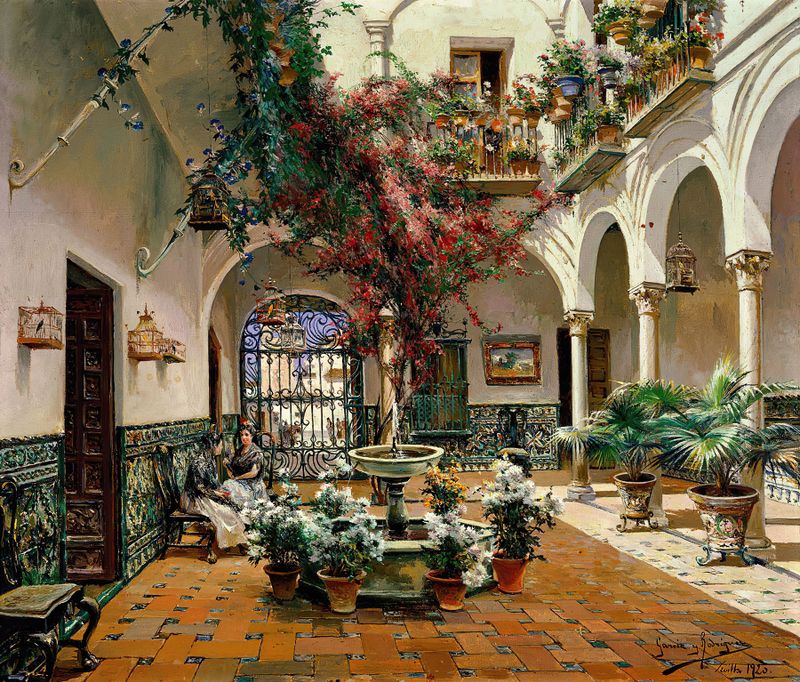
Interior Courtyard, Seville
Manuel García y Rodríguez
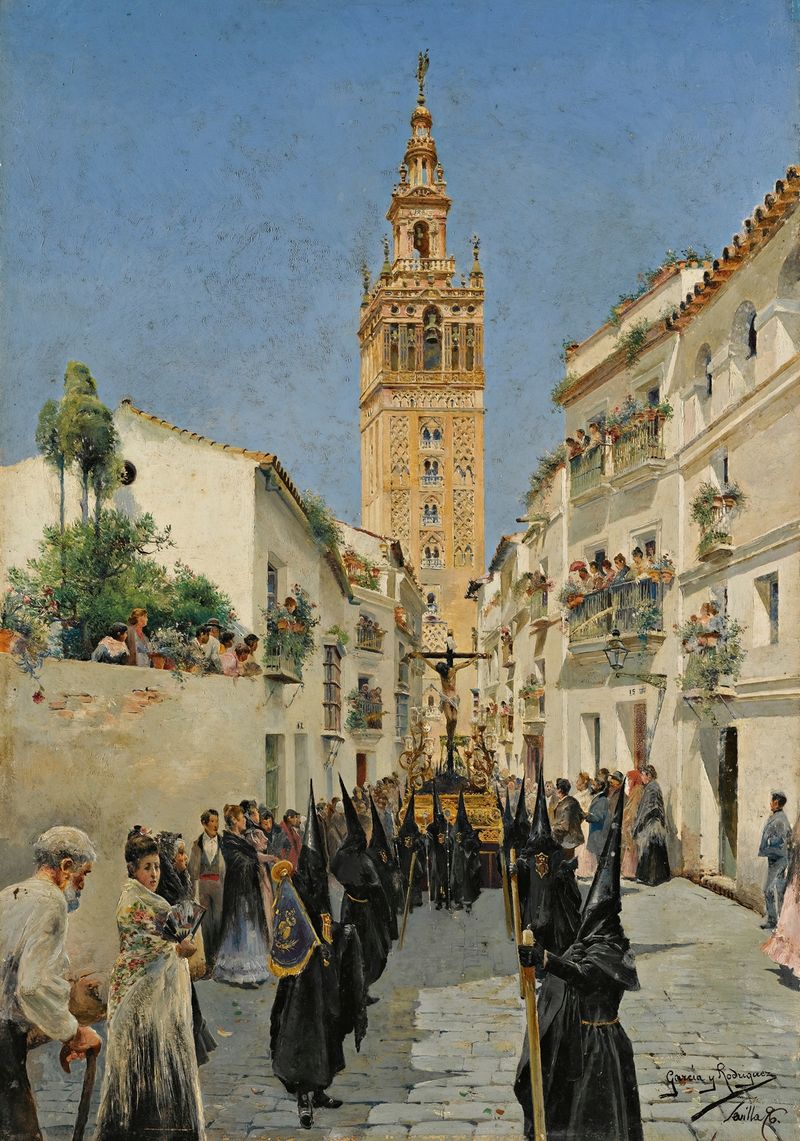
Easter Procession In Mateos Gago Street, Seville
Manuel García y Rodríguez

First Atrium of Santa Paula Convent, Seville
Manuel García y Rodríguez

Garden In Seville
Manuel García y Rodríguez
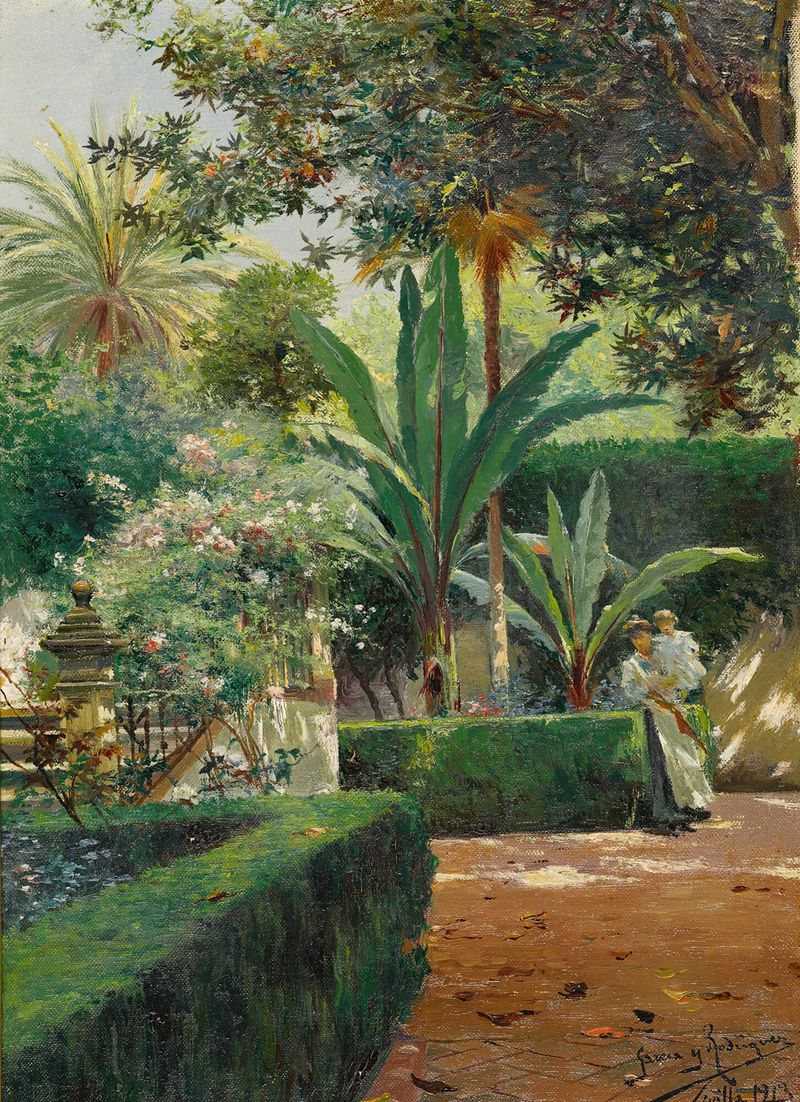
A Garden In Seville
Manuel García y Rodríguez

A Sevillian Alley
Manuel García y Rodríguez

Dappled Sunlight In A Garden
Manuel García y Rodríguez

Ronda
Manuel García y Rodríguez

Street scene in Granada
Manuel García y Rodríguez





