
Eenden bij een wilgenbosje — History & Facts
In the delicate whisper of nature, grief lingers like a forgotten breeze, painting each moment with an air of poignant reflection. Focus on the serene water in the foreground, where you can see gentle ripples that distort the reflection of the willows overhead. Look to the left and notice the soft, muted colors of the lush greenery, their hues blending seamlessly into the tranquil surface of the pond. The ducks, so elegantly poised, become a symbol of fragility amidst the surrounding decay of autumn.
The brushwork captures not only the physical beauty of the scene but also evokes a sense of stillness that invites contemplation. As the viewer, you can't help but feel the contrast between the lively ducks and the heavy stillness of the landscape. The intertwining branches of the willows create a natural frame, suggesting both shelter and isolation. This dichotomy reflects the artist's exploration of the relationship between life and loss, as nature stands resilient yet vulnerable to change, echoing the silent grief that permeates the environment. In 1883, Geo Poggenbeek was deeply engaged in the Dutch landscape painting movement, capturing the essence of rural life.
At this time, he painted in the Netherlands, where the interplay of light and water provided endless inspiration. The world was shifting with the onset of modernity, yet artists like Poggenbeek sought solace in nature, using it as a canvas for their introspections and emotional truths.
More Artworks by Geo Poggenbeek
Browse all →
Weiland met liggende koe bij een sloot
Geo Poggenbeek

Moeraslandschap met zonsondergang
Geo Poggenbeek
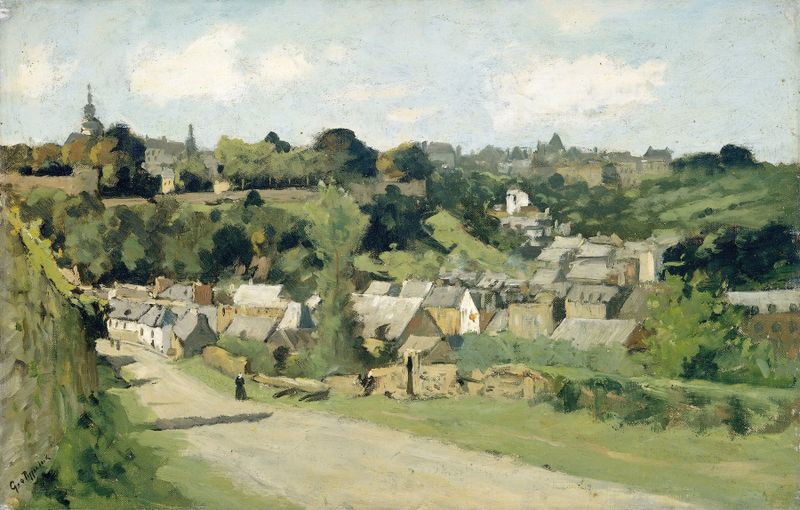
View of Dinant
Geo Poggenbeek
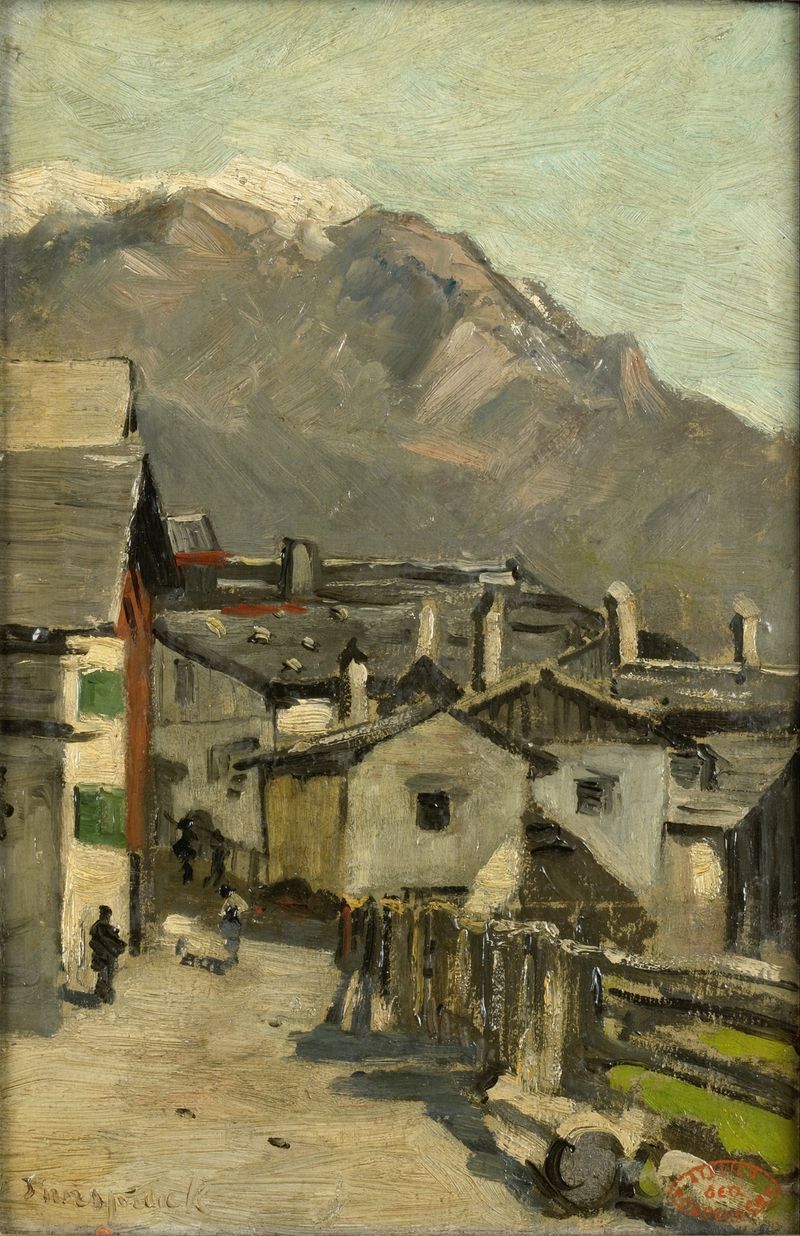
Houses along a road near a mountain
Geo Poggenbeek
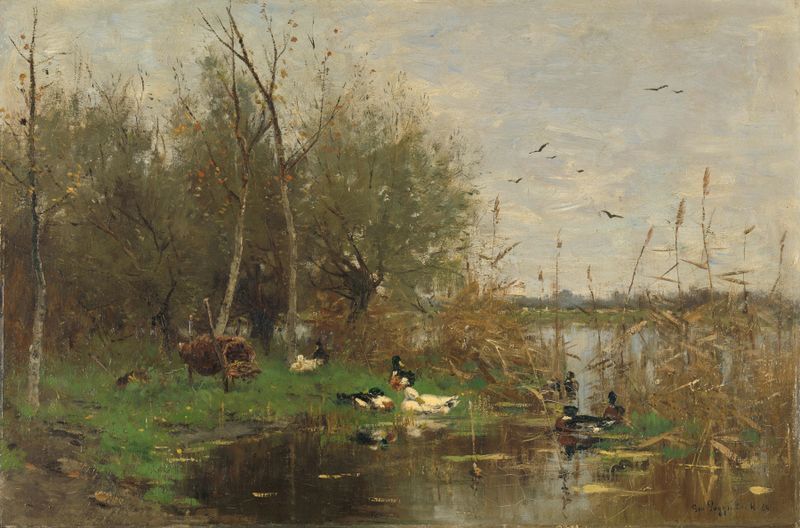
Ducks beside a duck shelter on a ditch
Geo Poggenbeek

The Willow
Geo Poggenbeek
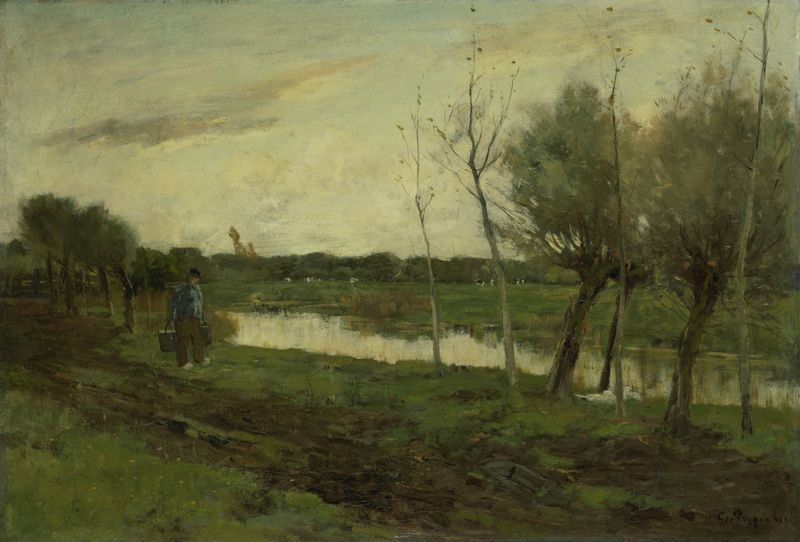
Landschap met een vaart
Geo Poggenbeek
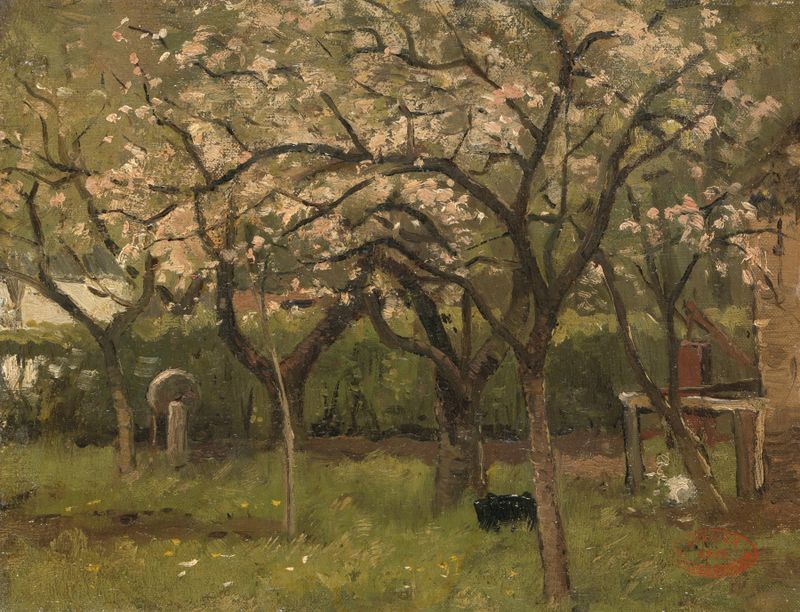
Blossoming Tree in an Orchard
Geo Poggenbeek





