
View of Dinant — History & Facts
Who listens when art speaks of silence? In View of Dinant, tranquility envelops a landscape steeped in stillness, revealing the profound emptiness that nature can hold. Focus on the gentle undulations of the river, where delicate brush strokes capture the light reflecting against the water’s surface. Look to the left where the town's quaint architecture rises against the backdrop of the majestic cliffs, offering a sense of harmony amidst nature's grandeur. The muted palette, imbued with earthy tones of greens and browns, invites a contemplative mood, while the sky, painted in soft pastels, evokes the fleeting nature of time. Yet, beneath this serene façade lies an emotional tension; the empty spaces between structures suggest isolation and longing.
The way the mountains loom over the town hints at human vulnerability in the face of nature's overwhelming presence. A single boat gliding across the water serves as a reminder of human endeavor, yet it reinforces the vastness of the setting, accentuating the solitude that permeates the scene. Geo Poggenbeek painted View of Dinant around 1895 while residing in Belgium, during a period marked by a burgeoning interest in Impressionism. This era influenced him to explore light and atmosphere, steering his work towards capturing the poetic essence of landscapes.
Amidst the changing tides of the art world, he sought to communicate the quiet beauty of his surroundings, establishing a bridge between emotion and observation.
More Artworks by Geo Poggenbeek
Browse all →
Weiland met liggende koe bij een sloot
Geo Poggenbeek

Moeraslandschap met zonsondergang
Geo Poggenbeek
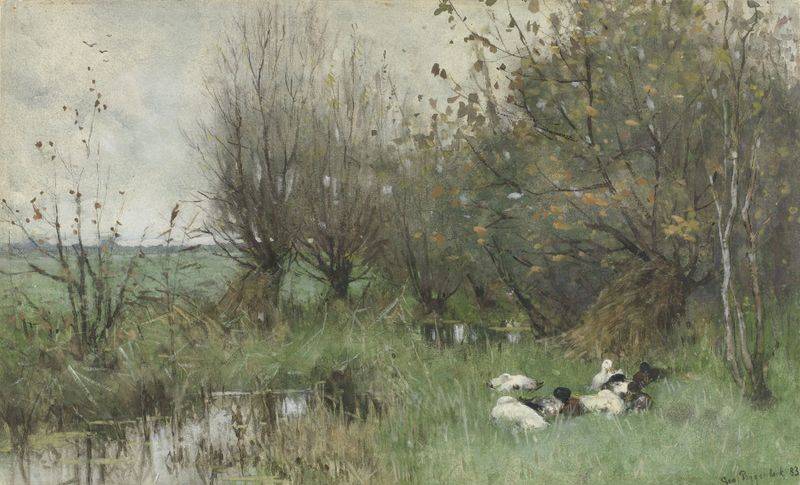
Eenden bij een wilgenbosje
Geo Poggenbeek
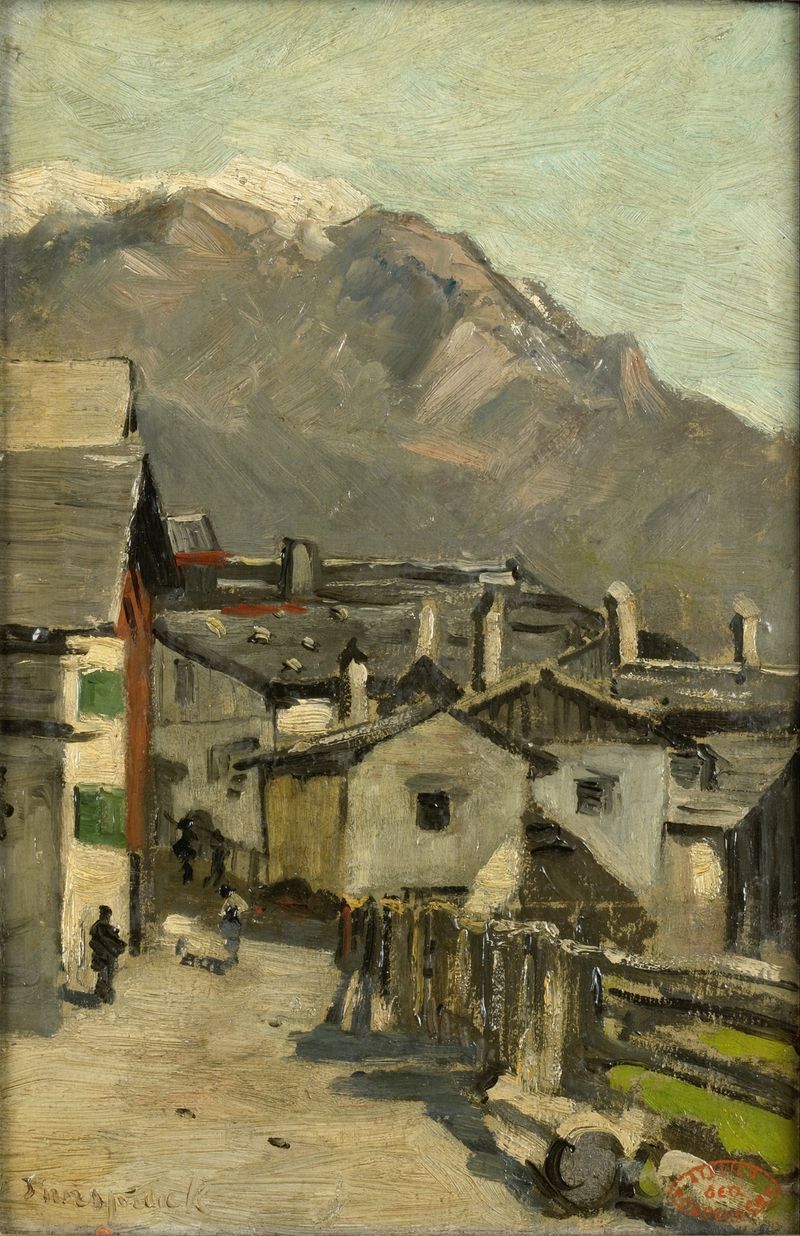
Houses along a road near a mountain
Geo Poggenbeek
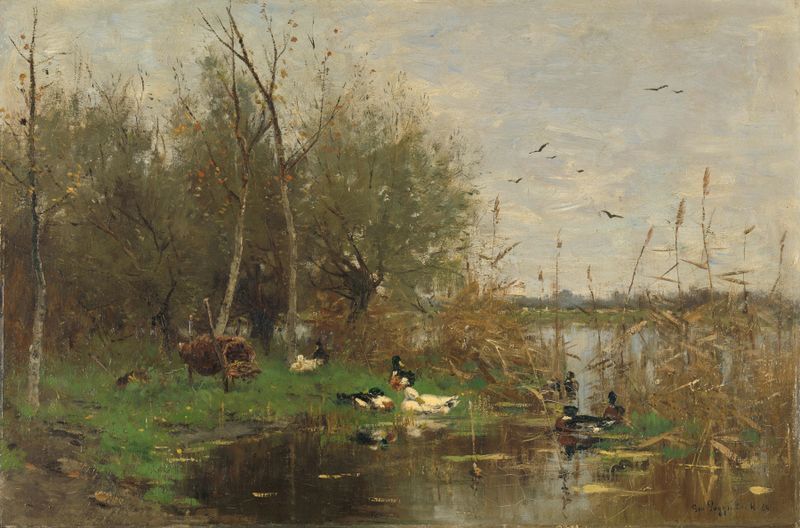
Ducks beside a duck shelter on a ditch
Geo Poggenbeek

The Willow
Geo Poggenbeek
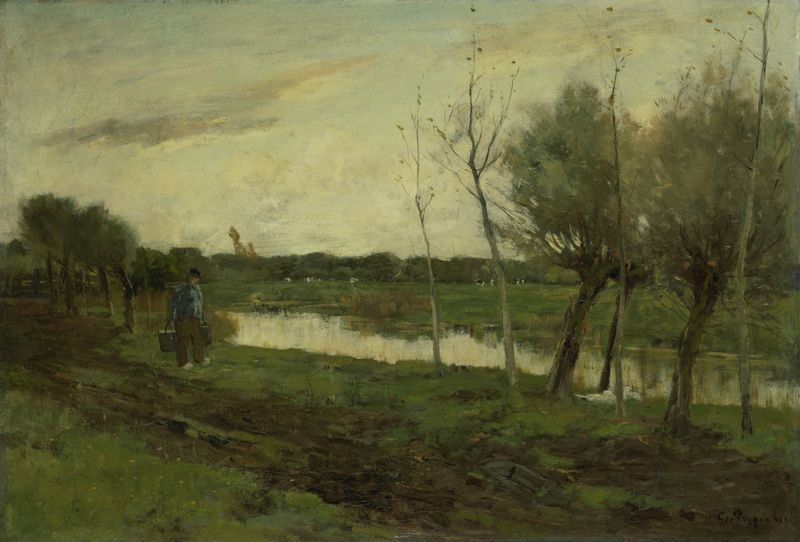
Landschap met een vaart
Geo Poggenbeek
Blossoming Tree in an Orchard
Geo Poggenbeek





