
Effet de lune — History & Facts
Could beauty survive in a century of chaos? In Effet de lune, the answer unfolds beneath a silvery moon, casting a spell of tranquility amidst the chaos of life. Look to the left at the gentle curve of the shoreline, where the water reflects the moon’s soft glow. The brushwork mimics the fluidity of the waves, merging vibrant blues with soft whites, creating a harmonious dance of color. Notice how the sky transitions from deep indigo at the top to lighter tones near the horizon, drawing the eye toward the tranquil landscape.
The composition, with its diagonal lines leading the viewer's gaze across the water, evokes a sense of movement and calm. Delve deeper into the scene, where the contrasts speak volumes. The luminous moon represents hope and faith, a beacon in the night, while the shadows along the shore suggest the lurking uncertainties of the era. The quiet figures, perhaps fishermen or wanderers, embody humanity’s struggle to find purpose amid darkness.
It’s a moment frozen in time, where beauty serves as a reminder of what’s worth preserving. Painted in 1899, Effet de lune emerged during a period when Maufra was deeply influenced by the Impressionists, yet he sought his unique voice amid a rapidly changing world. Living in Brittany, he captured the ethereal quality of his native landscape while grappling with the uncertainties of modern life. This work encapsulates the artist's commitment to faith in beauty as a response to the turbulence of his time.
More Artworks by Maxime Maufra
Browse all →
Le pont de l’Isle-Adam ou le Vieux pont
Maxime Maufra

Féérie nocturne: Exposition Universelle Paris 1900
Maxime Maufra
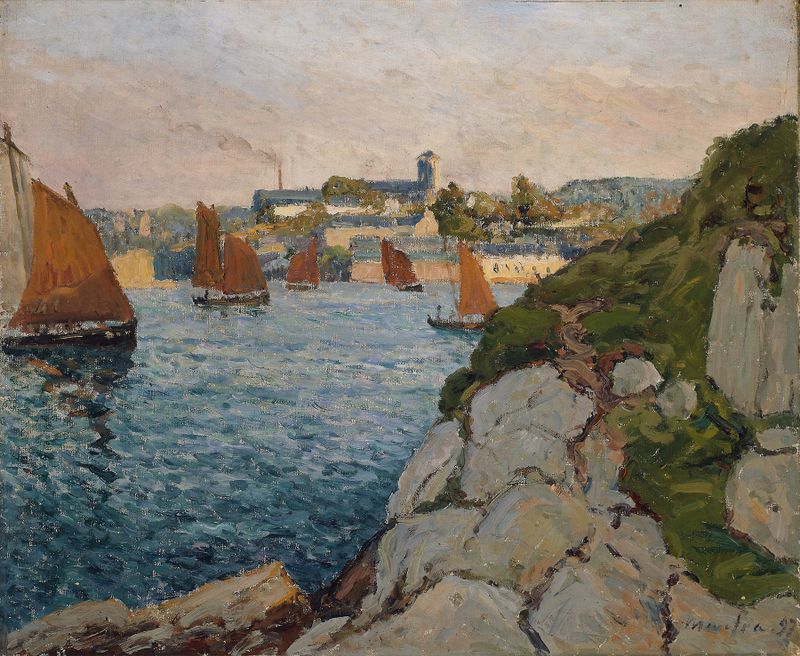
Douarnenez in Sunshine
Maxime Maufra
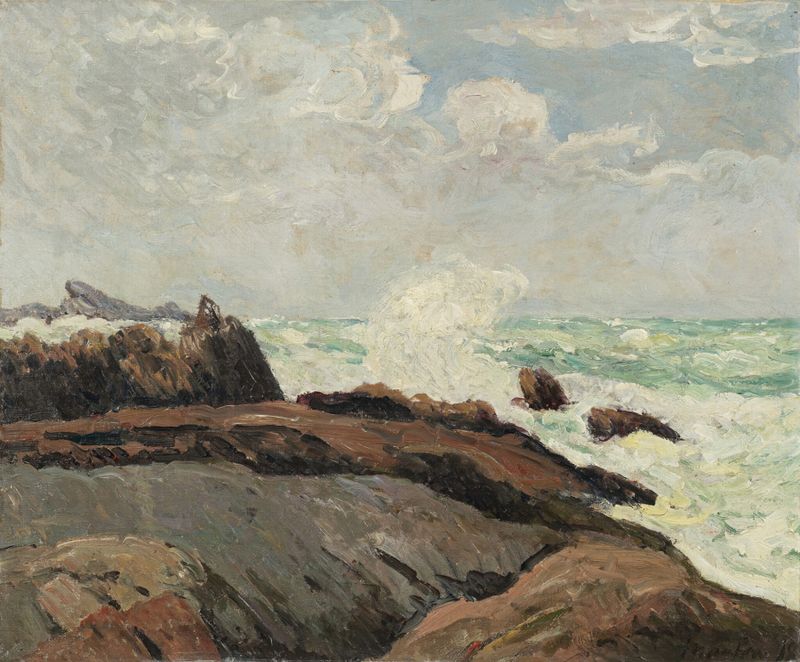
Mer forte à Saint-Guénolé Penmarc’h
Maxime Maufra

Marée Basse À La Plage De Port-Blanc, Presqu’île De Quiberon
Maxime Maufra
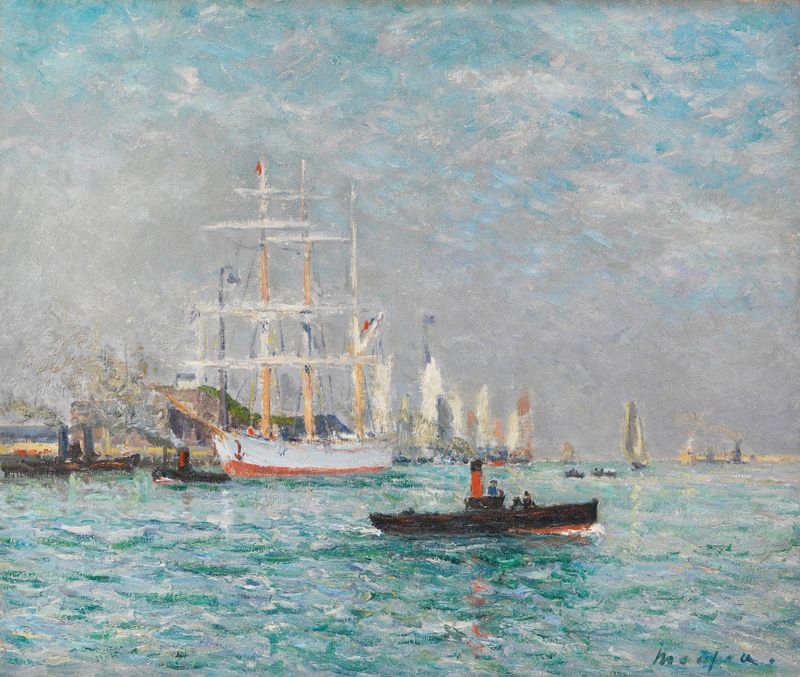
Entré d’un trois-mats, Le Havre
Maxime Maufra

Les rochers du château de Dinan, Morgat, Novembre 1903
Maxime Maufra
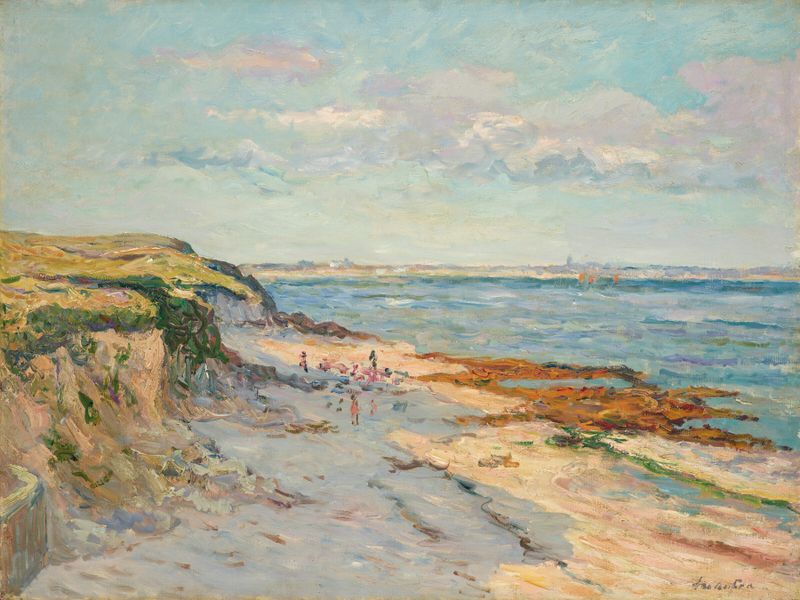
La Plage de Kerhostin, Morbihan
Maxime Maufra
Rochers au soleil couchant
Maxime Maufra
Soir D’orage À Kerhostin
Maxime Maufra





