Egyptian Landscape — History & Facts
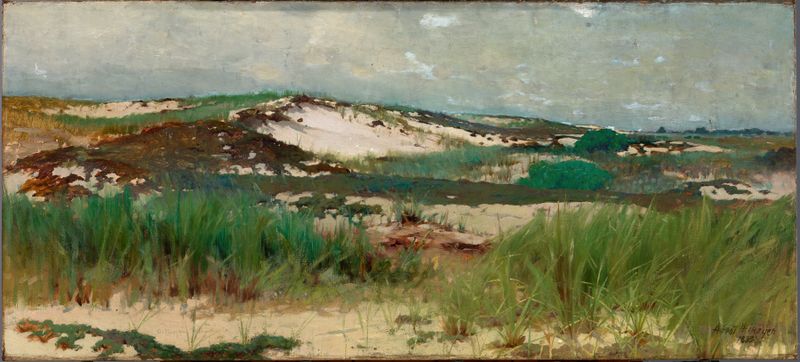
What secret hides in the quiet of the canvas? In Egyptian Landscape, the stillness invites us to explore the delicate innocence of nature's untouched beauty. Look to the foreground, where a gentle rise of sand swells into a lush oasis, beckoning the viewer with its vibrant greens and soft browns. The subtle gradients of color give way to a luminous, azure sky that stretches endlessly above, enveloped in a silken embrace of light. The artist's deft brushwork captures the textures of the terrain, inviting you to trace the gentle contours of the landscape with your eyes.
It is a harmonious composition that balances the starkness of the desert with the soothing presence of life, creating an enchanting contrast. Beneath the surface, an emotional tension stirs; the lush oasis symbolizes hope and renewal amidst the harsh, arid surroundings. The juxtaposition of vibrant life against barren land fosters a sense of innocence—life persists despite adversity. Small details, like the delicate play of light on leaves and the shadowy hints of distant mountains, whisper stories of resilience and tranquility, urging the viewer to ponder the delicate balance of nature. Charles Morgan McIlhenney painted this piece during a time when he was deeply influenced by the landscapes of Egypt, although the exact date of creation remains uncertain.
His work reflects a burgeoning interest in capturing the essence of place, drawing from both personal experience and wider artistic movements. As the world of art shifted in the early 20th century, McIlhenney's exploration of landscape offered a fresh perspective on the relationship between environment and emotion.