Egyptian Landscape William Kuhnert — History & Facts
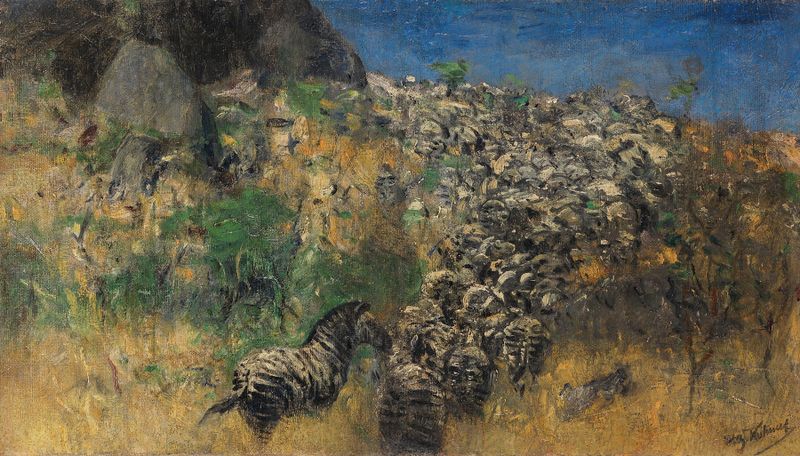
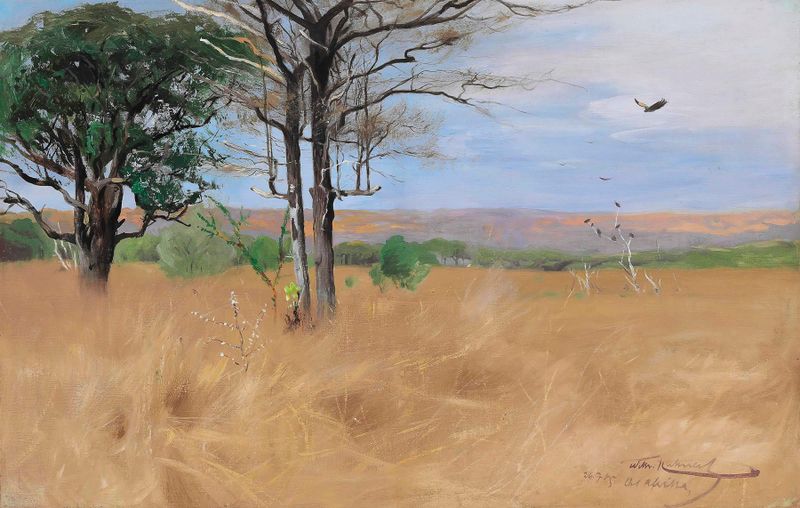
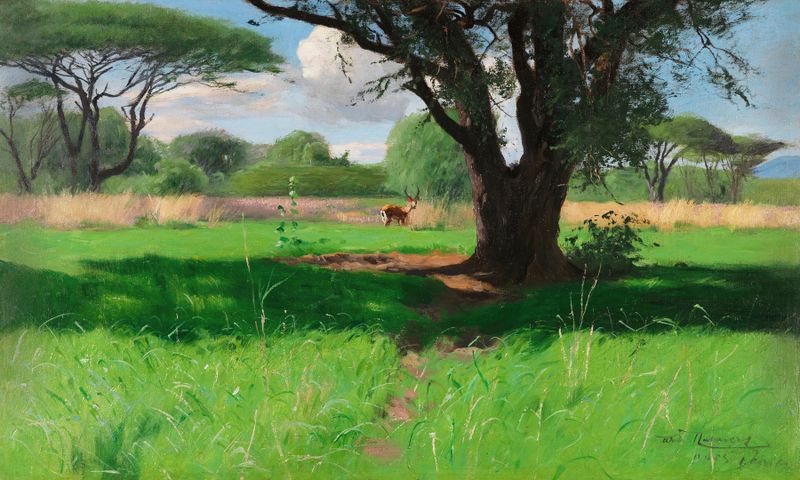
In a world where moments slip away like grains of sand, the brush captures a haunting stillness that echoes with the weight of fear. Begin by examining the horizon, where a muted palette of earthy ochres and subdued greens melds seamlessly. Look closely at the jagged outlines of ancient mountains standing stoically against a fading sky, their shadows stretching across the arid landscape. The sun, a mere smudge in the distance, casts a delicate light that dances across the textured surface of the earth, revealing the hidden contours of the terrain and inviting the viewer into its fragile beauty. Within this serene vista lies a tension underneath the calm.
The juxtaposition of the stark, unyielding mountains against the soft, ephemeral sky evokes a sense of foreboding — as if the land holds the weight of untold stories and lost civilizations. The muted colors suggest tranquility but also hint at a deeper unease, whispering of the relentless passage of time and the inevitable decay that looms over everything. This duality creates a profound emotional resonance, urging us to confront our own fears of impermanence and loss. Wilhelm Kuhnert painted this landscape during a period marked by both personal exploration and a broader artistic movement in the late 19th and early 20th centuries.
Though the exact date remains unknown, he was deeply influenced by his travels and the natural world, seeking to convey its essence with every stroke. At this time, artists were increasingly turning towards realism and the depiction of nature, often reflecting on the fragility of existence as they grappled with the tumult of their own lives and a rapidly changing world.