Ost Africa — History & Facts
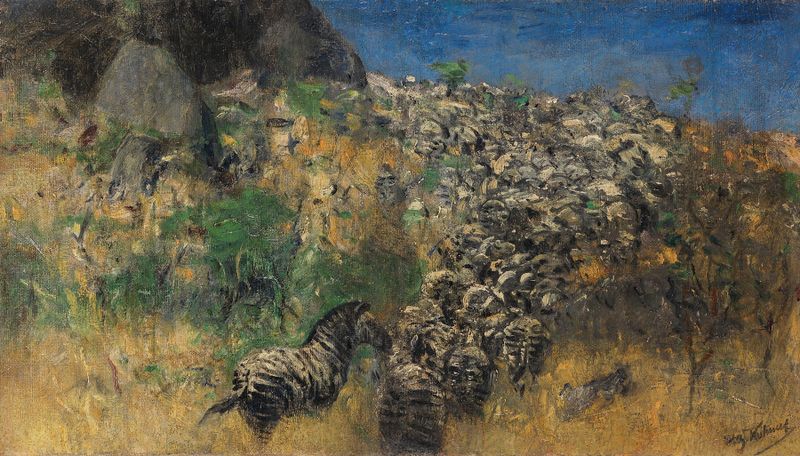
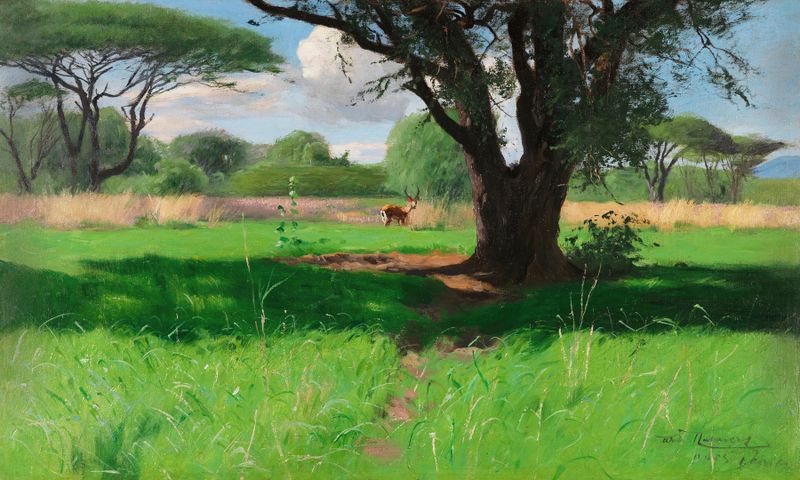
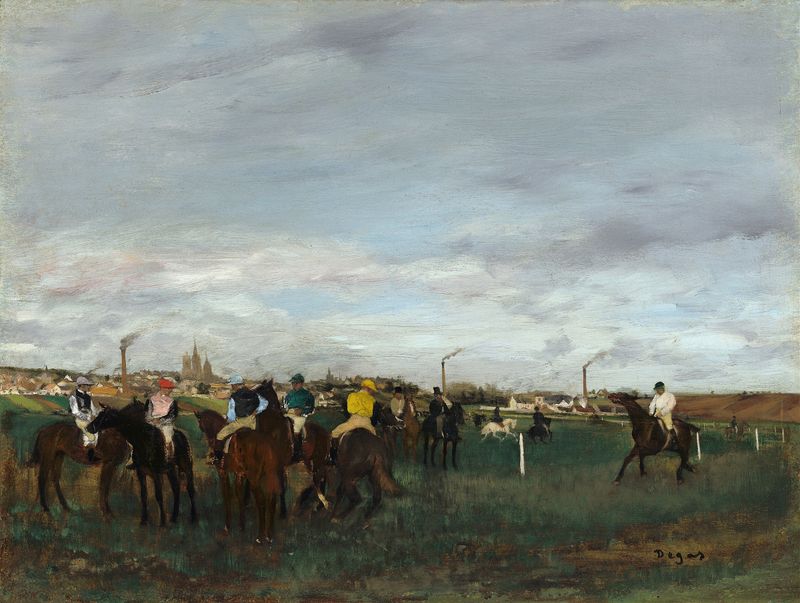
Can beauty exist without sorrow? This lingering question reverberates through the canvas, echoing the complexities of life and nature. Focus on the vibrant depiction of a herd of elephants as they traverse the sun-drenched savannah. The artist employs a rich palette of earthy tones, infusing life into the landscape with warm ochres and deep greens. Your gaze is drawn first to the majestic figures of the elephants, gracefully moving across the foreground.
Notice how their bodies capture the light—soft highlights enhancing their powerful forms, while shadows deepen the folds of their skin, creating a sense of movement that feels almost palpable. The lush foliage in the background serves as a contrasting backdrop, framing the scene in a way that emphasizes both the tranquility and the vibrancy of the moment. Yet, amid this stunning portrayal of life, there lies an undercurrent of tension. The elephants’ path is strewn with the remnants of a harsh environment, hinting at the fragility of their existence.
Each creature's gentle stride belies a struggle for survival, reminding us that beauty often walks hand-in-hand with vulnerability. The juxtaposition of the serene landscape with the indomitable presence of these animals speaks to the delicate balance of life in the wild, where movement is both a dance of grace and a fight against the elements. In 1905, Wilhelm Kuhnert painted this evocative work during a period of exploration and heightened interest in African wildlife. He was captivated by the continent's diverse ecosystems, having traveled there to study and sketch its inhabitants.
During this time, the art world was increasingly drawn to naturalism and the depiction of exotic landscapes, reflecting a growing fascination with the untamed beauty and complexity of nature.