Eight landscapes Pl.3 — History & Facts
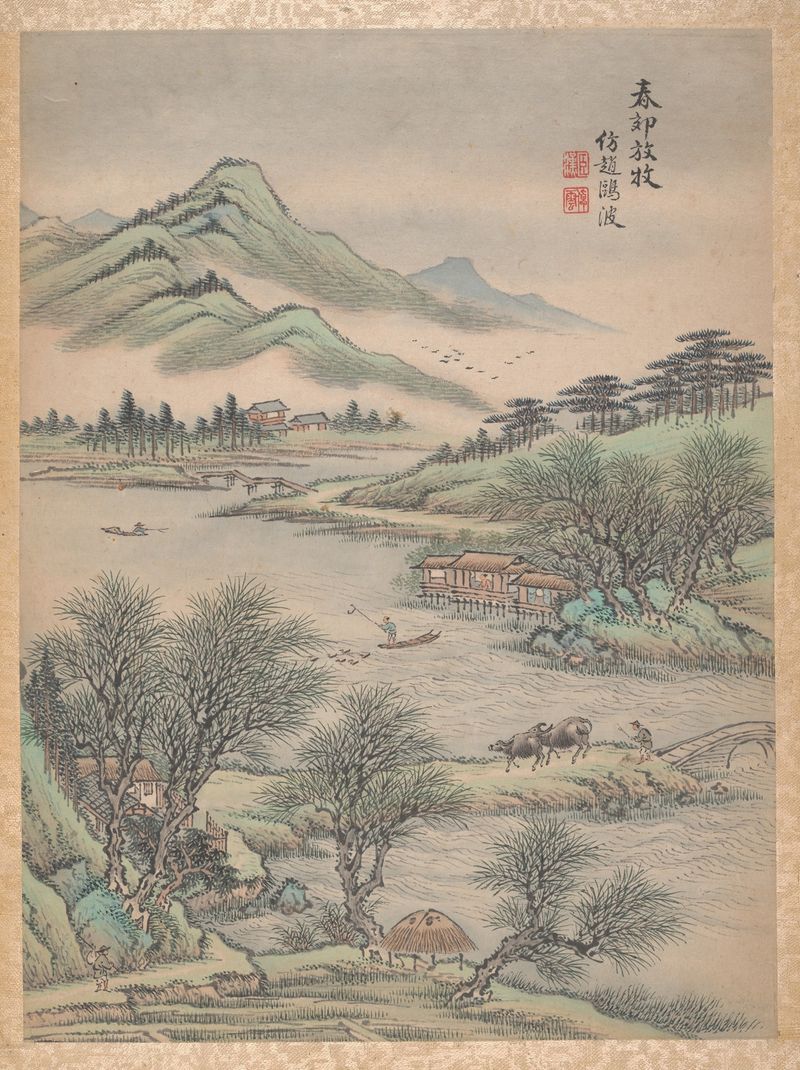
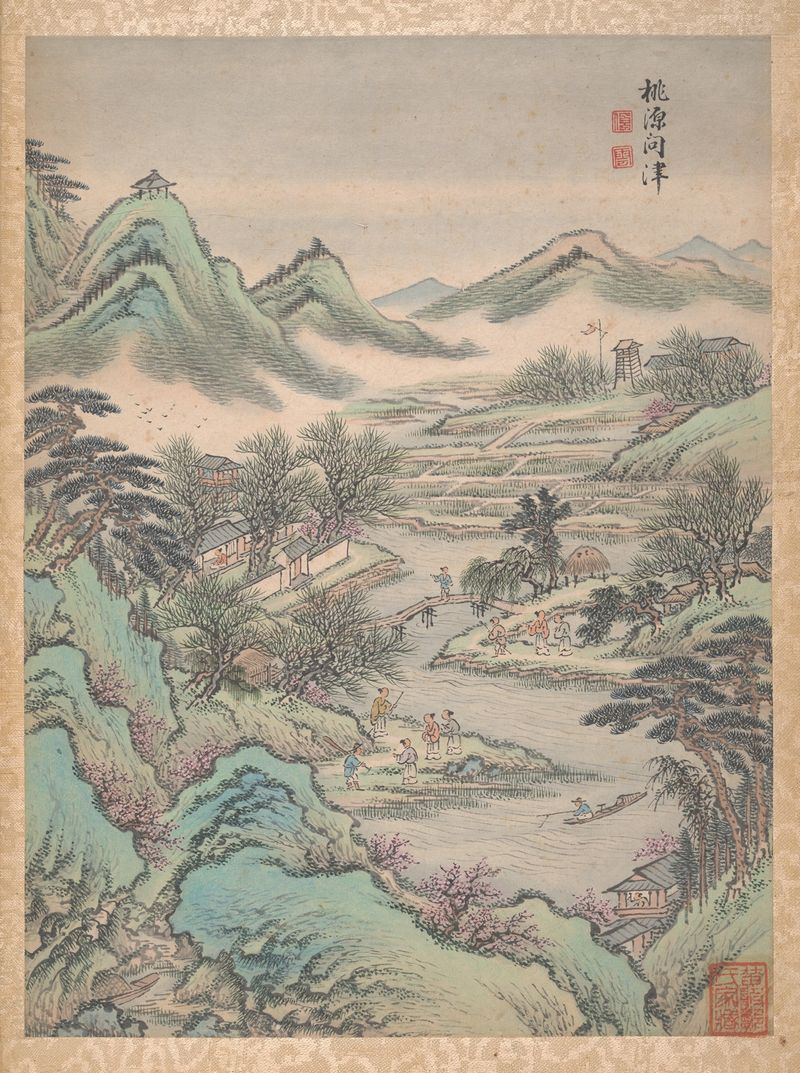
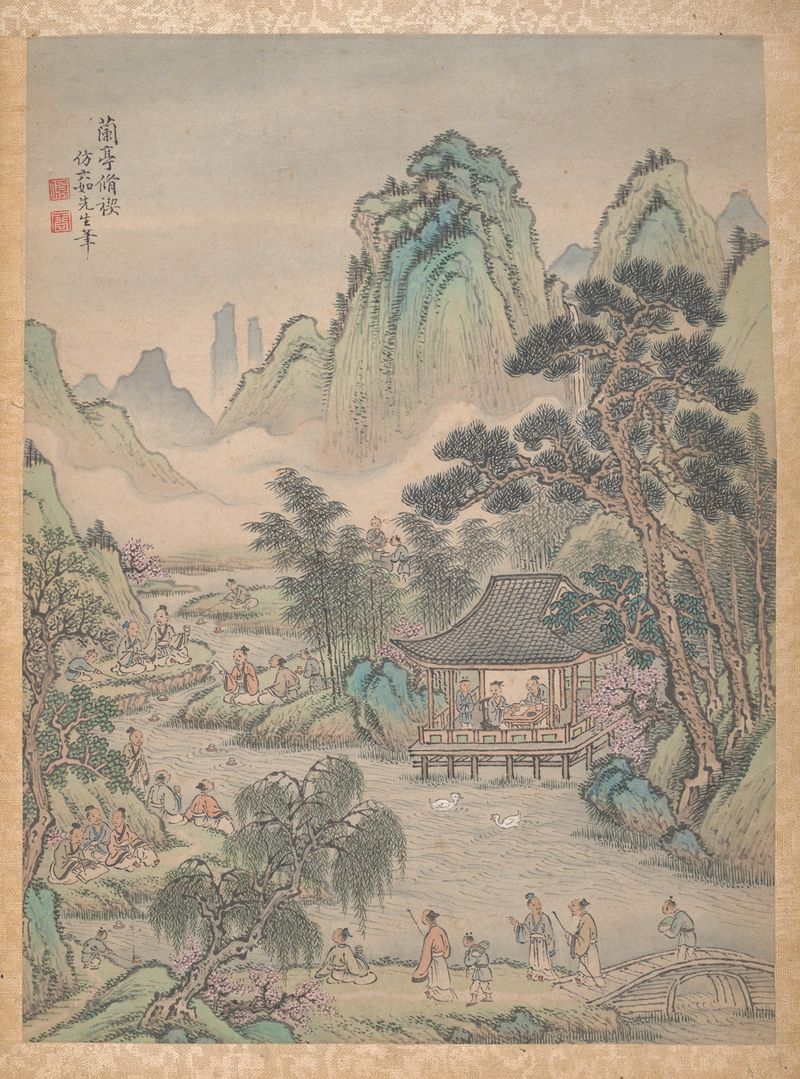
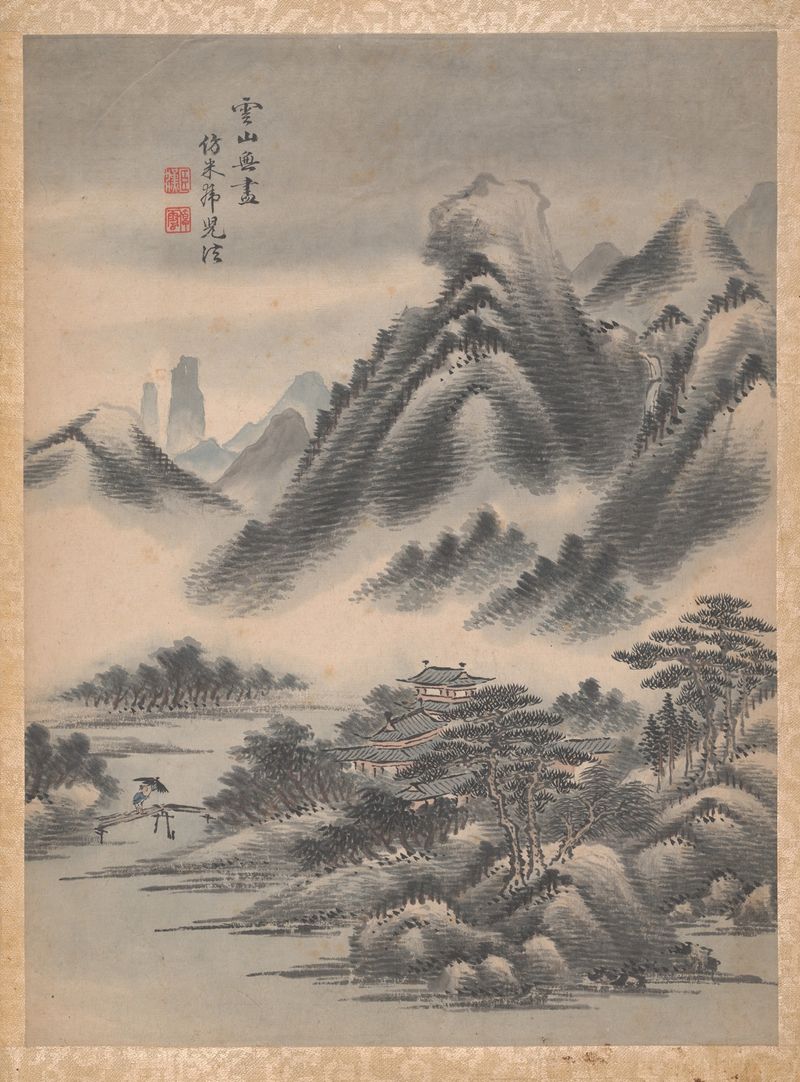
In the gentle embrace of nature, the essence of longing is woven into every line and hue, inviting the viewer to linger a moment longer. Look to the left, where a winding river navigates through serene hills, its surface mirroring the soft pastels of dawn. Notice how the artist employs delicate ink washes to create a sense of depth, layering shades of green and blue that dance with the light. The composition draws the eye through a harmonious blend of natural elements, beckoning us into a tranquil landscape that feels both real and dreamlike. As you delve deeper, the interplay of shadow and light reveals a complexity of emotions beneath the surface.
The distant mountains, shrouded in mist, evoke a sense of yearning for the unreachable, while the vibrant foliage on the riverbanks hints at fleeting beauty. Each element serves as a reminder of the ephemeral nature of life, capturing the delicate balance between presence and absence, fulfillment and desire. Lu Han created this artwork in 1699, during a time when traditional Chinese landscape painting was flourishing. Positioned within the context of the late Ming and early Qing dynasties, he was influenced by a rich history of poetic expression in art.
This period was marked by a longing for connection to nature and the past, and the artist channeled these sentiments into his work, contributing to the ongoing dialogue between humanity and the natural world.