Eight landscapes Pl.5 — History & Facts
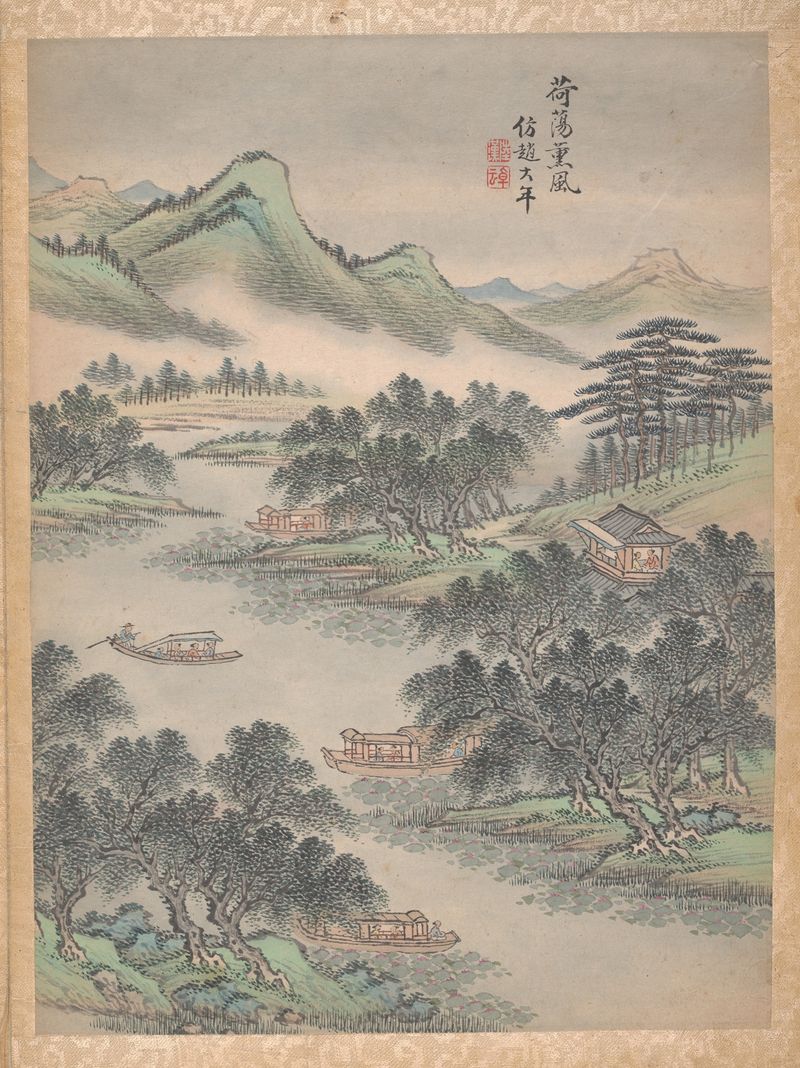
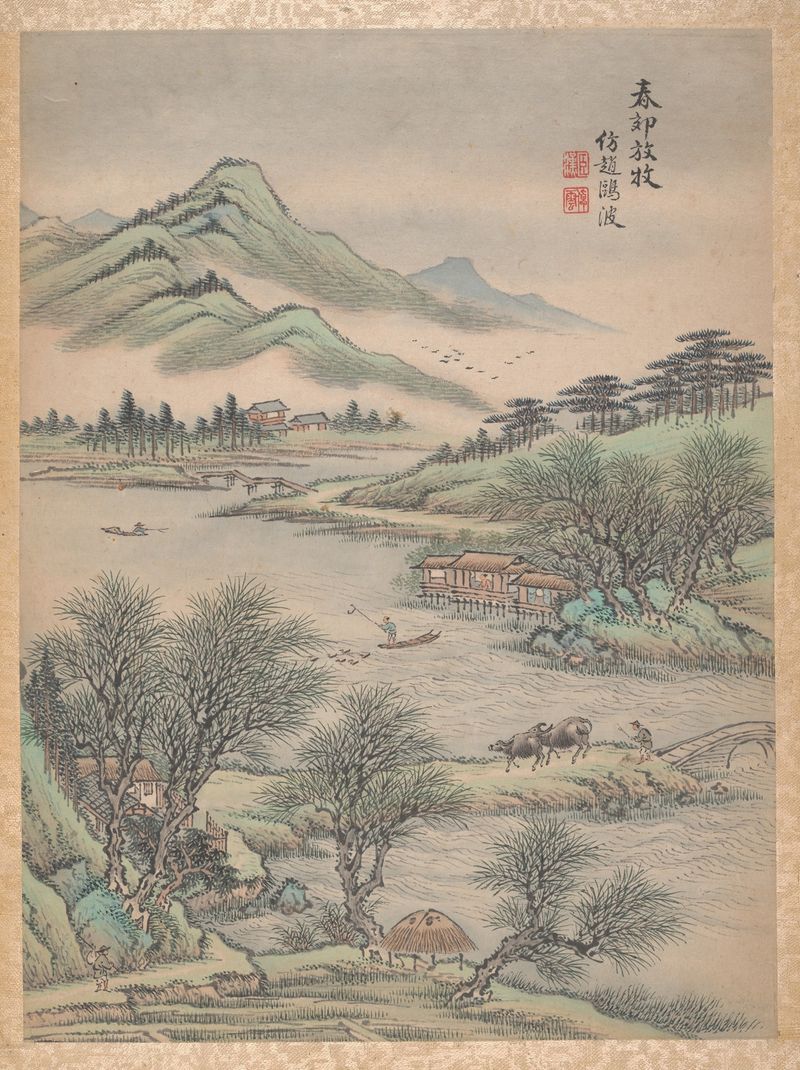
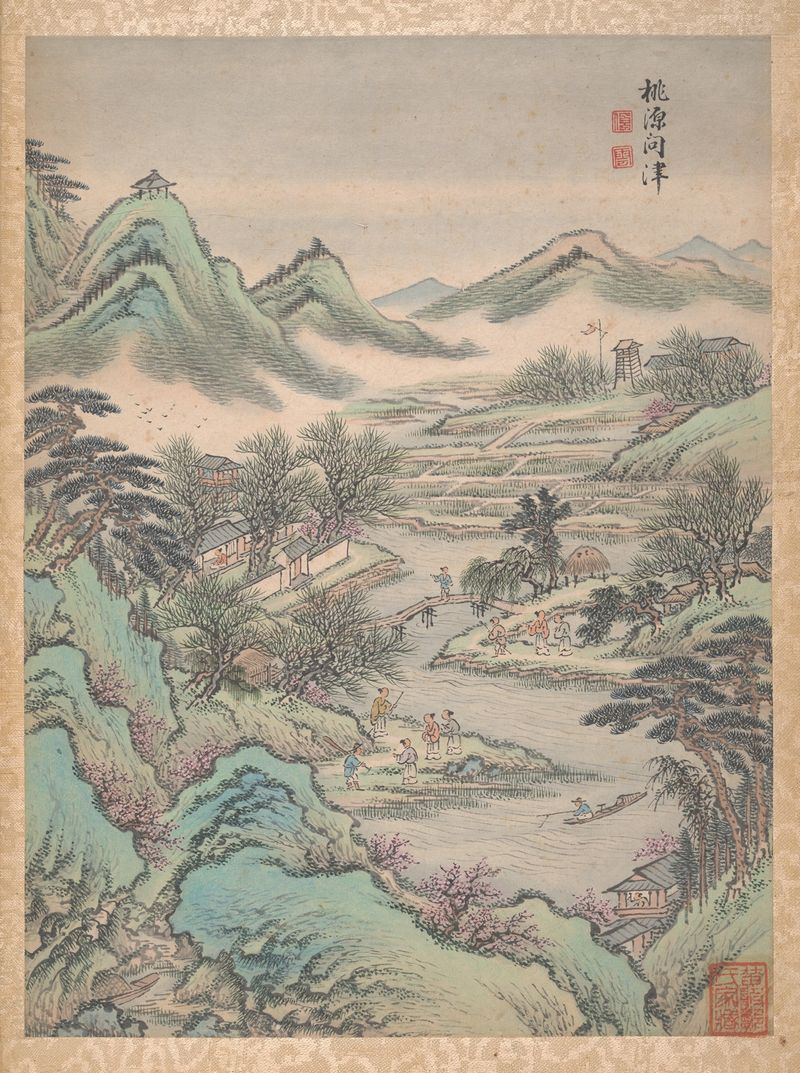
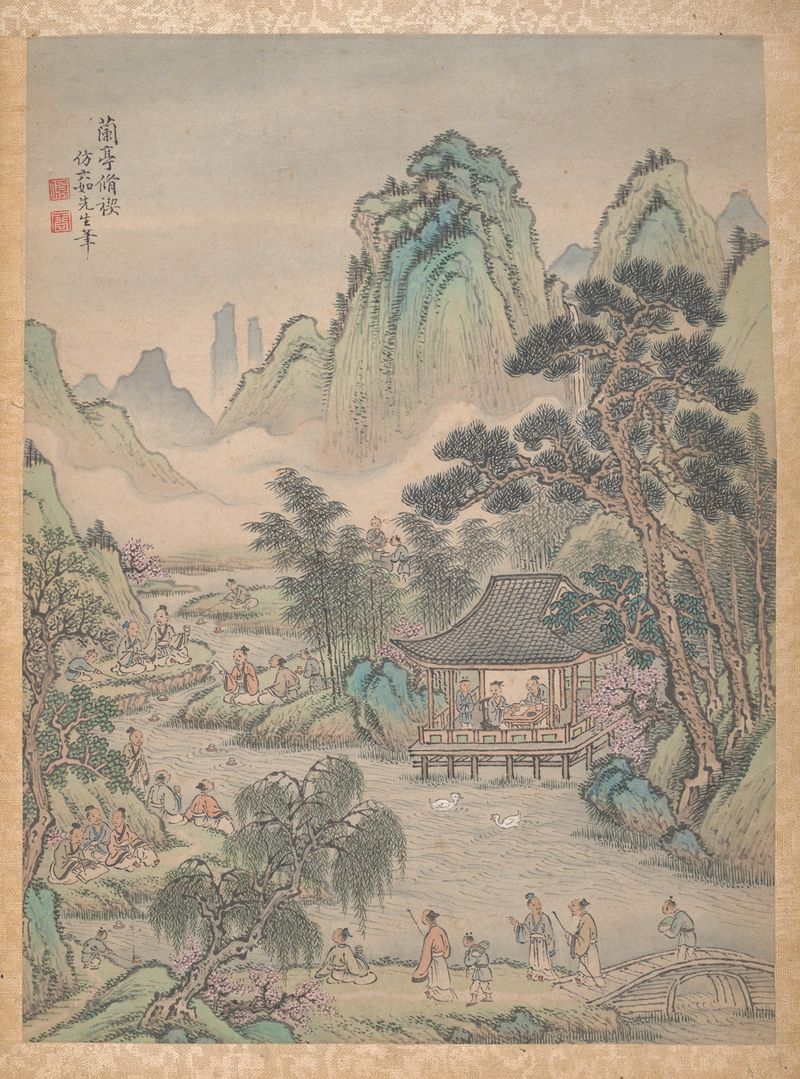
Did the painter know this moment would outlive them? In Eight landscapes Pl.5, Lu Han captures the ephemeral beauty of a landscape, echoing the lingering sorrow of loss. The untouched serenity of nature stands as a silent witness to what has come and gone, urging viewers to reflect on the transient nature of existence and the eternal whispers of memory. Look to the foreground, where delicate brushstrokes form a quiet river that meanders through the scene. The soft blues and greens blend harmoniously, drawing your gaze toward the distant hills shrouded in mist.
Notice how the light dances upon the water's surface, creating ephemeral glimmers that mirror the fleeting moments of joy and sadness that life encompasses. The subtle layering of color gives depth, inviting you to immerse yourself in the tranquility of this painted world. As your eyes wander, you may feel an emotional tension beneath the surface; the harmony of nature juxtaposed with an undercurrent of nostalgia. The stillness of the water evokes a sense of loss, suggesting the absence of voices and laughter that once filled the air.
The trees, stoic and unyielding, stand as guardians of memories, holding secrets of those who have passed. This interplay of serenity and sorrow invites viewers to reckon with their own experiences of longing and remembrance. In 1699, Lu Han created this work amidst a flourishing period of Chinese landscape painting, a genre that celebrated nature's beauty while also reflecting on the human condition. Living in an era where art was increasingly appreciated as a medium for philosophical expression, Lu Han sought to capture both the surface beauty of the landscapes and the deeper emotions they evoke, embedding within Eight landscapes Pl.5 a poignant commentary on life's impermanence.