Eine Wassermühle mit vielen Figuren — History & Facts
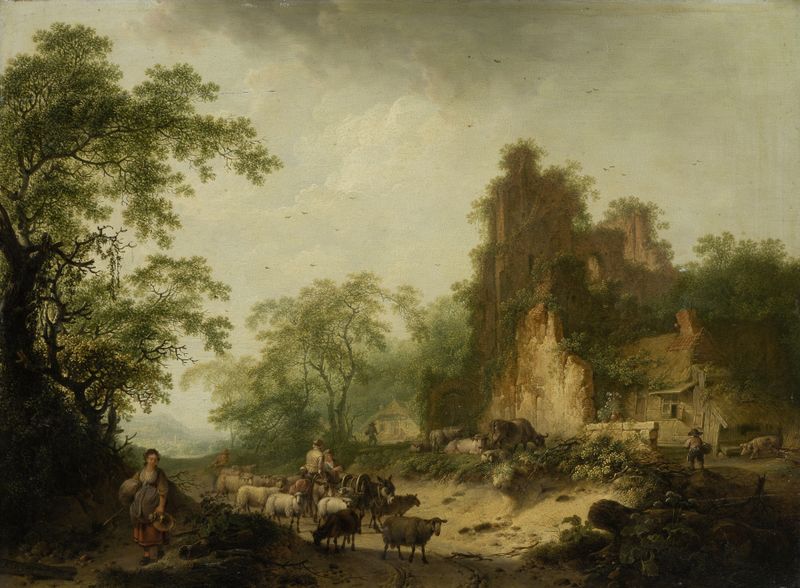
Could beauty survive in a century of chaos? In Eine Wassermühle mit vielen Figuren, light dances across the canvas, illuminating a world that thrives amid the tumult of the late 18th century. Look to the left at the watermill, its weathered structure harmonizing with the glistening water below. The artist employs a palette rich in greens and browns, echoing the vitality of nature, while hints of delicate pastels in the figures' garments provide a soft contrast. Notice how the sunlight filters through the trees, creating shimmering reflections that guide the eye across the scene, inviting the viewer to explore the vibrant life surrounding the mill. While the watermill stands as a symbol of industriousness, the multitude of figures adds layers of narrative depth.
Each character—some engaged in labor, others in leisure—embodies the coexistence of work and respite. This tension reveals an underlying commentary on the human experience; despite the busyness of life, there is a beauty in stillness. A child plays near the water’s edge, evoking innocence amidst the adult concerns depicted, and the subtle expressions of the figures hint at stories untold. Created in 1778, this work reflects Hendrik Meyer’s dedication to portraying rural life in a rapidly changing world.
At this time, Europe was grappling with the repercussions of the Enlightenment and the undercurrents of revolution. Meyer, operating in the Netherlands, sought to capture the simple joys of existence, offering solace and respite through his vibrant landscapes during a period marked by social upheaval and artistic evolution.