Farmhouse by a Stream — History & Facts
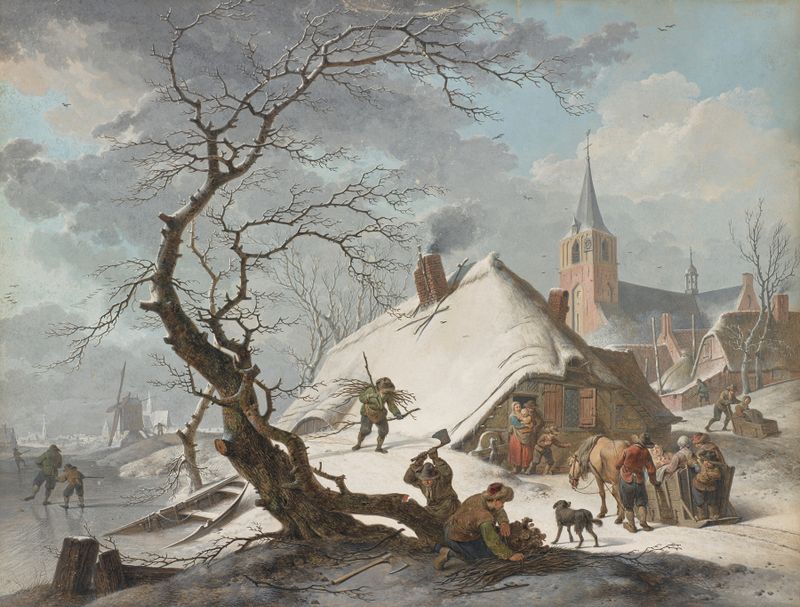
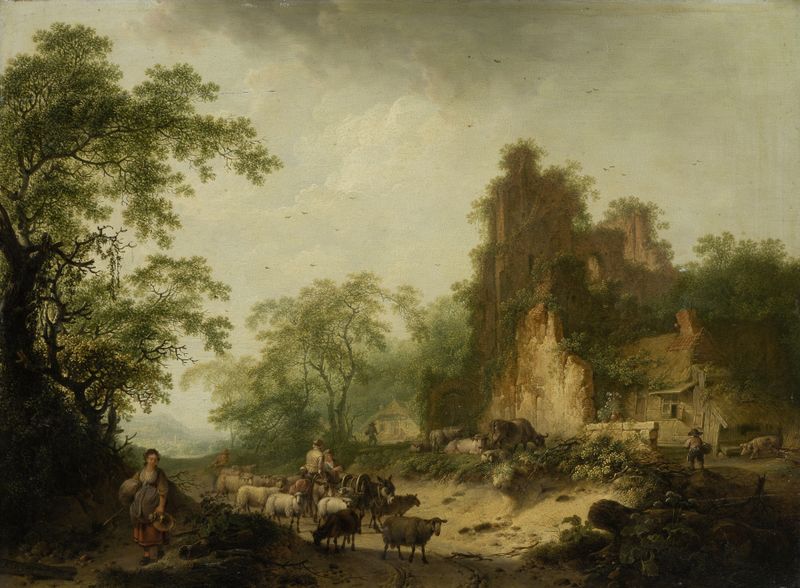
What if beauty was never meant to be finished? In capturing the essence of a serene landscape, Farmhouse by a Stream invites us to ponder the fragility that often lies beneath tranquility. Look to the left at the soft, pastel-hued farmhouse, nestled comfortably against the backdrop of lush greenery. Notice how the gentle curve of the stream flows effortlessly through the scene, its reflective surface shimmering in dappled sunlight. The artist’s exquisite brushwork allows colors to blend seamlessly, creating a harmonious dialogue between the earth and sky, while the scattered clouds above suggest the uncertainty of weather—and life itself. Yet, amidst this idyllic portrayal, hidden tensions emerge.
The contrast between the calm waters and the darker, shadowy areas surrounding the house evokes a sense of lurking violence, hinting at nature’s unpredictability. The stream, which appears to nurture the land, paradoxically serves as a reminder of the destructive forces that could arise: flooding, storms, or the encroachment of time itself. This juxtaposition compels the viewer to question whether such beauty, once taken for granted, might vanish in an instant. In 1778, Hendrik Meyer created this painting amidst a notable shift in European artistic expression, reflecting the emerging Romantic interest in nature.
Living in the Netherlands, Meyer was inspired by the pastoral landscapes that surrounded him, often capturing the harmonious coexistence of man and nature. This work, crafted during a time when the art world was beginning to explore emotional depth and narrative complexity, signifies the artist's pursuit of beauty that acknowledges both gentleness and an undercurrent of tumult.