
Eingang zum Dorf Cayeux — History & Facts
In the delicate interplay of brushstrokes and hues, a powerful yearning emerges, inviting us to inhabit the quiet moments often overlooked in our daily lives. Look closely at the foreground, where a meandering path beckons the viewer toward the village. The earthy tones of the dirt road contrast with the lush green foliage lining either side, creating a sense of journey and discovery. Notice how the light filters through the leaves, dappled and soft, illuminating the way while casting gentle shadows that hint at the passage of time.
Each stroke is intentional, guiding your gaze deeper into the tranquil scene. As you explore further, consider the emotional weight of solitude and connection expressed within the village's distant rooftops. They stand resolutely against the expansive sky, yet their presence feels both inviting and isolating. The serene beauty of this rural landscape speaks to the tension between nature and human habitation—a harmony that is at once comforting and melancholic, suggesting a longing for connection in a world that often feels vast and indifferent. Eugen Jettel painted this serene work in 1891, during a period marked by significant changes in the art world.
Based in Paris, he was influenced by the Impressionist movement yet held onto a more realistic approach. This duality mirrored the larger societal shifts of the time, as artists navigated the transition from traditional to modern forms of expression while reflecting on an increasingly industrialized and disconnected world.
More Artworks by Eugen Jettel
Browse all →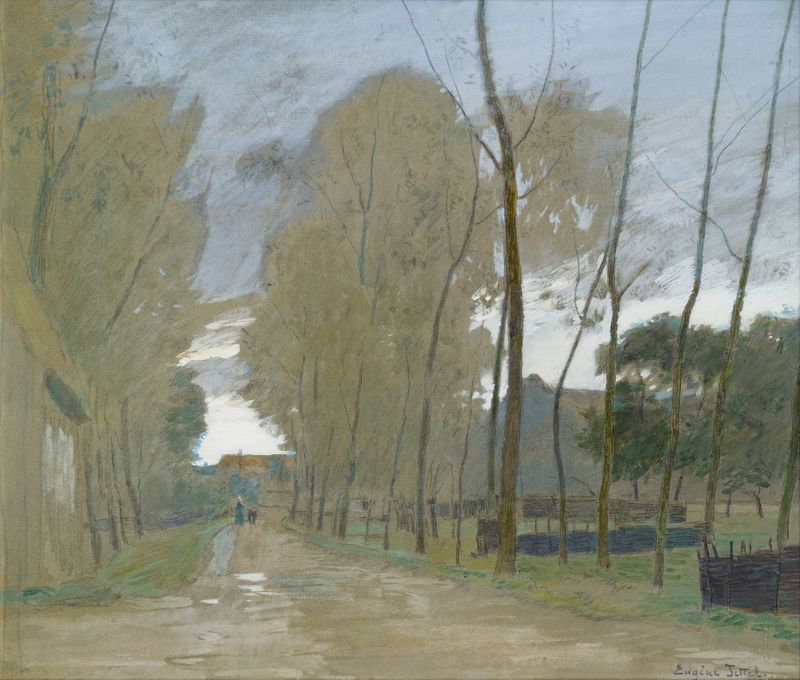
Motiv aus der Bretagne
Eugen Jettel
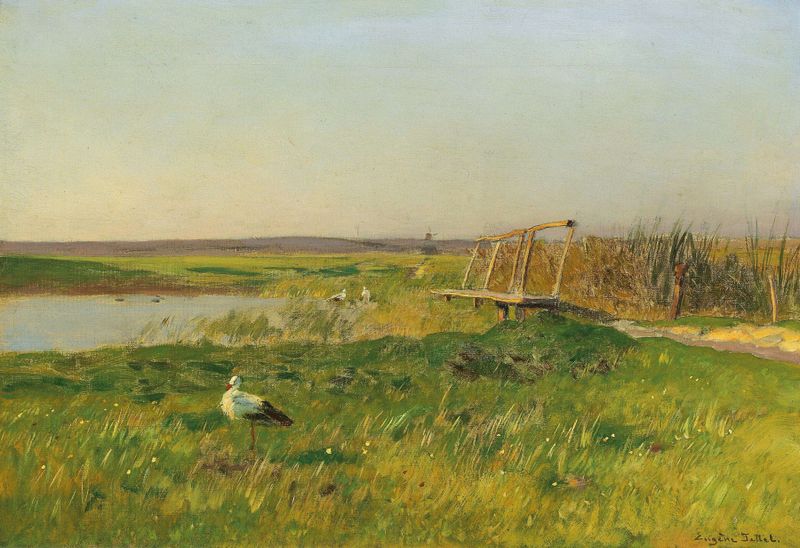
Frühlingslandschaft mit Störchen an einem Weiher
Eugen Jettel

Rinder auf Sommerwiese
Eugen Jettel
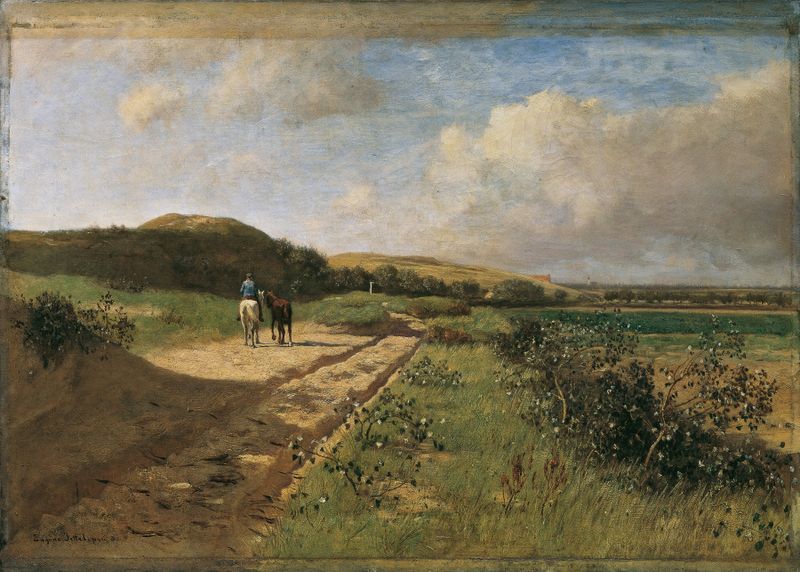
Dünen bei Katwijk
Eugen Jettel
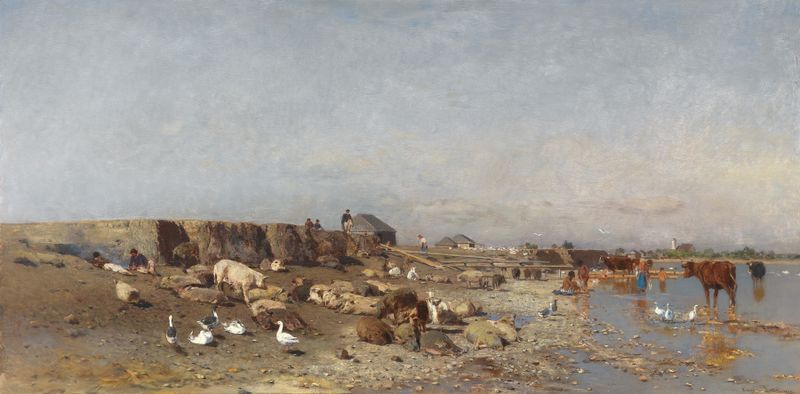
Motiv aus Szered an der Waag
Eugen Jettel
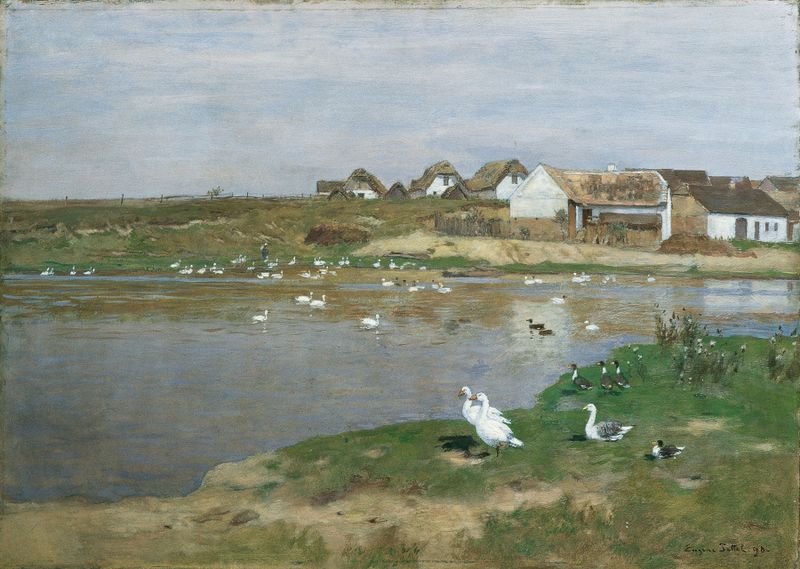
Der Gänseteich in Kotting-Neusiedl
Eugen Jettel

Flusslandschaft Mit Boot
Eugen Jettel

Flusslandschaft mit Kühen
Eugen Jettel

Dorfpartie Strohhütten aus Staatz
Eugen Jettel

Abendlandschaft
Eugen Jettel





