Elblandschaft bei Sonnenaufgang — History & Facts
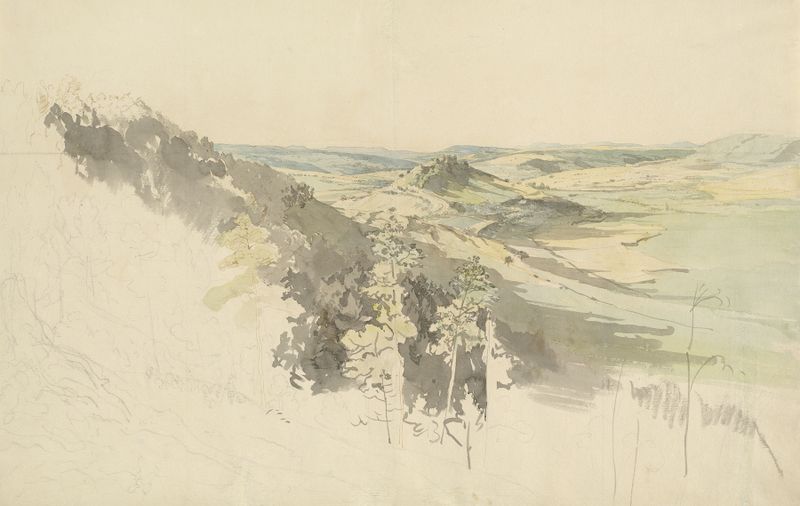
What if beauty was never meant to be finished? In Elblandschaft bei Sonnenaufgang, a haunting landscape reveals the transient nature of existence, inviting viewers to ponder the cycle of life and decay. Look to the left, where pale, golden rays of dawn spill across the horizon, illuminating a tranquil river that meanders through the scene. The brushstrokes are delicate yet assertive, capturing a moment where water meets land, evoking a sense of peace. The contrasting dark silhouettes of trees stand tall against the soft glow, hinting at the inevitable passage of time that whispers through the landscape. Upon closer inspection, the remnants of autumn’s grip can be felt in the dappled shadows and muted colors; these elements suggest an underlying tension.
The vibrant hues of dawn offer hope, yet the fading foliage alludes to decay lurking just beneath the surface. The composition strikes a balance between serenity and the melancholy of impermanence, reminding us of nature’s beauty, which is always at the mercy of change. Created around 1821, this piece emerged during a period when Carl Wagner was exploring themes of Romanticism, emphasizing emotion and the sublime in nature. At the time, his work was situated within a broader dialogue in the art world that sought to reflect the beauty and turmoil of the natural landscape, an exploration influenced by the shifts in societal perspectives towards nature and industrialization.