Hilly Landscape with Landsberg Castle — History & Facts
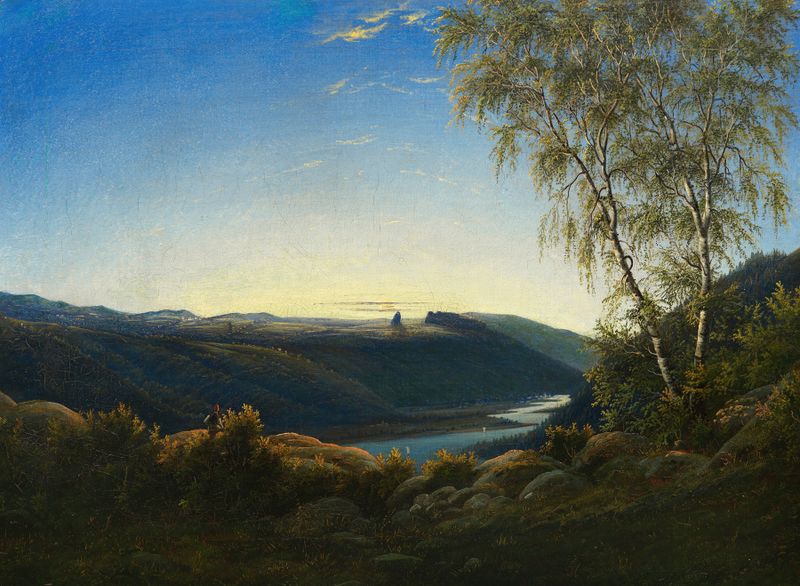
Can paint confess what words never could? In Hilly Landscape with Landsberg Castle, a visceral landscape whispers secrets of obsession and yearning, urging the viewer to delve deeper into its artistry. Look to the center, where the imposing silhouette of Landsberg Castle rises majestically against the undulating hills. The artist’s deft brushwork captures the play of light as it dances across the surface of the landscape, creating a contrast between the deep, earthy greens of the hills and the ethereal blue of the sky. The castle, with its formidable towers, seems to both beckon and repel, drawing the eye while hinting at the isolation it embodies.
Subtle strokes reflect the textures of nature, making the scene feel alive and almost palpable. There’s an emotional tension woven into the fabric of this image—a juxtaposition of strength and vulnerability. The castle, a symbol of human ambition, stands resilient yet lonely amid the vastness of nature, suggesting a struggle against the relentless passage of time. The surrounding hills wrap around the structure like protective arms, yet they also signify the weight of solitude that engulfs it.
The choice of color palette evokes a sense of nostalgia and longing, revealing an emotional undercurrent that resonates with the viewer. During the years 1830 to 1836, the artist was immersed in a period marked by romanticism and a growing fascination with the interplay between man and nature. Created in Germany, this work reflects the tumultuous socio-political climate of the time while also capturing Wagner's personal journey as he explored the landscapes that shaped his identity as an artist. This painting is a testament to the transformative power of nature and the artist’s enduring obsession with capturing its essence.