En Normandie — History & Facts
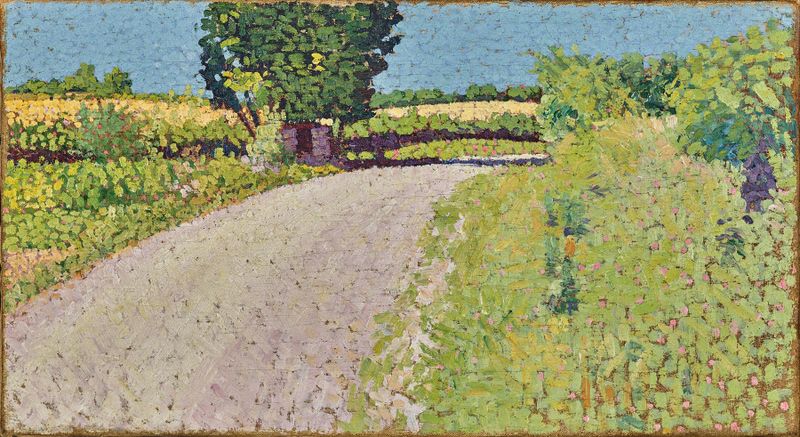
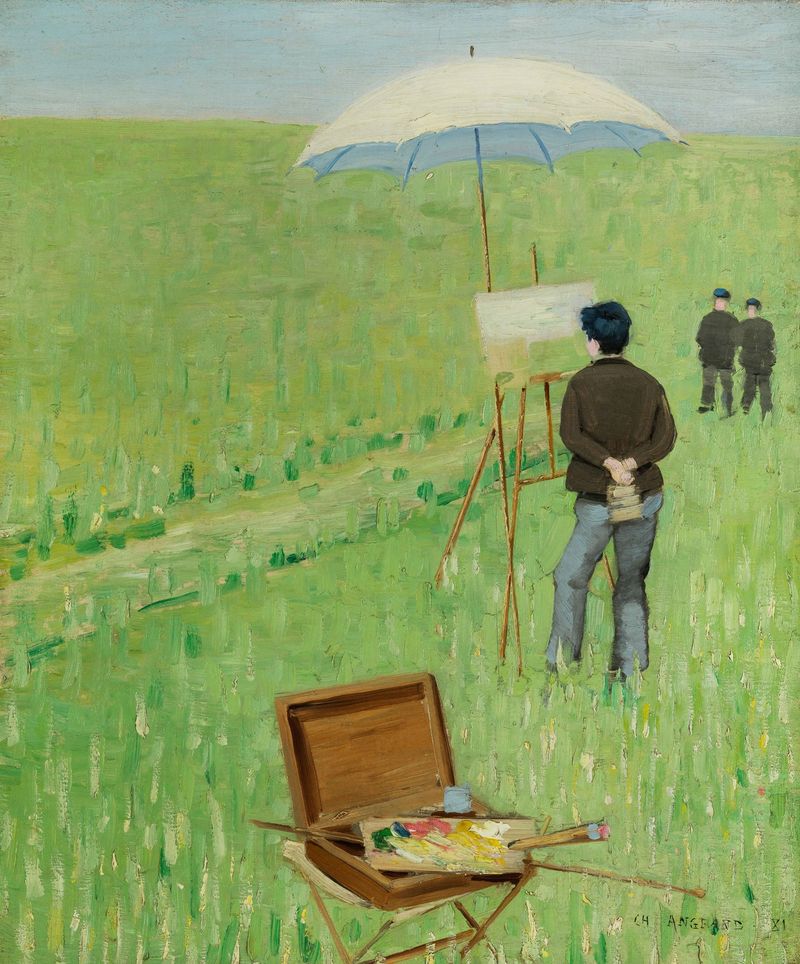
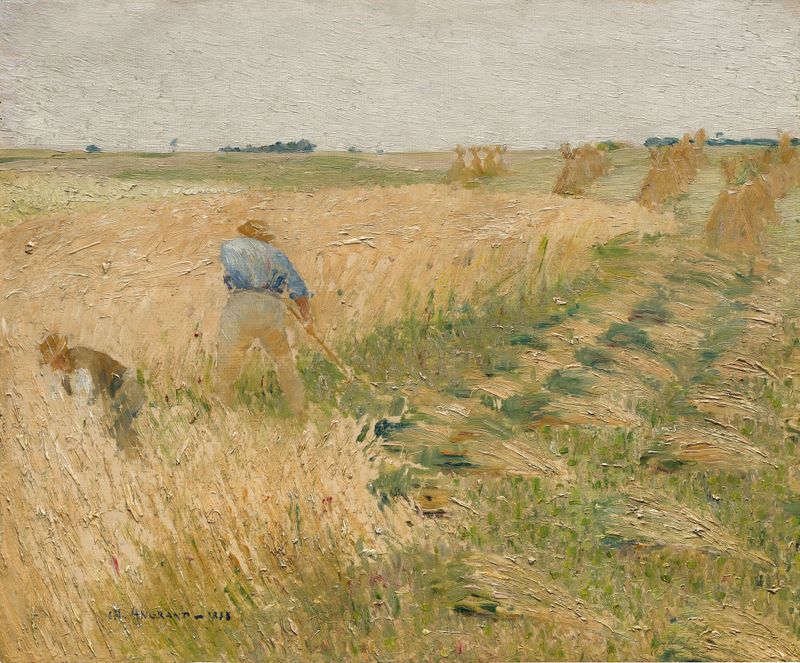
In the soft embrace of beauty, the ephemeral moments of life are captured, inviting us to linger longer than time permits. As you gaze upon the canvas, look to the left at the rolling hills, their gentle curves creating a serene horizon. Notice how the sun spills its golden light over the landscape, casting a warm glow on the figures amidst the fields. The palette is alive with vibrant greens and subtle earth tones, each brushstroke harmonizing to evoke a tranquil rural existence.
The composition draws your eye across the scene, from the rustic cottages nestled in the distance to the delicate strokes of the figures, harmoniously engaged in their daily tasks. Beneath the surface, a quiet tension resides in the juxtaposition of human activity and the vastness of nature. The figures, though small, appear determined, reminding us of the resilience found in the everyday. Yet, there's an underlying melancholy, as if the beauty of the moment is fragile—an acknowledgment of the transitory nature of life.
Each detail, from a fluttering garment to a distant plume of smoke, resonates with a sense of nostalgia, urging viewers to appreciate beauty before it fades. In 1883, the artist found himself immersed in the Impressionist movement while working in Normandy, a region known for its picturesque landscapes. This period marked a transition in Angrand's style, as he began to explore the interplay between light and color with a fresh perspective. The art world was evolving rapidly, and as he delved deeper into his practice, he sought to capture the simple beauty of rural life, reflecting both personal memories and the collective experience of a changing world.