En opkørt vej under gamle træer — History & Facts
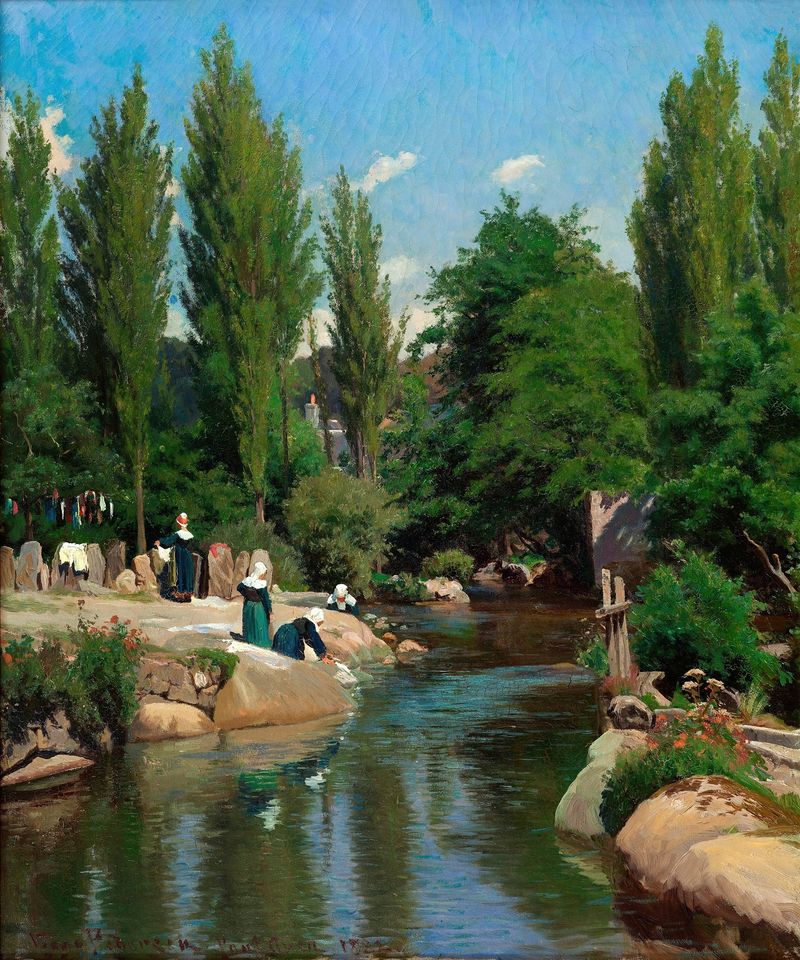
What if silence could speak through light? In En opkørt vej under gamle træer, the brushstrokes whisper the unvoiced fears of a journey, suggesting a path unknown. Look to the right at the gnarled branches of the old trees, their twisted forms looming overhead. The muted palette of deep greens and browns contrasts sharply with the warm golden light filtering through the leaves. This interplay of light and shadow creates an atmosphere thick with anticipation, drawing your gaze down the dirt road that seems to beckon but also warns.
The sparse figures walking toward the horizon appear small and vulnerable, underscoring the immense presence of nature that surrounds them. Hidden within this tranquil scene lies a tension between the stillness of nature and the uncertainty of human existence. The worn path suggests a journey taken many times before, yet the trees guarding it loom like ancient sentinels, guarding secrets and fears. The light that dances through the foliage hints at warmth and safety, while simultaneously casting shadows that evoke a sense of foreboding, reflecting the dual nature of human fears as they traverse the unknown. In 1882, Viggo Pedersen painted this piece in Denmark during a time when Romanticism was giving way to new artistic movements.
The era was marked by a growing interest in realism and the nuances of everyday life. As Pedersen navigated the evolving landscape of art, En opkørt vej under gamle træer exemplifies his mastery of light and shadow, capturing the emotional complexities of solitude and fear in nature’s embrace.