Washing clothes by a creek in Brittany — History & Facts
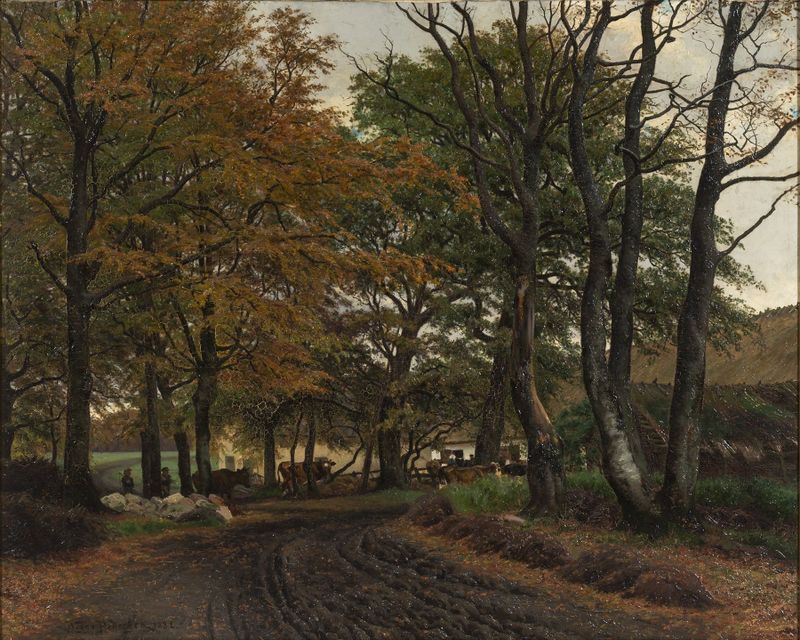
In the stillness of a moment, color breathes life into the mundane, transforming the ordinary into a narrative rich with emotion. Look to the top left where soft brushstrokes of azure and emerald evoke the surrounding landscape, hinting at the gentle sway of trees lining the creek. The figures, engrossed in their labor, emerge from the rich fabric of earthy tones below, their garments illuminated by the dappled sunlight that filters through the leaves. Notice how the water glistens in contrast to the more muted palette of the women’s clothing, creating a dynamic interplay that draws the eye across the canvas. As you delve deeper, observe the contrast between the serene backdrop and the women’s focused expressions.
Their concentration reveals a sense of camaraderie and shared purpose amid the tranquility of nature. The fluidity of the water symbolizes the passage of time, while the vibrant color palette reflects the vitality of rural life, capturing both the beauty and the burden of their labor. In 1882, Viggo Pedersen painted this piece while living in Brittany, a region that deeply influenced his work. During this period, he sought to depict the everyday lives of the local community, striving to embrace the impressionist movement's focus on light and color.
The world around him was rapidly changing, and this artwork embodies a moment of connection to a simpler, more harmonious existence in nature.