End of the Day, Gstaad, Switzerland — History & Facts
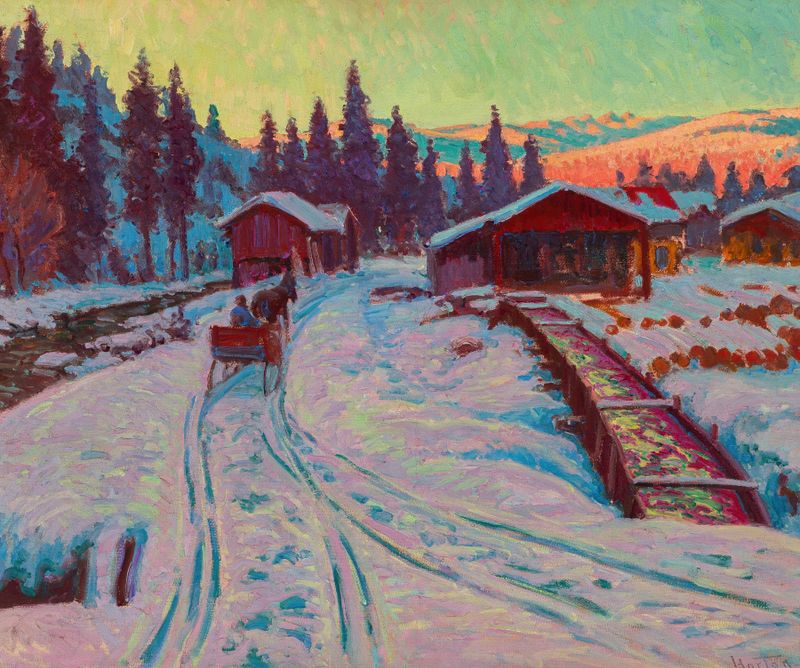
In William Samuel Horton’s End of the Day, Gstaad, Switzerland, a soft, golden light embraces the landscape, whispering promises of renewal and hope. The tranquil scene captures the quiet aftermath of a day well spent, evoking a sense of calm that invites reflection and solace. Look to the left at the rolling hills, where the sun dips below the horizon, casting warm hues of orange and pink across the sky. Notice how the gentle strokes of the brush create a harmonious blend of colors, drawing your eye toward the serene valley below.
The low, glowing clouds mirror the lush greens and browns of the terrain, while a solitary figure stands in silhouette, encapsulating the stillness of the moment. The composition balances simplicity and wonder, embodying a quiet reverence for nature's beauty. This painting resonates with deeper meanings, as the fading light symbolizes the passage of time and the cyclical nature of life. The lone figure, standing against such grandeur, evokes a sense of introspection and solitude, suggesting both a connection to nature and the weight of human experience.
The contrasts between light and shadow serve as a metaphor for hope amid uncertainty, reminding viewers that even as day turns to night, dawn always follows. In 1916, Horton painted this piece during a time of personal and global turmoil. While World War I ravaged Europe, he found refuge in the picturesque Swiss landscapes, which inspired a series of works reflecting peace and beauty. His focus on capturing light and atmosphere marked a departure from the more chaotic styles of the time, aligning him with the Impressionist movement while also setting a distinct narrative of hope amidst turmoil.