Punch and Judy on the Beach — History & Facts
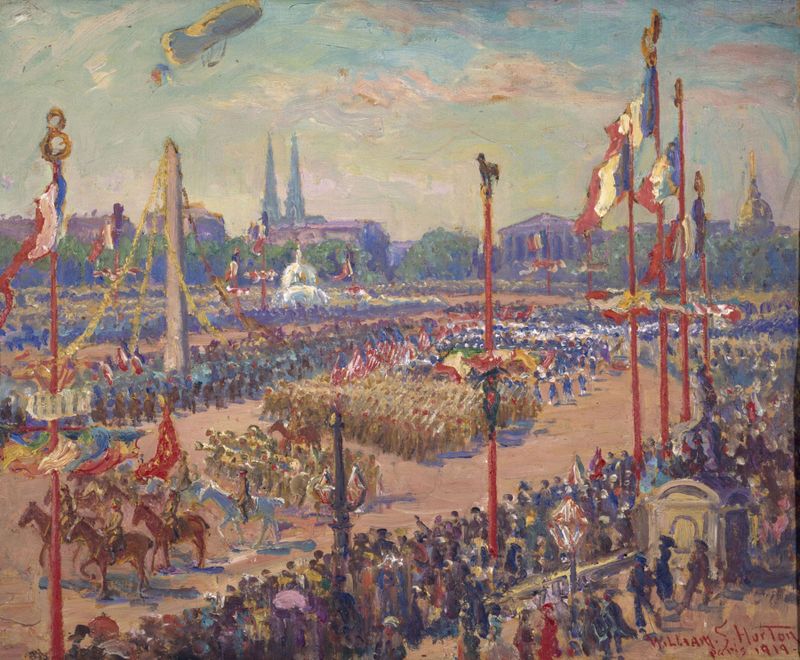
Can paint confess what words never could? In Punch and Judy on the Beach, the canvas speaks volumes about the isolation wrapped within playful scenes, subtly revealing the loneliness that often lurks beneath the surface of merriment. Look to the left where the whimsical figures of Punch and Judy stand, their exaggerated expressions frozen in a moment of performance. The vibrant colors clash playfully with the muted tones of the shoreline, creating a stark contrast that draws our gaze. Notice how the light spills across the sandy beach, illuminating the laughter of children while shadows deepen around the adults, hinting at a divide between joy and solitude.
The composition invites the viewer to navigate this emotional landscape, each brushstroke carefully chosen to enhance the narrative. Upon closer inspection, the subtle details unveil profound emotional truths. The audience, while captivated by the puppet show, is enshrouded in their own worlds — a mother’s furrowed brow, a child’s unyielding stare. The empty space around them suggests a distance that the bright colors cannot bridge, hinting at a collective yearning for connection even amidst laughter.
It’s a poignant reminder that the echoes of joy can often coexist with unspoken sorrow. Created in 1912, this piece emerged during a transitional period for Horton, who was exploring the interplay of light and mood in his landscapes. The early 20th century was marked by a shift in artistic movements, as traditional forms of representation began to give way to more expressive interpretations. This work reflects not only his personal artistic journey but also the broader societal complexities that infused the era with both vibrancy and a lingering sense of disconnection.