Engelberg — History & Facts
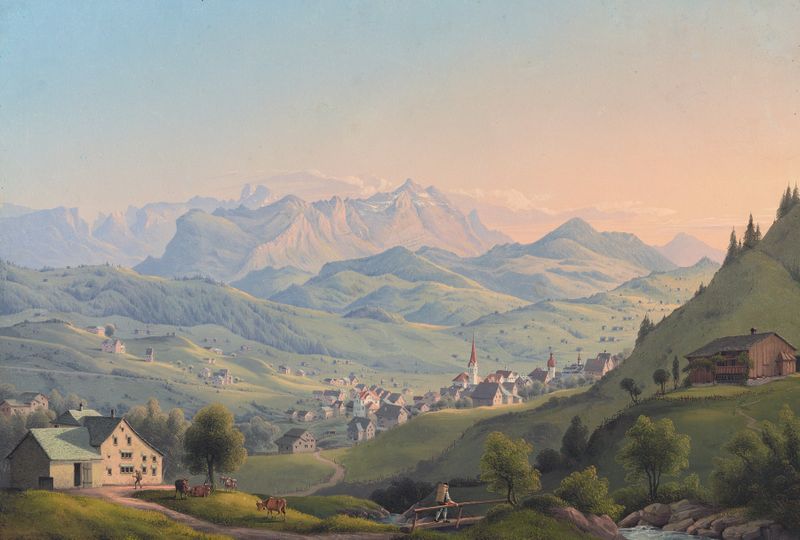
Could a single brushstroke hold eternity? In the intricate dance of color and form, the heartbeat of movement resonates, inviting us to ponder life’s fleeting moments. Begin your journey in the artwork by focusing on the undulating waves of rich blues and greens that sweep across the canvas. Notice how the strokes seem to pulse with vitality, evoking the sense of wind and water in motion. The composition draws your eyes to the center, where lighter hues intermingle, creating a luminous quality that suggests both depth and distance.
Each layer of color breathes life into the landscape, showcasing the artist's deft handling of oil paint to conjure a visceral response from the viewer. Delve deeper into the piece, and you may find a contrast between the calmness of the scene and the dynamic energy embedded within. The interplay of light and shadow reflects not just a physical landscape but a metaphorical journey through time and space. Is the painting a celebration of nature’s beauty, or does it whisper the urgency of existence? Each brushstroke becomes a fleeting moment, eternalized, yet simultaneously ephemeral. In his exploration of Engelberg, Konrad Corradi created this artwork during a time when modernism was reshaping the world of art.
Working in the early 20th century, he navigated the pulsating currents of change, seeking to encapsulate the essence of movement amid rapid transformations in society and art. This period was marked by a push towards abstraction, and Corradi’s work reflects a willingness to embrace not just the visual but the emotive power of color and form.