Ansicht von Gais — History & Facts
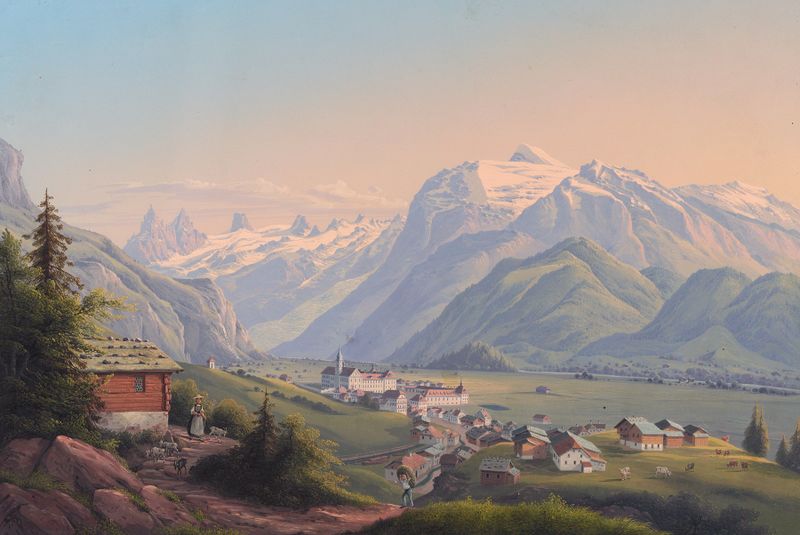
In a world often clouded by pretense, innocence stands as a beacon, revealing the purity of our experiences. Look to the foreground, where gentle hills roll like whispers across a vast expanse. The soft greens and muted browns create a serene palette that invites tranquility. Notice how the delicate brushstrokes blend seamlessly, capturing the essence of a quiet landscape, while the distant mountains loom with a sense of timelessness.
A subtle interplay of light accentuates the contours, allowing the viewer to journey through this pastoral scene as if wandering through a sunlit dream. The emotional depth rests within the simplicity of everyday life. The hills, in their gentle curves, evoke a sense of security, reminiscent of childhood memories of play and exploration. Yet, the distant peaks introduce an element of yearning, a reminder of aspirations that may always seem just out of reach.
This contrast highlights the tension between innocence and ambition, grounding the viewer in the present while beckoning them to consider their own dreams. Created during a time when nature was often celebrated in art, the artist painted this piece at a moment when artistic expression sought to reconnect with untouched beauty. In this landscape, viewers find a reflection of the artist’s own moment of contemplation amidst the evolving world of the late 19th century, where the romanticized view of nature was a counterpoint to the rapid industrialization surrounding him.