Et skovparti i Charlottenlund. Aften — History & Facts
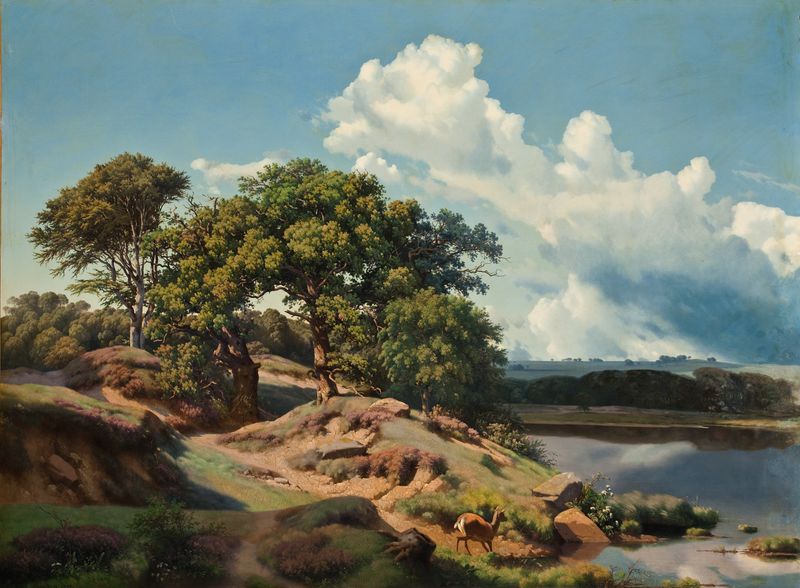
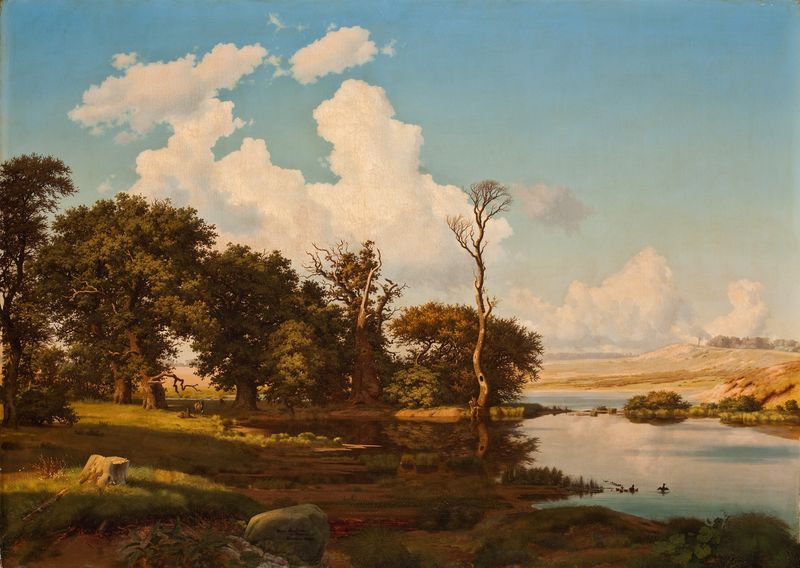
Who listens when art speaks of silence? In Et skovparti i Charlottenlund. Aften, the stillness of a twilight forest invites contemplation of both movement and peace. Look to the left where the trees arch gracefully, their dark silhouettes contrasting against the soft glow of the fading day. Notice how the light filters through the branches, creating dappled patterns on the forest floor, as if inviting you to step into this serene world.
The palette consists of deep greens, muted browns, and the gentle hues of dusk, conveying a tranquil atmosphere that is both enveloping and reflective. Yet, amid this tranquility lies a palpable tension. The figures, subtle and seemingly distant, evoke a sense of longing, possibly for connection or escape. Their placements amidst the lush foliage symbolize the delicate interplay between humanity and nature, highlighting the transient beauty of the moment—a union of stillness and the implicit movement of time.
Each brushstroke whispers the stories of lives intertwined with the forest, suggesting an ever-present pulse beneath the calm surface. Heinrich Buntzen painted this work between 1818 and 1831, a period marked by the Romantic movement that emphasized emotion and nature. Living in Denmark during a time of artistic upheaval, he navigated the shifting tides of artistic influence, embracing the ideals of connection and introspection that characterized this era. His choice to depict the evening light within the forest reflects not only personal inspiration but also the broader cultural fascination with the sublime beauty of the natural world.