Oak Trees By A Pool — History & Facts
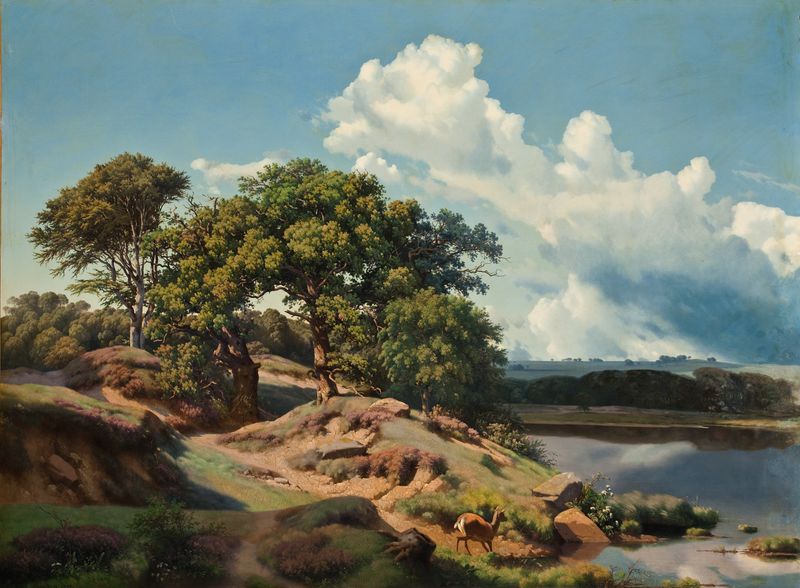
In Oak Trees By A Pool, the artist captures a serene landscape that whispers of the tumult beneath its tranquil surface. Focus first on the calmness of the pool at the center, its reflective waters mirroring the swathes of green that frame it. To the left, the oak trees stand sturdy and proud, their twisted branches reaching out like silent sentinels. The interplay of light and shadow reveals the texture of the leaves, each one a brushstroke of vibrant green, while dappled sunlight dances on the water, creating a mosaic of shimmering golds and blues.
The composition draws the eye naturally, guiding the viewer to explore the contrasts of nature’s serenity and the unseen chaos of life. As you delve deeper, notice the juxtaposition of the sturdy oaks against the fluidity of the water. This balance evokes a tension between stability and chaos, suggesting that beneath the calm exterior of nature lurks an underlying turmoil. The stillness of the pool might reflect a moment frozen in time, yet the movement of the leaves in the gentle breeze hints at a world constantly in flux.
The scene embodies a fragile harmony, where beauty and turmoil coexist, each enhancing the impact of the other. In 1840, Heinrich Buntzen was deeply engaged with the Romantic movement, painting in Germany as this style gained traction across Europe. He was influenced by the tension between nature and human emotion, a reflection of both personal and broader societal struggles. This period marked a time of profound change in the landscape of art, as artists began to embrace the emotional resonance of their subjects, creating works that spoke to both the heart and the mind.