Evening after Rain — History & Facts
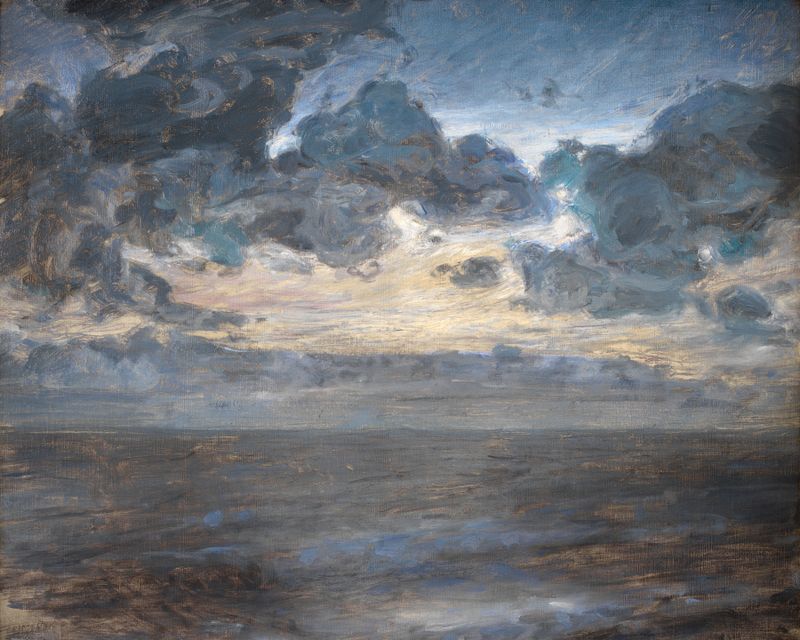
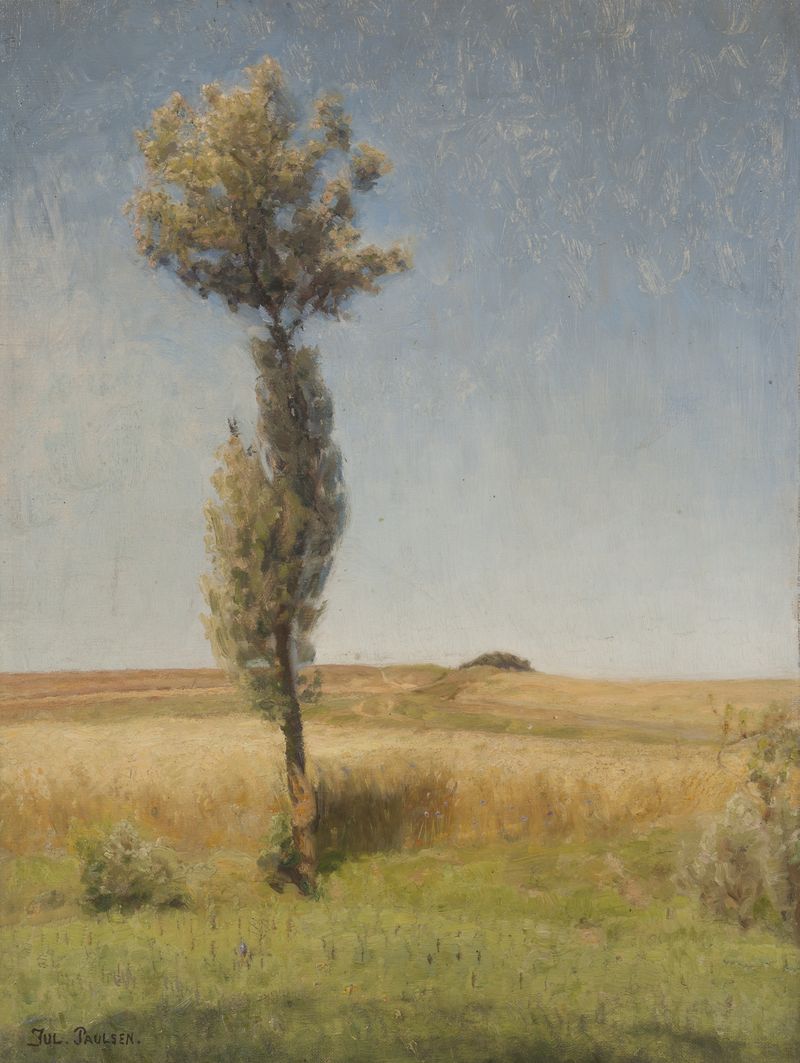
What secret hides in the quiet of the canvas? In the stillness of Evening after Rain, the world breathes a moment of respite, inviting contemplation of what has been washed away and what remains. Look to the left at the deep hues of indigo and violet that stretch across the sky, merging with the muted greens below. Notice how the brushstrokes create texture, transforming the ground into a glistening expanse, reflecting the last light of day. The artist's choice of color palette communicates a serene yet melancholic atmosphere, while a solitary figure stands, enveloped in the tranquility that follows a storm, seemingly lost in thought. The emotional tension lies in the contrast between the vibrant sky and the shadowed landscape, hinting at the duality of nature's beauty and the fleetingness of time.
The figure, almost an afterthought amidst the vastness of the scene, evokes a sense of solitude and introspection, prompting the viewer to explore their own connection with the moment captured. This interplay between light and shadow serves as a metaphor for life’s transient moments, suggesting both hope and melancholy. In 1892, while working on this piece in Oslo, the artist was influenced by the burgeoning Impressionist movement, which sought to capture the ephemeral qualities of light and atmosphere. As he painted, Paulsen navigated personal challenges, including family obligations and the evolving art scene that pushed him to define his own legacy.
In Evening after Rain, he weaves these threads together, offering a glimpse of beauty and introspection that resonates through time.