Under the Pont des Arts, Paris. Noon — History & Facts
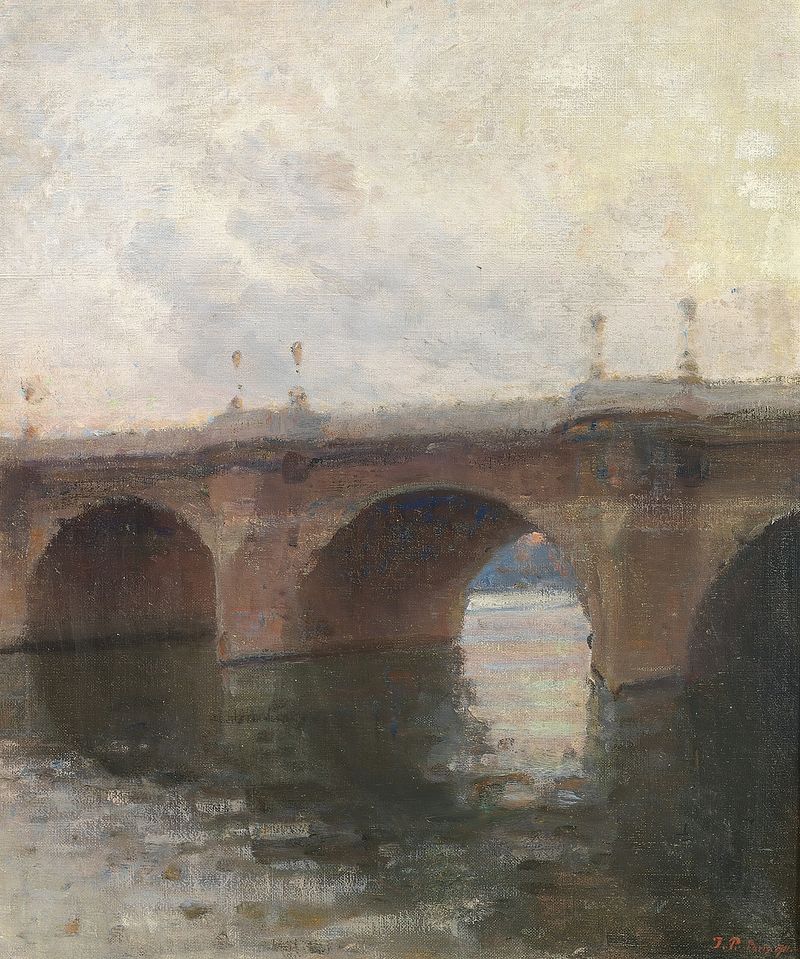
What if silence could speak through light? This question resonates deeply within the delicate brushstrokes of Under the Pont des Arts, Paris. Noon, where the serenity of midday transforms the essence of legacy into a visual symphony. Look to the bottom left, where the muted colors of the water ripple gently under the bridge. Notice how the soft hues of blue and green reflect the canopy of trees lining the banks.
The delicate balance of light and shadow creates a tranquil atmosphere, drawing our gaze along the arching structure of the Pont des Arts, its elegant lines inviting exploration. Paulsen's careful layering of paint imbues the scene with depth, while the subtle blend of sunlight and shade enhances the vibrant yet peaceful quality of this Parisian moment. As we immerse ourselves in the painting, we uncover layers of emotional tension. The bridge stands not just as a physical structure but as a symbol of connection and memory.
The quiet water beckons with the promise of stories untold, suggesting an intimacy that feels both timeless and transient. The interplay of light signifies hope—a legacy passed down through generations—while the stillness evokes a sense of longing, inviting viewers to reflect on their own ties to places and people. Julius Paulsen painted this work in 1910, during a period of artistic exploration in Europe. Living in Paris, he was surrounded by a vibrant community of artists who were redefining their craft.
This era saw the rise of Impressionism and Post-Impressionism, and for Paulsen, it was a time of personal and professional development, one that deeply influenced his approach to capturing the ephemeral beauty of urban life.