
Evening train to Hawthorn — History & Facts
When did color learn to lie? In the hands of a master, hues can transport us beyond mere representation, whispering secrets of longing and transcendence. Look closely at the composition, where the warm, golden tones of the late afternoon sun bathe the scene, inviting viewers into the quiet anticipation of travelers. Focus on the figure seated to the left—a woman draped in soft, flowing fabric, her head slightly bowed, as if caught in a reverie. Observe how the light dances across her and the nearby passengers, creating a harmonious interplay of shadow and illumination that speaks to the ephemeral nature of time and memory. Delve into the contrasts that Roberts skillfully navigates: the tension between the bustling life of the train station and the individual stories of those waiting in stillness.
The bright splashes of color juxtaposed with the muted tones of the platform convey a sense of fleeting moments—each figure, though captured in stillness, is part of a larger narrative unfolding in transit. The juxtaposition of movement and pause evokes a contemplative space where journeys are both physical and emotional. In 1889, Tom Roberts was deeply immersed in the Australian art scene, a pivotal moment marked by the emergence of Impressionism. Painted during his time in Melbourne, the work reflects not only his personal aesthetic evolution but also the broader cultural shifts of the era, as artists began to explore new ways of seeing and interpreting modern life.
More Artworks by Tom Roberts
Browse all →
Bailed up
Tom Roberts
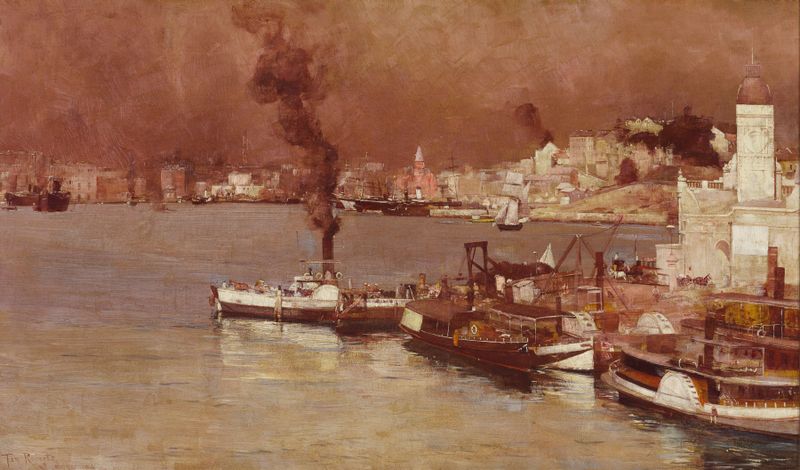
An autumn morning, Milson’s Point, Sydney
Tom Roberts

Winter morning after rain, Gardiner’s Creek
Tom Roberts

A break away!
Tom Roberts
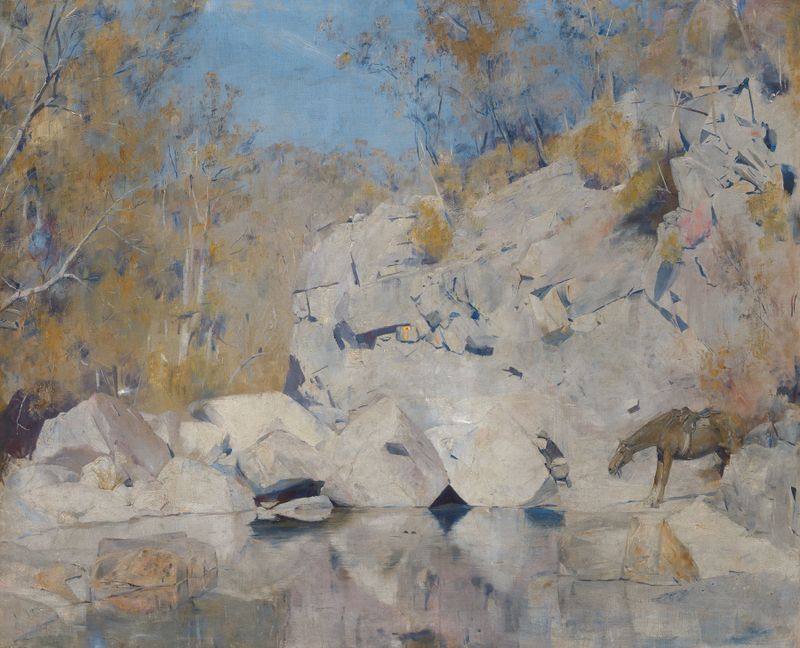
In a corner on the Macintyre
Tom Roberts
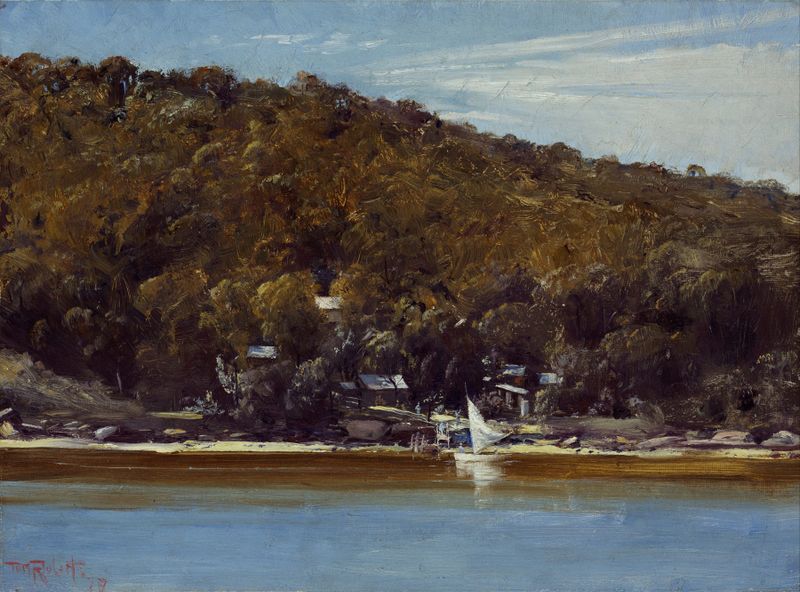
The camp, Sirius Cove
Tom Roberts
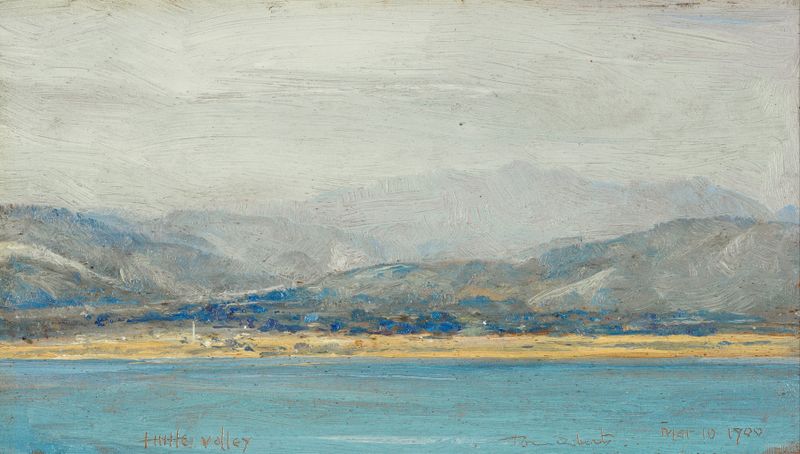
Hutt Valley
Tom Roberts

Holiday sketch at Coogee
Tom Roberts

A Sunday afternoon
Tom Roberts
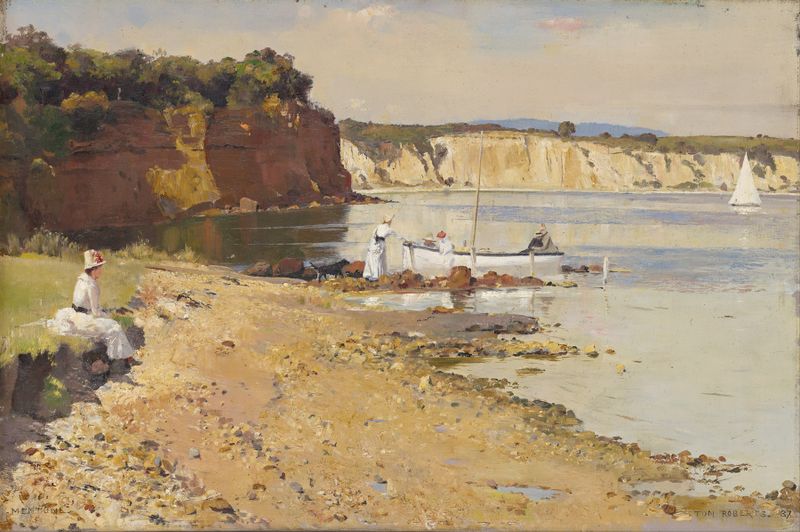
Slumbering sea, Mentone
Tom Roberts





