
The camp, Sirius Cove — History & Facts
What if silence could speak through light? In The Camp, Sirius Cove, Tom Roberts captures a moment where tranquility dances on the edge of chaos, inviting the viewer to explore the story woven within the quiet stillness of the Australian landscape. Look to the left at the clustered tents, their muted colors harmonizing with the surrounding earth tones. The light, a gentle wash of gold and amber, spills over the canvas, illuminating the natural beauty while casting delicate shadows. Notice the brushstrokes that suggest movement, as if the scene might pulse with life — a child playing on the ground, a distant figure by the fire — yet everything remains profoundly serene.
Each element competes for attention, creating a tension that mirrors the chaotic beauty of nature itself. As you delve deeper, the dichotomy of calm and disorder emerges. The scattered debris around the campfire hints at stories untold, lives intertwined amidst a backdrop of wilderness. The lush greenery envelops the scene, almost suffocating in its abundance, presenting nature both as a refuge and a force of chaos.
This duality resonates with the viewer, evoking a sense of connection to the natural world, where peace and disorder continually coexist. Roberts painted this work in 1899 while immersing himself in the burgeoning Australian art scene. Living in Melbourne, he was part of a movement that sought to define a national identity through art, capturing the unique landscapes and experiences of his homeland. During this period, the tension between urbanization and the untouched beauty of the Australian outback became a central theme in his work, reflected poignantly in The Camp, Sirius Cove.
More Artworks by Tom Roberts
Browse all →
Bailed up
Tom Roberts
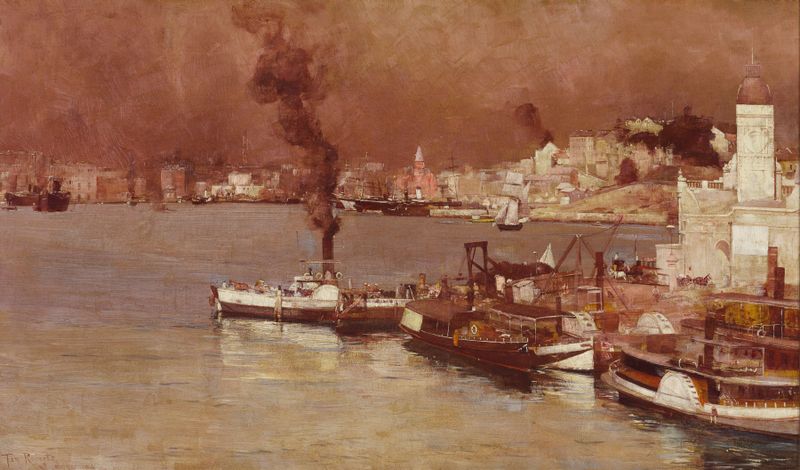
An autumn morning, Milson’s Point, Sydney
Tom Roberts

Winter morning after rain, Gardiner’s Creek
Tom Roberts

A break away!
Tom Roberts
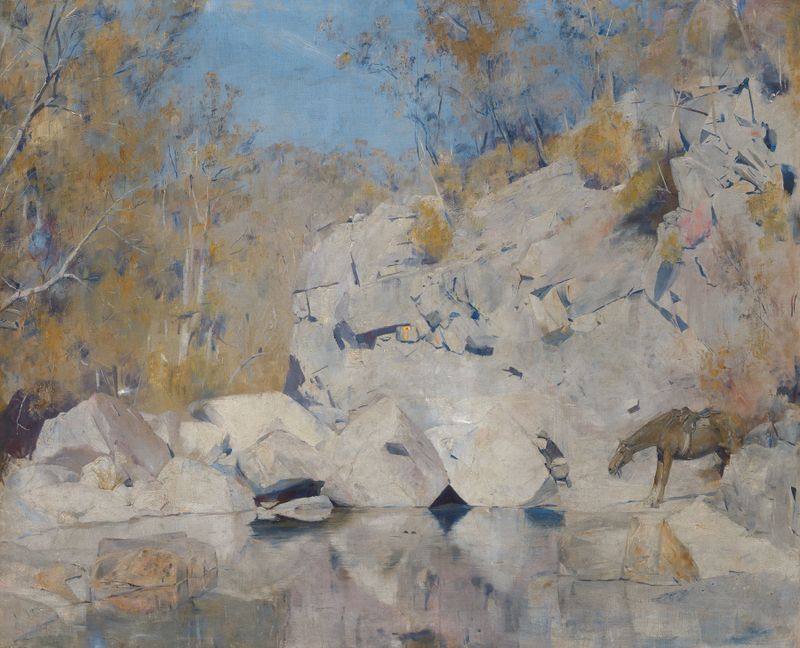
In a corner on the Macintyre
Tom Roberts

Evening train to Hawthorn
Tom Roberts
Hutt Valley
Tom Roberts

Holiday sketch at Coogee
Tom Roberts

A Sunday afternoon
Tom Roberts
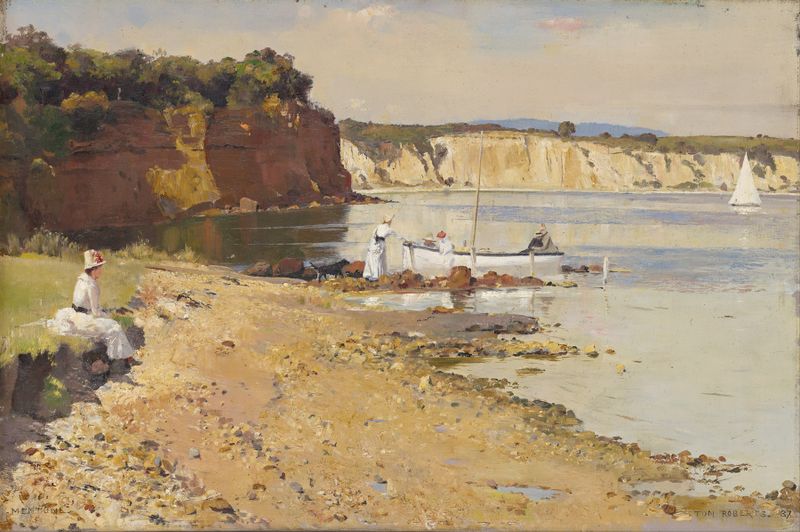
Slumbering sea, Mentone
Tom Roberts





